Seven years on, the CAA continues to play a major role in Assam politics, and the focus on the law has increased as elections in the northeastern state approach.

Seven years ago, India witnessed one of the largest protests in modern history after the introduction of the Citizenship (Amendment) Act, 2019. Soon after its passage, tens of thousands of Indians marched on the streets in the bitter cold of December 2019, protesting the implementation of the law, which was seen as a violation of the secularism pledged by the Indian Constitution. These extended back to 2020 before Covid struck, as well as the government crackdown.

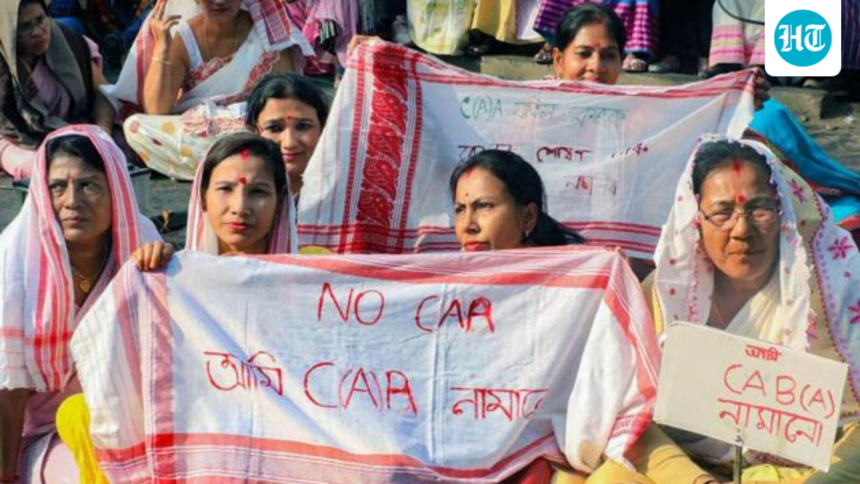
However, these mass protests began in Assam, where protesters claimed that the CAA was violating the 1985 Assam Accord. Fast forward to 2026, and the CAA remains a major focus in the state, especially as it prepares to go to the polls later this month.
What is the Central Auditing Organization?
The Citizenship (Amendment) Act, 2019 was introduced and passed by the Indian government in 2019. The Act amends the Citizenship Act, 1955 in order to give illegal immigrants a path to Indian citizenship.
Under a 2019 amendment, the CAA made immigrants eligible for Indian citizenship if they belong to the Hindu, Sikh, Buddhist, Jain, Parsi or Christian community and are from Afghanistan, Bangladesh or Pakistan.
This amendment, according to the government, allows religious minorities who fear persecution on the basis of religion to apply for citizenship in India. The law only applies to migrants who entered India on or before December 31, 2014. Certain areas in the North-East are excluded, such as the tribal areas of Assam, Meghalaya, Mizoram and Tripura and those under the Inner Line Permit system.
Assam State and CAA Agent
Days before the bill was introduced in Lok Sabha in 2019, students across Assam erupted in protest against the law. The silent protests at Cotton University quickly took a violent turn as demonstrations grew after the bill was passed into law.
While protests erupted across the country over the alleged marginalization of Muslims under the amendments, the focus in Assam remained on “protecting the state’s culture and identity”.
The Assam Accord, signed in 1985, put an end to Assam’s armed movement against illegal immigration, especially from Bangladesh, erstwhile East Pakistan.
Read also | Understanding Assam’s contradictory response to the CAA

The agreement fixed the cutoff date for citizenship in Assam to 24 March 1971. Moreover, under Clause 6, the state was also guaranteed constitutional, legislative and administrative safeguards to protect and promote the cultural, social and linguistic identity of the Assamese people.
Under this agreement came the National Register of Citizens (NRC), which was introduced to identify illegal immigrants.
In 2019, protesters across Assam stated that the CAA violated the terms of the 1985 agreement.
A major factor in Assam was that the CAA would allow thousands of immigrants from Bangladesh to become legal citizens of India, which in turn would affect the cultural identity of the northeastern state.
In 2024, Assam witnessed fresh protests against the CAA after the deadline was extended from December 31, 2014 to December 31, 2024.
The All Assam Students Union (AASU) and the Assam Sanmilita Morcha held protests and accused the Center of “burdening” Assam with more illegal immigrants.
Despite the unrest in the state, BJP Chief Minister Himanta Biswa Sarma continues to downplay the impact of the CAA and asserts that the protests against the law were “not based on logic”.
Its role in the 2026 elections
As the state gears up for elections, the Citizenship (Amendment) Act, 2019 continues to play a major role in state politics.
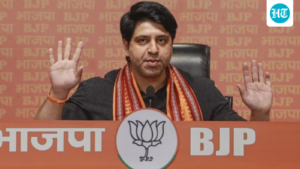
The BJP, led by Himanta Biswa Sarma, has stood firm on the claim that the CAA will strengthen Assam’s security and is necessary to protect religious minorities, with a major focus on Hindus.
However, opposition parties like the Congress have highlighted violations of the 1985 Assam Accord by the CAA.
The opposition in the state, which also includes several new regional parties that emerged after the 2019 protests, also said that in a state like Assam, which is also a border region, the identity of indigenous communities is the primary focus, regardless of the religion of the migrants.
Assam is scheduled to go to the polls in a single-phase election on April 9. The Election Commission of India is scheduled to count the votes on May 4.

Danita Yadav is a Senior Content Producer at Hindustan Times. Danita is based in New Delhi and serves as a pivotal voice in international reporting within the team. Operating under a mandate to deliver services ‘without the noise’, Danita excels at distilling complex geopolitical developments into clear, objective narratives that prioritize factual accuracy over sensationalism. At HT, Danita was honored for her breaking news efforts and time-bound coverage of the Air India plane crash, which drove over 2 million users to the site with reliable and factual coverage of the incident. Thanks to her success in high-pressure editorial environments, Danita has also earned a reputation for navigating the nuances of global diplomacy and cross-border politics. With over four years of experience in the journalism industry, Danita has spent her years deep diving into covering international relations and global conflicts. She previously worked with the news teams at Outlook India and Times Network, where she covered a wide range of topics and topics, from education curriculum and student protests to Indian politics and international conflicts such as the Ukraine, Gaza and Sudan wars. Danita holds a bachelor’s degree in journalism from Kamala Nehru College, Delhi University. Aside from the newsroom and her love of international relations, you’ll find Danita “obsessed” with books, music, and BTS. Her appreciation for global popular culture and storytelling also added to her unique perspective on the “soft power” dynamics that have increasingly shaped international relations in an ever-changing global order.Read more