Lori Segal is a former technology correspondent for CNN and CBS News 60 minutes The livestream says that despite the abundance of tech coverage we encounter every day, the sector is not covered in the way it should be.
So I decided to create a new media company to try to solve this problem.
Segall will launch a company called Mostly Human, which will produce original podcasts and programming, and work with creatives to tell stories about how technology is changing our world.
“It was born a little bit out of frustration,” Segal says. Hollywood Reporter. “I’ve spent my career covering technology and what’s coming next, kind of at lightning speed, and trying to look at the human impact of that.
“Then in this moment in media and technology, I think it’s really interesting that there’s a decline in trust in traditional media organizations at a time when the world of creatives is exploding, but the loudest voices aren’t necessarily the most credible,” she adds. “At the same time, there is an education gap around AI, which is widening, and we really need cultural literacy around AI.”
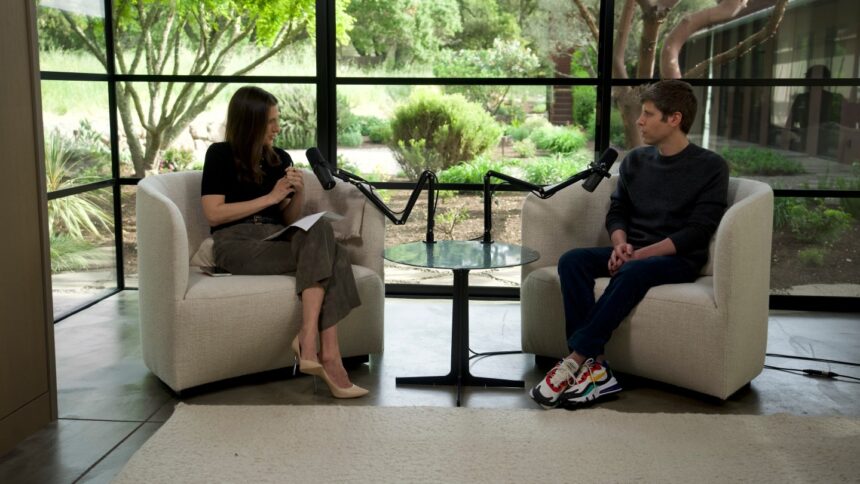
Segall is launching Mostly Human with a bang. The company’s first product is a new podcast, in partnership with iHeartMedia, and OpenAI CEO Sam Altman is scheduled to be this week’s guest. Segal, who has covered Altman for more than a decade, says they discussed the Sora shutdown (it’s his first interview since the move) as well as the battle between the Pentagon and OpenAI competitor Anthropic.
“But what I think is important is that we dig deeper into this,” she says. “I have this idea with the podcast. One of the things I’m most proud of is the ability for the episodes to talk to each other, for me to get into Silicon Valley and be able to be a direct line between people who live in the real world and people who are building the future.”
But the podcast is just the beginning, with Segal and co-founder Mark Winehouse saying they are in development on a number of other projects, with a strategy to develop short-form video content that will live on the platforms where people watch this type of content (you can probably guess which), and tie it into long-form series and documentaries that could live on streaming platforms. Segall says they’re in “active development with multiple streaming devices.”
“One of the things that came out of Laurie’s frustration with the process and the slow nature of traditional media is how can we really hack away at important stories and hide the medicine in the pudding,” says Winehouse. “So the main focus for us is to make short series to support broader feature documentaries.”
One such idea that Segal cites as the core of this thesis is the true crime concept that centers around deepfakes, taking a genre people know and enjoy, and connecting it to the world of technology in a unique way.
“We need to bridge these worlds, and this is important for you to know, but we can create a really entertaining movement that allows people to participate,” she says, noting the real-life impact deepfakes are having in schools today. “We’ll get more people talking about this.”
This will also include a creator element, with Mostly Human helping creators develop their own software, while also sharing content through their own channels.
“A lot of the people we talk to are not necessarily the loudest voices in the room, but they are important cultural voices when it comes to the mission of Mostly Human, which covers technology through a human lens, with the idea of collective impact, helping to shape culture, and being able to give people a seat at the table,” she says.
And this idea, of having a seat at the table, couldn’t be more important at a time when tech giants seem to be gambling with humanity’s future. For Segal, who built his career in technology while the iPhone was changing the way we consume media, 2026 feels like a similar moment in time.
“It sometimes feels like Silicon Valley is playing a high-stakes game of poker, and we don’t have a seat at the table,” Segal says. “I think the ability to build voices, not just my own, but other voices that represent cultural literacy in the age of artificial intelligence, feels incredibly timely, and I think there is opportunity in this chaos.”
“I think we are in another moment of chaos,” she adds, “and there are a lot of opportunities in both technology and media to bring out these narratives that give us more power.”