

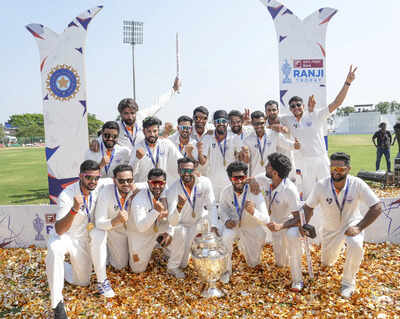
Jammu and Kashmir players hold the Ranji Trophy trophy after the team’s win over Karnataka, at the KSCA Stadium, in Hubballi, Karnataka. (PTI)
There is a classic scene in Gangs of Wasseypur where Sardar Khan (played by Manoj Bajpayee), Nasir Ahmed (played by Piyush Mishra) and Asghar Khan (played by Jameel Khan) loot a petrol pump owned by coal mafia don Ramadhir Singh (portrayed by Tigmanshu Dhulia).
As they scramble to escape, Sardar Khan slips off his shoe, Nasir Ahmed dashes forward, leaps into the jeep and taunts the victor, “Hum first, hum first.”This stampede seems familiar now. Since then, 41-year-old Paras Dogra has led Jammu and Kashmir to its historic site
Ranji Trophy
Victory, the rush to claim a share of glory began. Political leaders, administrators, well-wishers, and assorted stakeholders line up, each eager to say, “Hum first.”
J&K are making history! Jammu and Kashmir wins 1st Ranji Trophy 2025-26 | Emotional family reactions
They say it takes a village to raise a child. The same applies to this team. The affection mixed with apprehension from former cricketers, the love and encouragement of captain Paras Dogra, the grooming of coach Ajay Sharma, the talent spotting of Irfan Pathan, the professional eye of the selectors and finally the confidence injected by social media, which has allowed cricketers from Jammu and Kashmir to spread their wings, have played a role in this.
After winning the title, Aqib Nabi, who grew up in the curfew-plagued Baramulla district and took 60 wickets in the 2025-26 Ranji Trophy season, taking him 104 in two seasons, now wants to return home for a much-needed break.But he feels the title has brought him closer to his dream of opening a cricket academy in Baramulla, where he can nurture more Aqibs.“I am one step away, brother,” he told TimesofIndia.com from Hubballi.“I would like to open an academy. There is absolutely nothing here. When I started playing, I had to go to Bengaluru to train and play lower-tier matches there. I want to find and coach more Aqib Nabis from Baramulla,” he says.The other prophet
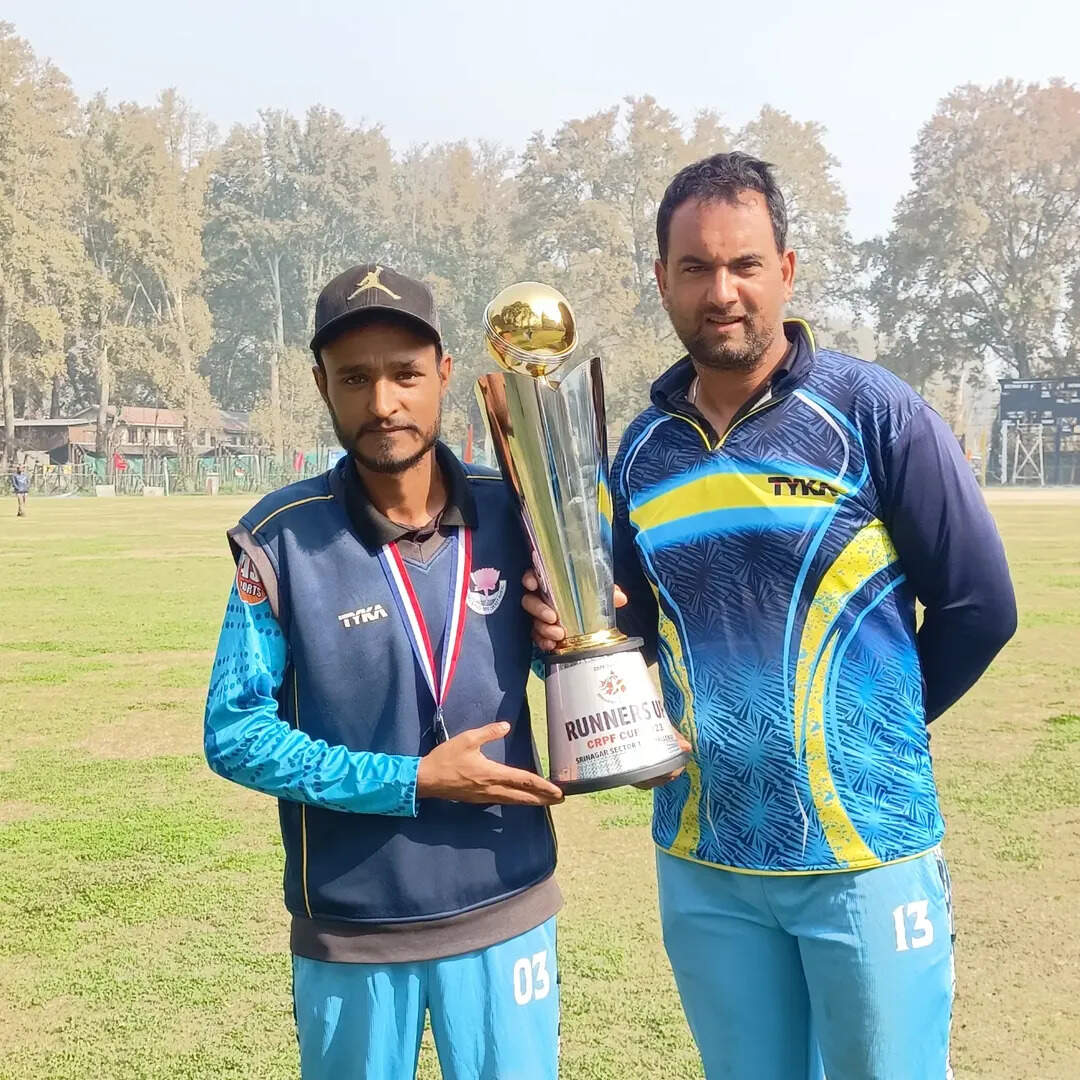
Archive photo of Ubaid al-Nabi (right). (Instagram)
Before Aqib Nabi, who mesmerizes batsmen with his length and impeccable swing, there was another prophet, Abid Nabi, the first poster boy of Jammu and Kashmir cricket.It was 2000 when the 6ft 2in bowler with broad shoulders and smooth movement caught the attention of Dennis Lillee at MRF Pace.
The Australian legend alerted fellow Aussie Greg Chappell, the then India coach, and soon Nabi was bowling against India.“It feels like redemption to me,” Abid Nabi tells this site. “It took me twenty years.”“Jo khwaab itne saalon pehle dekha woh aaj polla kar dya ladkon ne (The dream I had so many years ago, it has come true),” he says, pausing before completing the sentence.Nabi reminisces but doesn’t want to talk about his time with the Indian cricket team.
Instead, he spoke of an Under-19 one-day match when Jammu and Kashmir defeated Haryana under his captaincy.“It was the first major win over a senior team by any J&K team. If I’m not mistaken, it was in the 2003-04 season. It took more than two decades, but J&K has finally arrived. The infrastructure is still the same. The boys play on grass wickets. You can’t play cricket in the Valley after October because of the weather. Most of them didn’t have spikes when they first came to the state side.”
It’s an amazing achievement. Please forgive me, I don’t have the words,” Nabi says in a choked voice.
I was disqualified because I was not praying and saying hello to the selectors and the coach. There was no professionalism. The less you say, the better
Abed Nabi
Nabi’s career was derailed after he joined the now-defunct Indian Cricket League.“I was dropped from the J&K team because I was not offering my prayers and blessings to the selectors and the coach. There was no professionalism. The less I say, the better,” he says.Meanwhile, twenty years later, another prophet almost single-handedly led J&K to the title.
He could have done the same thing in the previous season as well. In the 2024-25 Ranji Trophy, he took 44 wickets in eight matches, the second most in the season. His performance helped Jammu and Kashmir qualify for the quarter-finals, where Kerala beat them by one run in the first round.“Losing once to Kerala gave me sleepless nights,” Aqib Nabi said after he was picked by Delhi Capitals for Rs 8.40 crore in the IPL auction.Those who planted the seeds
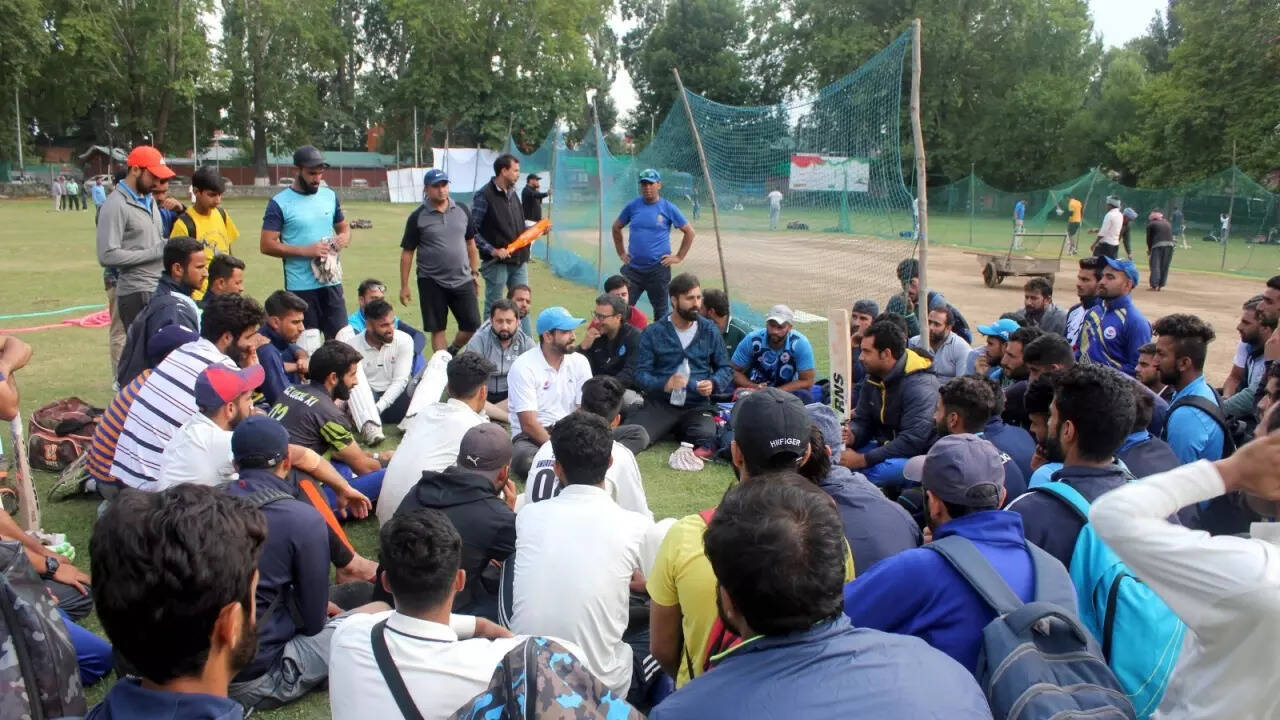
Budding cricketers from Jammu and Kashmir during a training session. (Photo by special arrangement)
After the end of the fourth day of the final, sports journalist Abid Hussain Khan, who has covered Jammu and Kashmir cricket tirelessly for the past two decades, sent an emotional text message to this correspondent.“I wish I had been there. In 20 years of working in sports journalism, I have always dreamed of a moment like this and when it finally happened, I wasn’t there to witness it. In fact, I may not be invited when they finally go home,” Abed’s message read.He credits the existing Jammu and Kashmir Cricket Association system, a three-member committee set up by the BCCI.“The BCCI sub-committee headed by Brigadier Anil Gupta and Mithun Manhas, with whom I do not have a good relationship, deserves appreciation. Manhas is a strict taskmaster who did not budge even on the harshest criticism. He ended the star culture and once even punished two Indian Premier League cricketers who were late for training,” he says.For many years, Jammu and Kashmir had only a token presence in the Ranji Trophy. No international matches have been played in the state since 1986.
Rain forced the abandonment of the fifth ODI of the India-New Zealand series in Jammu in 1988.Parvez Rasool, the first international cricketer from the state, credited former India captain Bishan Singh Bedi, who was appointed as a coach and mentor in 2011, for changing the mindset.
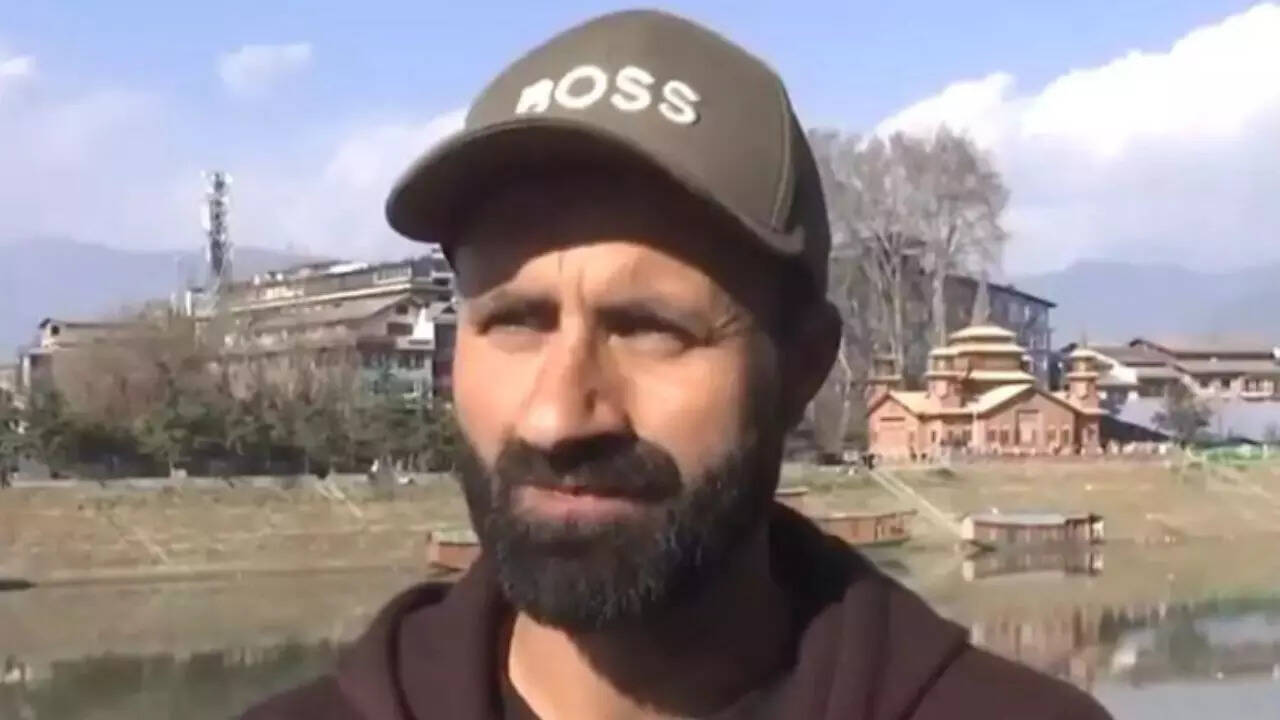
Former Indian cricketer Parvez Rasool (ANI Image)
“He changed our mentality. Earlier, when J&K played, the thinking was that we would just participate. But Bedi sir taught us to go and compete.”
He taught us that we have to fight, not just participate. He brought the spark in me and Jammu and Kashmir cricket,” he told TimesofIndia.com in November last year.Abid Hussain Khan echoes Rasool and says the mentality changed first under Bedi and later when Irfan Pathan joined the Jammu and Kashmir team as a player and mentor.“During his tenure, he held a lot of camps. All the boys you see now, even the ones playing in the Indian Premier League, were selected by Irfan,” says Abid.Aqib Nabi, the Kohinoor cricketer for Jammu and Kashmir, was first discovered by Pathan during a trial in 2018-19.
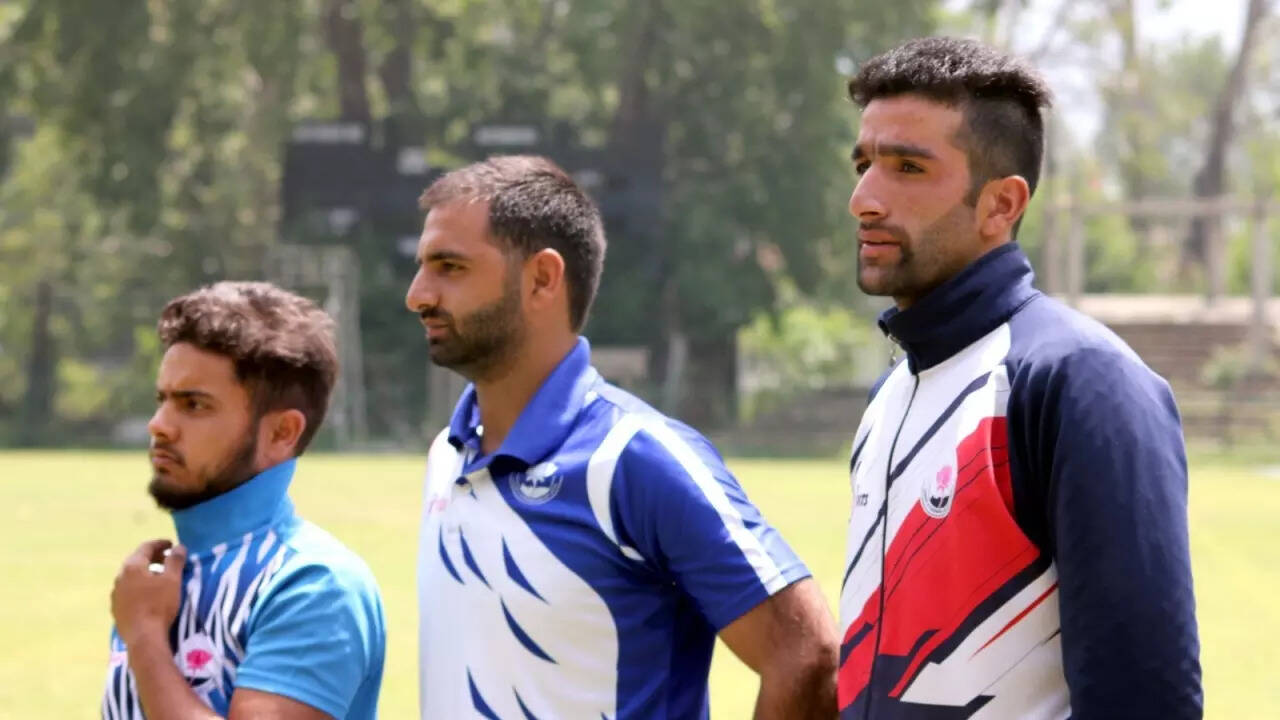
(From right to left) Muhammad Tahir, Aqib Nabi, and Haziq. (Photo by special arrangement)
“He gave me a lot of useful tips related to bowling. He was the first one to tell me to work on my wrist and not change anything,” Nabi said.Before leaving, Irfan wrote a mail to JKCA asking the association to invest in Prophet.Many young and senior J&K cricketers feel that he changed the mentality of the team.
J&K has reached the quarter-finals of the 2019-20 Ranji Trophy season.“He instilled the belief that we can also win,” says Abid Mushtaq, a player for the victorious Jammu and Kashmir team. “We can beat the best local teams. Our players can To play in the Indian Premier League and for the Indian national team.”Sweet redemption
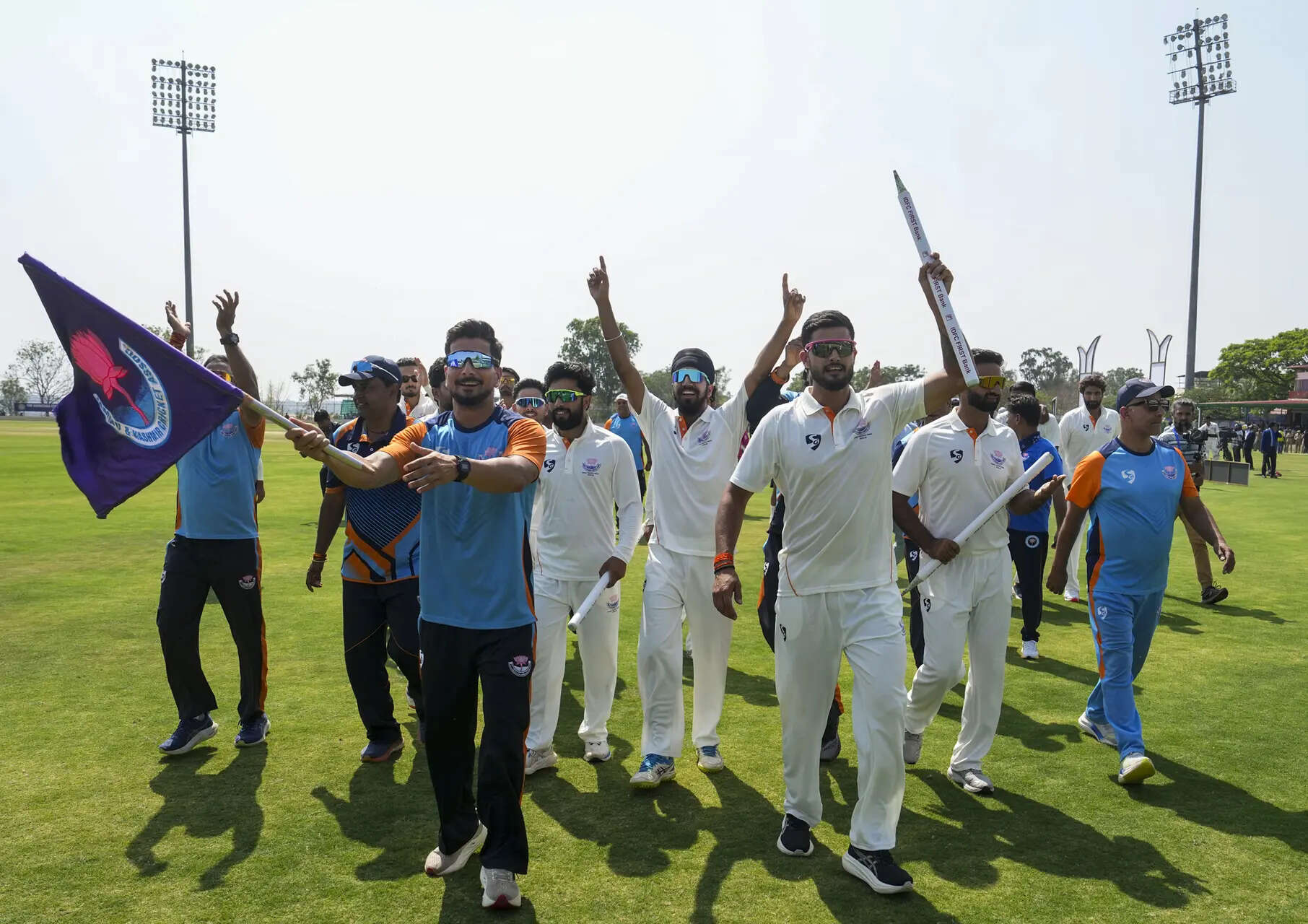
Yudhvir Singh, Aqib Nabi and others from Jammu and Kashmir celebrate after winning the 2025-26 Ranji Trophy final. (PTI)
On Saturday work,
Name God Beg
He took a day off and was on his way to the JKCA office with his teammates Parvez Rasool, Muhammad Mudassir, Ram Dayal and others to celebrate what is a historic day for cricket in Jammu and Kashmir.“A tremendous achievement. Considering the fact that the infrastructure was lacking here and is still not up to par, the journey of this team, this group of cricketers, is nothing less than a fairytale,” a proud Peay tells TimesofIndia.com.“If you see the interviews I gave, I told everyone that this team has the potential to win the Ranji Trophy. Many laughed, the journalists laughed, the cricketers laughed. But finally I was proven right.”
We always had talent. “The only thing we lack is self-confidence,” he says.Beigh was a pivotal member of the side that reached the quarter-finals of the 2013-14 Ranji Trophy, where a poor on-field decision cost them the match against Punjab.
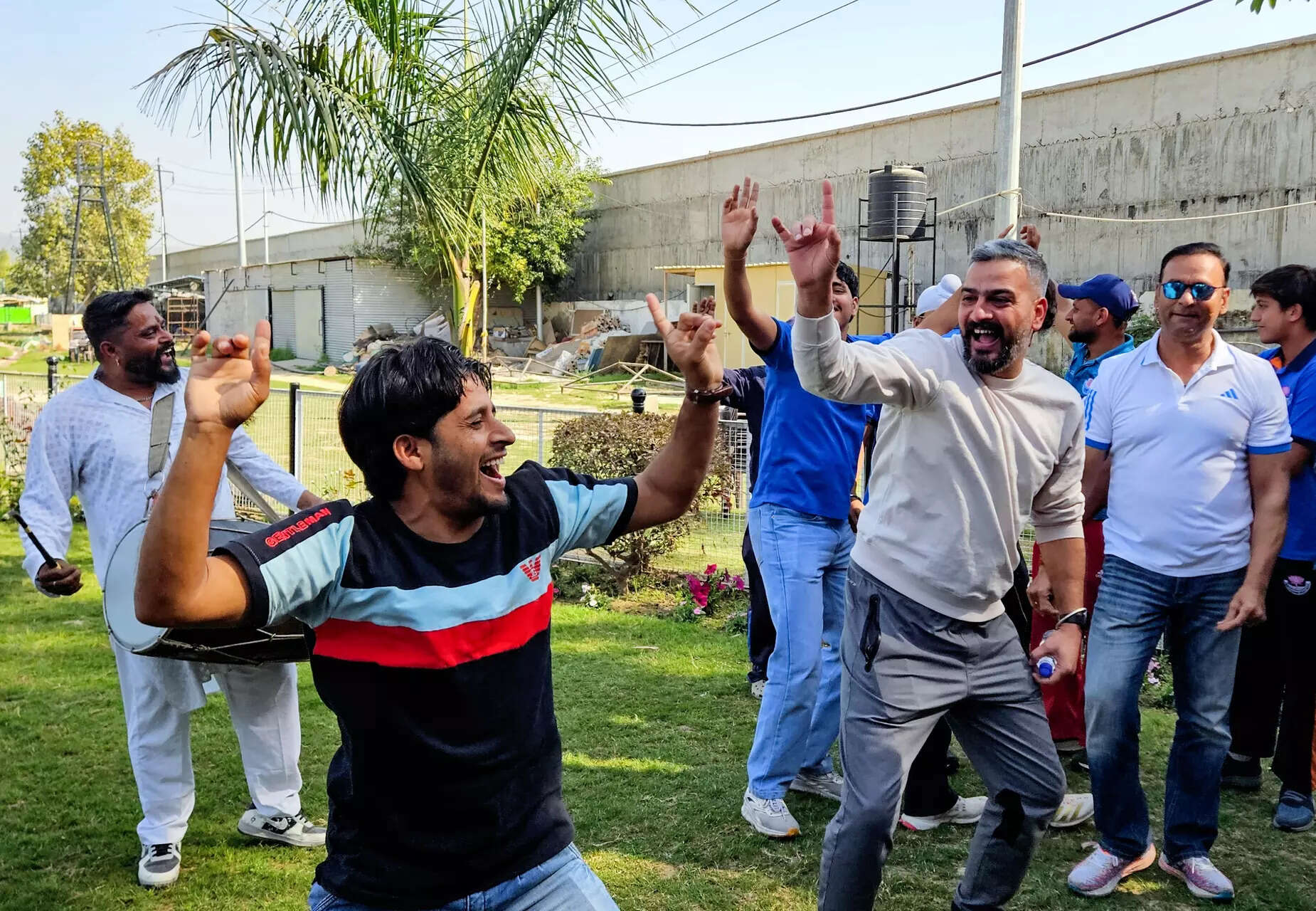
People celebrate at the JKCA office after the Jammu and Kashmir team clinched their first-ever Ranji Trophy win, in Jammu on Saturday. (that I)
“Unfortunately, the umpiring spoiled our journey in the 2013-14 season. In the quarter-final against Punjab in 2013, we had them reeling at 147 for 7. Harbhajan Singh was one over. Everyone heard that except the umpires.
“He went on to score 92 points and the momentum changed.”“And this year when we qualified for the quarter-finals and I knew that every match would be broadcast live, I told my friends that we would win. They asked me how I was so sure of that. I said that there would be a DRS. In crucial moments, top players put pressure on the referees to make tough decisions. Sometimes the referees give in. But when there is a DRS to get things right, everything changes. You saw that with the Kuala Lumpur team sending off Rahul in that final.
“He was not given the opportunity, and then the decision was overturned by the third official.”Thus, unlike that scene in Gangs of Wasseypur, this story does not belong to the man who shouts “Hmm first.” It belongs to the many who ran together, stumbled together and stayed the course. Jammu and Kashmir winning the Ranji Trophy is not about who reached the jeep first. It is about a village that has finally achieved its long-awaited goal.