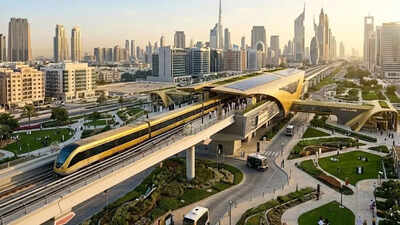
Dubai unveils the golden line of the metro worth 34 billion dirhams, promising faster travel, stronger connectivity and major urban transformation / Photo: File
Dubai has unveiled its largest transportation project ever, with Sheikh Mohammed bin Rashid Al Maktoum announcing the Dh34 billion ($9 billion) Gold Metro Line on April 22, 2026. This ambitious project aims to reshape how millions move through the city, and advance Dubai’s long-term vision to become one of the most connected urban centers in the world.
Described as a “fully integrated subway line,” the Gold Line represents a major leap in infrastructure planning, connecting historic districts to rapidly expanding new communities.
Dubai Metro Golden Line 2026
The new line will extend 42 kilometers underground, extend to depths of up to 40 metres, and pass through 15 major areas throughout Dubai.The route is expected to start in Al Ghubaiba and connect key locations including:
- Business Bay
- field
- Jumeirah Village Circle
- Dubailand
- Jumeirah Golf Estates
It will also be seamlessly integrated with the existing Red and Green lines, while being connected to the Etihad network of upcoming trains, creating a more unified transportation system across the emirate.With around 18 stations planned, the line is designed to serve densely populated neighborhoods and emerging real estate centres, ensuring smoother movement between old and new Dubai.
The impact of the Golden Line in Dubai on travel time
The new Gold Line is expected to significantly reshape daily mobility around Dubai, with planners estimating that it will serve around 1.5 million residents once fully operational. By relieving pressure on the existing Red Line and major road corridors, the project aims to make journeys faster and more predictable through some of the city’s busiest areas.
At full capacity, the line can handle up to 465,000 passengers per day, providing a major boost to public transport use as Dubai’s population continues to expand. The broader impact goes beyond comfort. With the addition of the Gold Line, the metro network is expected to grow by approximately 25%, bringing the total route length to more than 160 kilometers and increasing the number of stations from 67 to 85.Officials also expect strong economic returns in the long term, with projections indicating that the project could achieve returns of up to 430% over the next two decades, driven by high demand for residential and commercial developments around metro-linked areas.
Expected offering
The Gold Line is scheduled to be completed on September 9, 2032, a symbolic date that reflects the original launch of the Dubai Metro on September 9, 2009. The timeline reflects both ambition and careful planning, with the bidding process scheduled to begin in 2026, followed by contract awards in 2027. Construction is expected to begin shortly after, using advanced tunneling technology to connect what will be one of the city’s most complex underground transportation systems.Once completed, the Gold Line will operate alongside the upcoming Blue Line, expected by 2029, forming part of a wider strategy to expand rail connectivity and reduce reliance on road transport. Together, these projects confirm Dubai’s move towards a more integrated, efficient and future-ready transportation network.
The future of travel in Dubai
The Gold Line is more than just a new railway, it represents a shift in how Dubai plans its future growth.
By connecting 55 major real estate projects and building bridges between historical areas and new urban areas, the project aims to create a more seamless and sustainable city.It also reflects Dubai’s larger ambition to build a transportation system that is not only efficient, but also future-ready, supporting economic expansion, tourism and daily life in one of the world’s fastest-growing cities.In simple terms, this is not just another metro line, it is the backbone of the next phase of development in Dubai.