Uttarakhand has opened up 83 major Himalayan peaks across the Garhwal and Kumaon regions for mountaineering expeditions, a move aimed at putting the state firmly on the global climbing map. The decision, taken at the behest of Chief Minister Pushkar Singh Dhami and implemented by the Uttarakhand Tourism Development Board (UTDB) in coordination with the forest department, is expected to expand high-altitude tourism and generate local employment, officials said.
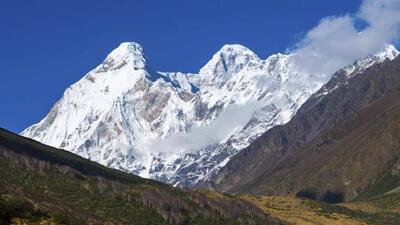
Twin Peaks of Nanda Devi seen from Chaukori, Uttarakhand. (ap file)According to officials, the newly opened peaks range from 5,700 m to 7,756 m in height and are among the most famous and technically challenging peaks of the Indian Himalayas, such as Kamet (7,756 m), Nanda Devi East, Chowkhamba Group, Trishul Nepal, Shangchutang, Panchuthalinga Group and Shivchuthalinga Group. The peak of the Nilakanta group. These mountains are internationally known for their difficult terrain, technical climbing routes and scenic beauty and are considered the epitome of the Himalayan landscape.
Dhami said the initiative was a historic step for the adventure tourism sector in the state. “The Himalayas are our identity, our heritage and our strength. Opening up 83 major peaks for trekking is a historic step to give global recognition to adventure tourism in Uttarakhand,” he said.
“The objective is to encourage the youth of the country to take up adventure fields like mountaineering, generate employment for local communities and ensure balanced development with environment conservation. The state government is fully committed to safe, responsible and sustainable mountaineering,” he added.
Officials said that for these 83 notified peaks, Indian mountaineers no longer have to pay any expedition-related fees, including peak fees, camping charges and environmental fees. Earlier, these charges were levied by the Indian Mountaineering Foundation (IMF) and the Forest Department. The state government will now bear these costs, a move expected to significantly benefit young mountaineers and aspirants who were earlier restricted by financial constraints.
More Read

In a parallel decision to promote international expeditions, additional state-level fees previously imposed on foreign climbers have been scrapped. Foreign climbers will now only have to pay a fee set by the IMF, a move officials say will boost Uttarakhand’s global appeal and attract more international climbing teams.
To streamline the process, all expedition applications will now be routed through the Uttarakhand Mountaineering Permit System (UKMPS), a fully digital online portal. Officials said the system is transparent, time-bound and designed to eliminate delays and procedural hurdles in granting permits.
The move is expected to have a significant socio-economic impact on border and remote villages. Tourism activity in the Inner Himalayan region will increase, creating new livelihood opportunities for local residents as guides, porters, homestay operators, transport providers and service workers. This will help curb migration and strengthen the rural economy, officials said.
More Read

At the same time, the government has mandated strict safety and environmental compliance for all operations. Climbers must follow prescribed safety protocols to protect the fragile Himalayan ecosystem and adhere to the ‘leave no trace’ policy, officials added.
UTDB officials described the decision as a milestone in promoting the adventure heritage of the state. The initiative will take the state’s mountaineering and adventure tourism potential to new heights and establish Uttarakhand as a major global destination for mountaineers and adventurers, officials said.
Notably, Union Finance Minister Nirmala Sitharaman, in the Union Budget 2026-27, also announced the development of eco-friendly mountain trails to boost adventure tourism in Uttarakhand, Himachal Pradesh and Jammu and Kashmir.