Preparations have begun for the 2027 elections to the 403-member Uttar Pradesh Assembly. In 2022, voting concluded on March 7. The results were announced on March 10 of that year, and Yogi Adityanath was sworn in as Prime Minister for a second consecutive term on March 25.

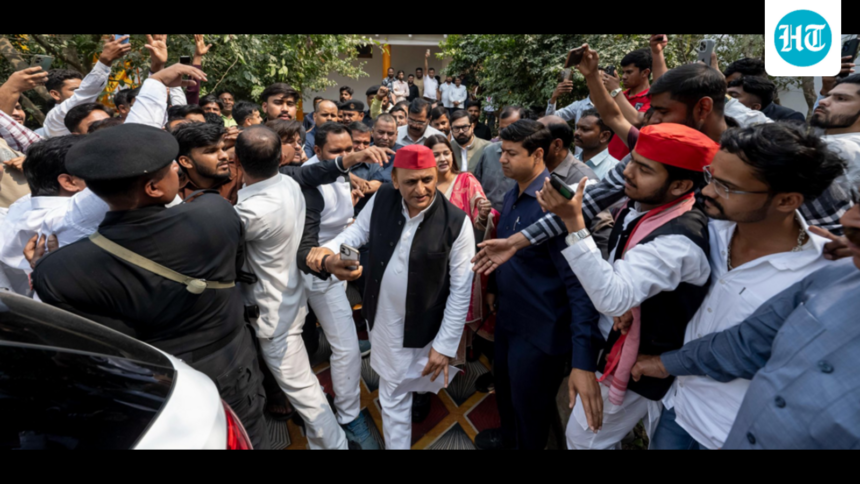
The rivalry remains primarily between the ruling Bharatiya Janata Party (BJP) and the main opposition Samajwadi Party (SP), and their leaders Adityanath and Akhilesh Yadav.
Apart from the Bahujan Samaj Party (BSP) and the Congress, the Azad Samaj Party led by Chandrashekar Azad (Kanshi Ram), the All India Majlis-e-Ittehadul Muslimeen Party led by Asaduddin Owaisi, the Apna Dal (Sonelal) led by Anupriya Patel, the Nishad Party led by Sanjay Nishad and the Suheldev Bhartiya Samaj Party led by Om Prakash Rajbhar are hoping to leave Their mark. Where class remains a factor.
The BJP will continue to rely on Prime Minister Narendra Modi and Adityanath. In a sectarianly divided society, both remain the first choice of Hindu voters, usually reluctant to have no choice but to vote for the BJP, despite their alleged acts of omission or commission, otherwise Muslims will rule the country.
The BJP has the major advantage of its ideological source network, the Rashtriya Swayamsevak Sangh (RSS). After the landslide victory in Bihar, the BJP-RSS may want to strengthen its position further by retaining Uttar Pradesh.
The BJP also has the capacity to contest elections, a committed cadre, and the poll management skills of leaders like Union Home Minister Amit Shah. It operates on the idea that every vote is crucial, which makes its alliances with small, one-person parties crucial.
However, the divide in the Hindu vote bank during the 2024 national elections remains a concern for the BJP. Dalits remain skeptical about the alleged intention to change the Constitution.
Brahmins, a major base of BJP supporters, are also angry over Adityanath’s supposed pro-Rajput bias and negligence in the administration, the University Grants Commission’s justice regulations, and the sexual assault case against Swami Avimuktewaranand Saraswati. But their political options are limited because the Congress is making no effort to reach out to them, and they do not trust the BJP despite Mayawati’s overtures in 2007. The growing disillusionment among the youth will also worry the BJP.
In 2017, the BJP won 312 assembly seats with about 40% of the votes. This dropped to 255 seats in 2022, although the vote share rose to 41.29%. The Socialist Party won 47 seats in 2017, with 21.82%. Its number of seats increased to 111, with 32.06% of the vote in 2022.
SP leader Akhilesh Yadav remains a popular leader with a clean image, barring the riots in Muzaffarnagar during his rule. He focused on key development projects during his stint as chief minister from 2012 to 2017. The Yadav Pechera, Dalit and Panhandle (PDA) formula of uniting backward, Dalit and Muslim voters worked in the 2024 Lok Sabha polls when the SP won the largest number of seats in Uttar Pradesh. It is expected that the formula will be reflected in the distribution of tickets.
There is talk of a possible alliance between the BSP and AIMIM, and the Azad Samaj Party’s continued association with the Owaisi-led party. But SP remains the first choice for Muslims. Unlike the BSP, the SP has never allied with the BJP. The SP is also the only party facing the BJP.
Yadav also has the advantage of committed political workers and well-equipped machines. He has learned lessons in poll management from his late father, Mulayam Singh Yadav, and has the support of his uncle, Shivpal Singh Yadav.
Meanwhile, the BJP is reminding voters of the ‘Gonda Raj’ during the SP rule. Changing the SP image did not produce the desired results. Thus, while Akhilesh Yadav has a good image, the party needs a change. Besides social alliances, a socialist party also needs a viable ballot issue.
For the Congress Party, despite Rahul Gandhi’s growing popularity, a disconnect persists between the party and the common people. The interest rate was constantly declining and needed a miracle to recover. The party’s strength lies in the fact that it remains the first choice for about 10% of Jatav voters. The biggest challenge facing it is its inertia and lack of political credibility.