When the United States and Israel struck Iran, and then Tehran responded with ballistic missiles and drones that tore the skies of the Gulf, the explosions were not heard louder in the government war rooms. It was also heard in homes in Kerala, Maharashtra and other Indian states whose economies see contributions from the 4.3 million Indians living and working in the UAE.

Read also | ‘I can see missiles approaching past’: Kerala CM urges Center to help workers in Gulf
the The Indian community in the UAE numbers nearly 4.4 million (or 44 lakh), more than double what was recorded a decade ago, according to information from the embassy there. This means that Indians constitute about 38% of the total population of the UAE. They are concentrated in construction, retail, hospitality and logistics. These are the sectors that war closes first.
With the start of “special flights” to evacuate those stranded in the Emirates, there was some relief on Monday. But the impact is still tangible, now and in the medium and long term as well.
Generally around 10 million Indians live and work in West Asian countries. About 10,000 Indians live in Iran, while more than 40,000 Indians live in Israel.
What Iran hit
Iran responded after the United States and Israel launched a joint military operation targeting Iranian Islamic Revolutionary Guard Corps facilities, missile sites and nuclear infrastructure. Supreme Leader Ayatollah Ali Khamenei was killed, as was much of the Iranian regime’s leadership. But she continues to fight.
Iran responded by launching ballistic missiles and drones at Gulf states including the UAE, where the United States and its allies have military bases.
UAE air defenses intercepted 167 missiles and 541 drones, but 35 of them fell on UAE territory, killing at least three people and wounding 58 others. Among the wounded was an Indian.
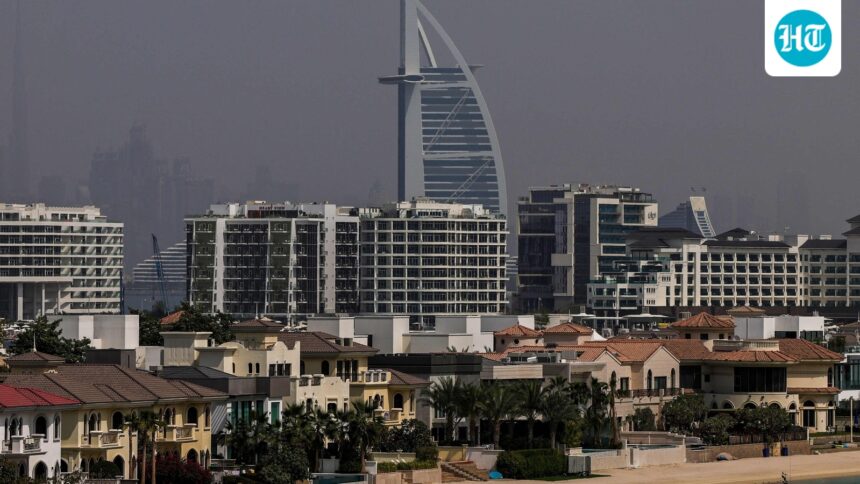
Fires broke out in Burj Al Arab and Palm Jumeirah. The strikes also hit Jebel Ali Port and Abu Dhabi port infrastructure.
“Tehran coolly and rationally chose Dubai, realizing that threatening the relationship between global capital would immediately send markets into a state of panic and force the UAE to pressure Washington for immediate restraint.” written.
Samriddhi Vij, another researcher at ORF, said: “Despite the UAE being ranked as one of Iran’s largest trading partners, interdependence has not curbed Tehran. When survival becomes paramount, economic interdependence ceases to act as a deterrent and instead becomes a pressure point open to exploitation.”
What did the Indian government say?
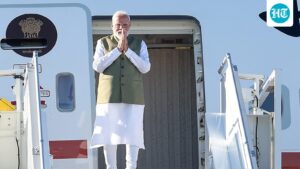
prime minister Narendra Modi has already made a phone call to UAE President Sheikh Mohammed bin Zayed Al Nahyan. Modi posted on the
External Affairs Minister S Jaishankar interacted with the foreign ministers of Saudi Arabia, Kuwait, Bahrain and Qatar and UAE Deputy Prime Minister Sheikh Abdullah bin Zayed, while also speaking to Iran’s Seyed Abbas Araqchi and Israel’s Gideon Sa’ar. The Ministry of Foreign Affairs issued an official statement in which it said that India was “deeply concerned about the recent developments in Iran and the Gulf region,” and urged “all parties to exercise restraint, avoid escalation, and prioritize the safety of civilians.”
India separately issued warnings to its nationals in Iran, Israel, Jordan, Qatar, the United Arab Emirates and the Palestinian territories to exercise extreme caution. The Ministry of Foreign Affairs said embassies are in active contact with stranded citizens across the region.
Although Indian opposition parties are urging evacuation efforts, they have criticized Modi’s policies. Congress general secretary Jairam Ramesh said Modi visited Israel on February 25-26 “at a time when the whole world was aware that the US-Israeli military attack on Iran for regime change was imminent,” describing the government’s response as “a betrayal of India’s values, principles and interests.”
The lifeline of remittances
The economic risks are high, as is the Reserve Bank of India It says the UAE accounts for about a fifth of all inward remittances, according to the latest data from 2024. This makes it the second-largest exporter globally after the United States. The GCC countries as a whole accounted for 38% of total flows to India. Total remittance revenues in India reached $119 billion in 2023-2024, and the UAE’s share reached about $23 billion.
Experts say that more than half of the remittance money received by Indian families is used to support the family, covering basic items such as food, education and health care. At the state level, Maharashtra received just over a fifth of the total remittances, followed by Kerala at just under 20%, Tamil Nadu, Telangana and Karnataka.
Biswajit Dhar, Distinguished Professor at the Social Development Council, told news agency PTI that oil prices could rise to $120-130 a barrel, inflating the import bill and fueling inflation, while remittances could be affected if the conflict continues, putting pressure on Indian households from both ends simultaneously.