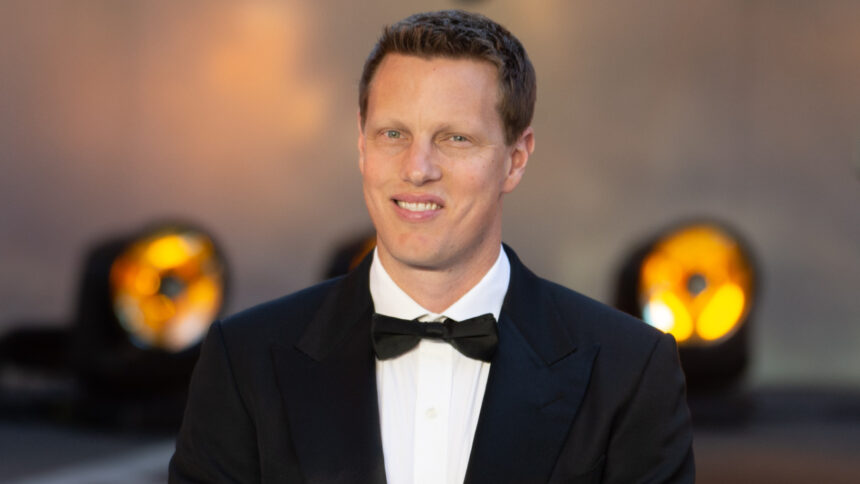
David Ellison wants to form a modern media and entertainment empire, and Warner Bros. will become it. Discovery is its centerpiece.
Paramount’s CEO spoke Monday for the first time about the massive $110 billion deal, which will see the smaller company, backed by tens of billions from his father Larry Ellison and tens of billions in debt from a consortium of lenders, swallow up the larger company.
The result will be a behemoth, with two major movie studios (Paramount and Warner Bros.), a host of TV studios, two major streaming services in HBO Max and Paramount+, and a stable of TV channels that will include CBS, TNT, CNN, MTV, Nickelodeon, HGTV and many more that will make it a formidable player in the declining but profitable pay-TV business. It will be a major sports player, bringing together the two television news giants of CNN and CBS.
Ellison explained the deal as being about the future of the entertainment sector. “By uniting our popular free-to-air streaming platforms into our global studio footprint, our cable and linear networks, and our global IP, we have the opportunity to help shape the future and build a next-generation media and entertainment company. This has been our goal since day one,” Ellison said Monday. “It’s not about consolidation, it’s about reinventing the business. We want to expand our reach and enhance our ability to create the world’s most compelling stories and experiences. We are very excited about this deal and it will accelerate this ambition.”
Hollywood has been wary of the deal (just as it was wary of the Netflix deal) because of its concern for jobs and production. Ellison sought to allay at least some of those concerns on Monday, reiterating that the company has no plans to step back from film or television production. Notable for the TV industry is his promise of continued support for HBO, telling analysts that “HBO must remain HBO” and praising Casey Bloys and his team.
“HBO is the crown jewel of the industry, bringing to life some of the most powerful stories told in generations,” Ellison said. “Under our ownership, you will continue to have the resources and autonomy to do what we do best. At the same time, we believe in licensing our content to other platforms and producing third-party content in our TV studios, and we are committed to growing our studios and the popular shows they create.”
However, Ellison confirmed that once the deal closes, the plan is to combine HBO Max and Paramount+ into one major streaming platform.
It committed to 45-day theatrical release windows before sending premium video on demand (PVOD) films, echoing commitments made by Netflix. Ellison, of course, is a fan of big theatrical films.
“Franchises and large pieces of intellectual property are being released in theaters,” Ellison said Monday. “We truly believe that films should be seen in theaters, and we continue to believe that this is one of the most important places where you can create long-term resident intellectual property.
“TV is a completely different business in that regard,” he added. “Obviously you can penetrate the zeitgeist, and have huge successes on direct-to-consumer platforms. But when it comes to the DTC business, engagement is definitely the key to success there. So you have to look at what drives engagement.”
But there will be financial implications, and it will continue to be a source of indigestion for the town. The company will have approximately $79 billion in net debt, and the company is targeting $6 billion in cost savings and 3x leverage within three years of closing, Andy Gordon, Paramount’s chief strategy officer, told analysts on the call.
That would mean a lot of job losses, though they took pains to say the majority of the savings wouldn’t come from labor, and “we have no intention of pulling back on production,” Ellison said.
While the company may be rationalizing its real estate, Ellison and Gordon emphasized that they have no plans to sell any assets (no, not even cable) to try to deleverage.
“As at Paramount, have confidence in the assets we are purchasing,” Gordon said.
And it was hard to ignore something else missing from Monday’s Wall Street call: Jeff Shell, Paramount’s president, is being investigated by an outside law firm in connection with an allegation made by a whistleblower with whom Shell allegedly shared confidential information related to the company’s UFC deal. Instead, the call was led by Ellison, Gordon, and Paramount’s CFO.