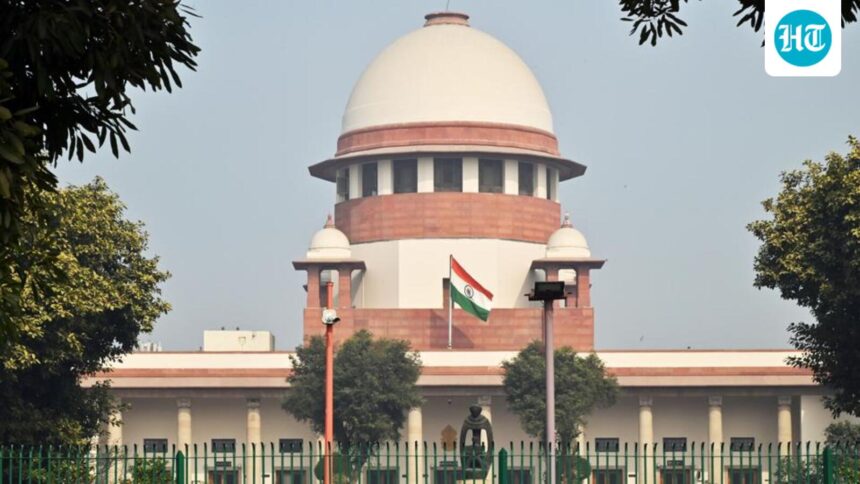
The Supreme Court on Wednesday urged the Union government to consider enacting a comprehensive law governing end-of-life care, terming the absence of a legal framework on the subject a serious legislative gap that has repeatedly forced the judiciary to intervene.

In its ruling allowing passive euthanasia of 32-year-old Harish Rana who remained in a permanent comatose state for over a decade, the court said the prolonged absence of legislation regulating end-of-life medical decisions had forced the judiciary to frame guidelines from time to time to protect the constitutional right to live and die with dignity.
Writing the judgement, Justice JP Pardiwala said that the guidelines laid down by the court in earlier judgments, in particular the Constitution Bench decision in the Common Case (2018), were never intended to be a permanent alternative to legislation.
“The long absence of comprehensive end-of-life care legislation has forced this Court, time and again, to step in to fill the void, out of constitutional necessity rather than institutional choice,” the court said. The bench, also comprising Justice KV Viswanathan, observed that while the cross-case ruling created important safeguards by recognizing the legality of passive euthanasia and advance directives, those judicially framed mechanisms were only intended to act as a temporary bridge until Parliament enacted a detailed legal framework.
“We urge the Union government to consider enacting comprehensive legislation on this subject in line with the view of the Constitution Bench in Common Cause (2018),” the court said, adding that such legislation would bring greater clarity and certainty to an area characterized by complex medical, ethical and emotional issues.
The court described the legislative intervention as an “imminent necessity” and said that nearly eight years had passed since the ruling on the joint case was issued, but the legal vacuum still persisted.
The court warned that the continued absence of legislation exposes vulnerable patients and their families to serious risks. Without a clear legal framework, decisions to continue or withdraw life-sustaining treatment may be influenced by factors unrelated to medical judgment or patient autonomy, the court said.
“In the absence of clear and comprehensive legislation, end-of-life decisions are jeopardized by the possibility that considerations entirely outside medical science or patient autonomy — most notably financial distress or lack of insurance coverage — may imperceptibly influence outcomes,” the court said.
The Council warned that such circumstances may blur the line between a true medical decision that is in the best interest of the patient and a decision motivated by the economic burden of prolonged treatment.
The Court stressed that judicial guidelines are, by their nature, limited in scope and cannot replace a detailed legislative framework that emerges through wider consultation and debate. “The legislative exercise is inherently more robust because it necessarily involves the participation of a large number of stakeholders from different fields,” the ruling stated.