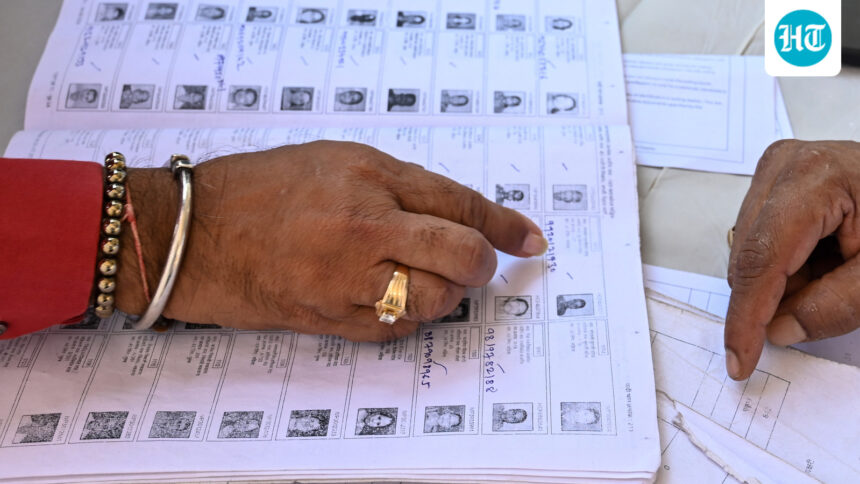
The right to vote and run for elections is not a basic right, but rather a legal entitlement The Supreme Court maintained. A bench of Justices B V Nagrathna and R Mahadevan said that these rights exist only to the extent provided by law.

“It is well established that neither the right to vote nor the right to contest elections is a fundamental right,” the court said, according to the law of life.
The court, citing previous precedents, said that while voting enables participation in the electoral process, the right to compete is a distinct and additional entitlement that can be subject to qualifications and conditions of eligibility and disqualification.
Background of the case
The issue is about Election Rules for Rajasthan Dairy Producers Cooperative Unions. These unions operate under a three-tier system established by the Rajasthan Cooperative Societies Act, 2001.
Bylaws are in place to determine eligibility rules for candidates. These included the minimum days and quantity of milk supply, the working status of the associations, and auditing standards.
Some primary co-ops challenged these rules in Rajasthan High Court, saying it was unfair and went beyond the law.
In 2015, a single judge struck down the bylaws but allowed previous elections to take place. This was upheld by the division bench in 2022.
Subsequently, the Registrar initiated the process of changing the bylaws. This led the heads of several local milk unions, who were not part of the Supreme Court case but said they were affected, to move the Supreme Court.
The Supreme Court disagrees with the Supreme Court
The Supreme Court disagreed with the Supreme Court’s reasoning, holding that the bylaws only set eligibility criteria and do not amount to disqualification or violation of constitutional principles.
He also questioned the possibility of maintaining the writ petitions. The court said that cooperative societies in general are not a “state” under Article 12 and do not normally perform public functions. As a result, disputes relating to its internal governance, especially elections, do not usually warrant intervention under Article 226.
What do the rules say about voting rights?
The right to vote and run for elections comes from the laws, not from the constitution. Laws such as the Representation of the People Acts of 1950 and 1951 determine who can vote, who can stand for election, and who can be excluded, for example, on the basis of age, nationality or criminal record.
Similar rules apply to LGUs and cooperatives under state laws and bylaws. This means that the government can set reasonable conditions for these rights, and courts typically intervene only if the rules are unfair or violate basic constitutional principles such as equality.