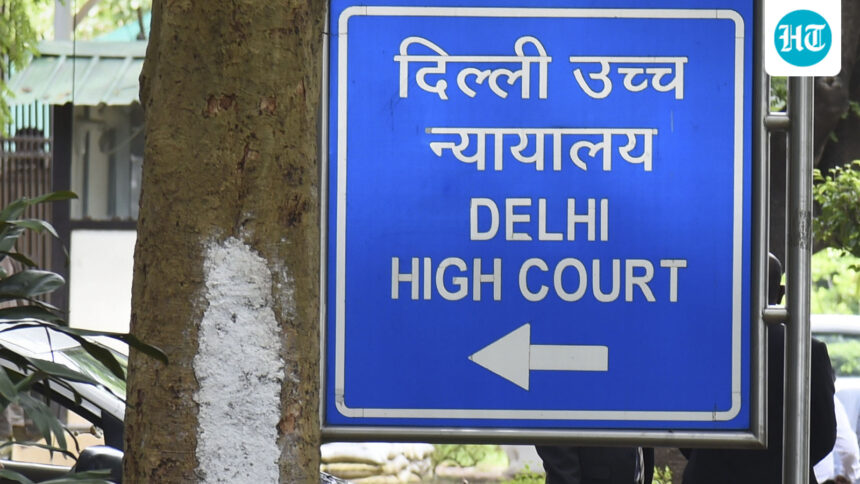
A three-year-old girl suffering from a rare genetic disorder has approached the Delhi High Court through her father, seeking immediate government financial assistance for a life-saving bone marrow transplant.

The family urged the court to direct the Union government to release the requested funds without delay, arguing that any further waiting could seriously threaten the child’s life.
Hearing the matter during the court’s June 5 recess, Justice Amit Sharma issued notice to the Union government and granted it time to seek instructions. The matter has been directed to be placed before the Holiday Board on June 8, according to news agency PTI.
What did the call say?
The petition was filed by Anuj Aggarwal and Company, Advocates, led by Advocate Ashok Agarwal, on behalf of the petitioner.
Read also | HC vacates order restraining trial court from filing charges in larger Delhi riots conspiracy case
The petition seeks directions to the Ministry of Health and Family Welfare to sanction and release the entire amount required for the child’s haploid bone marrow transplant and post-operative treatment directly to Apollo Hospital, Chennai, where the procedure has been recommended. It also seeks directions to ensure that treatment is initiated without any further delay.
According to the appeal, the child, Baby Sanskriti Bhagat popularly known as Sanchi, suffers from LRBA (lipopolysaccharide responsive beige-like anchor protein) deficiency, an extremely rare genetic disorder that severely damages the body’s immune regulatory mechanism, leaving patients vulnerable to recurrent infections and serious autoimmune complications.
The family says the diagnosis came after a long medical journey
The petition stated that the child began suffering from recurrent bouts of fever and severe anemia within months of birth and underwent multiple blood and platelet transfusions. After consultations at AIIMS Delhi, CMC Vellore and other specialized centres, whole genome testing was conducted in 2025 and confirmed the diagnosis of LRBA deficiency.
Read also | Technical reading of law cannot defeat reproductive rights: Delhi High Court
After an evaluation by specialists at Apollo Hospital, Chennai, in March 2026, doctors concluded that bone marrow transplantation was the only curative treatment available. Since an exact match could not be found, they recommended a matched transplant using the child’s father as a mismatched donor.
Treatment is estimated to cost $40 lakh
The petition states that treatment, including an organ transplant and post-operative care, is estimated to cost approx $40 lakh. While Apollo Hospital in Chennai has the specialized infrastructure and expertise to perform the procedure, the family says they have exhausted their savings on the initial diagnosis and treatment and cannot afford the cost.
The petition also relies on a prescription issued by AIIMS Delhi in April 2026, which allegedly admitted that the institution lacked the necessary facilities and resources to provide the specialized treatment needed by the child. According to the petitioner, this makes government intervention inevitable.
The family cites rare disease policy and constitutional rights
Invoking the National Rare Disease Policy 2021, the family asserts that patients suffering from rare diseases are entitled to government financial assistance. The petition indicates that financial support under this policy has been enhanced from $20 lakh for $50 lakh through Office Note 2022 issued by the Ministry of Health and Family Welfare.
According to the petitioner, motions seeking the release of the funds were submitted to the authorities on June 1, 2026, but no decision was communicated, prompting the family to resort to the Supreme Court.
The petition also argues that denial of timely financial assistance violates Articles 14 and 21 of the Constitution, emphasizing that the right to life includes access to timely and affordable medical treatment. It also confirms that if specialized treatment is not available in government hospitals, the state is constitutionally obligated to fund treatment in an appropriate private institution.
The petitioner relied on a landmark judgment of the Supreme Court recognizing the constitutional obligation of the State to provide adequate medical facilities, along with various decisions relating to financial assistance to children suffering from rare diseases.
The family stated that any further delay in treatment could lead to an irreversible deterioration in the child’s health, including the risk of multiple organ failure and a significant reduction in the chances of a successful organ transplant.
(with PTI inputs)