The BJP won a historic victory in West Bengal for the first time since independence and scored a hat-trick of victories in Assam, the Congress ousted the Left in Kerala, and an emerging Tamil cinema buff dismantled the Dravidian duopoly in Tamil Nadu in a historic parliamentary election that raised existential questions for three of India’s powerful regional rulers.

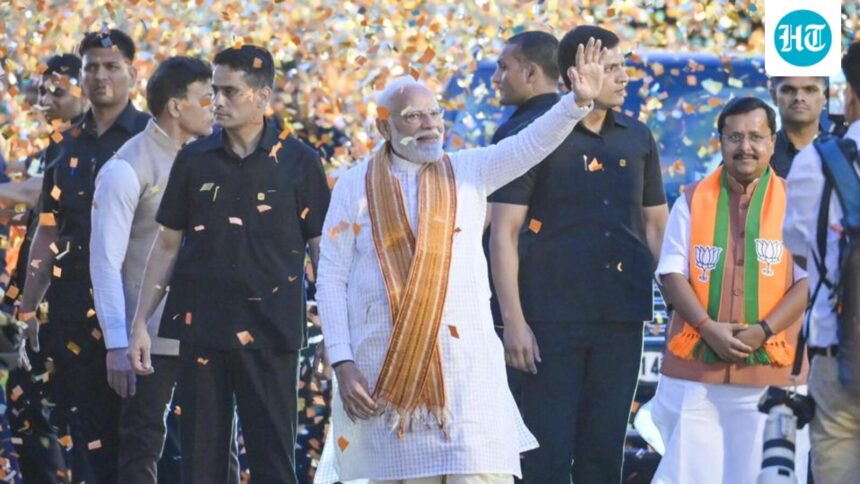
The BJP’s landslide victories – especially in a region that had never been receptive to the overtures of the political right since 1947 – helped steady Prime Minister Narendra Modi, bolster his rule and ideological agenda, and remove any doubts about his enduring national appeal and his status as India’s longest-serving politician.
“The lotus flower is blooming in West Bengal! The 2026 West Bengal Assembly elections will be remembered forever. The power of the people has prevailed and the BJP’s policy of good governance has triumphed,” he said on X.
The setbacks for Mamata Banerjee in West Bengal, MK Stalin in Tamil Nadu, and Pinarayi Vijayan in Kerala have deepened the crisis in the opposition, hurt three of India’s most vocal federalists, deprived the India bloc of the largest and second-largest states under its control, and suggest that a kind of politics that relies solely on social handouts is at an end.
These elections – which came about halfway through Modi’s third term – were an opportunity for regional parties that had achieved greater success than the Congress in disrupting the electoral juggernaut of the Bharatiya Janata Party. But three opposition prime ministers were voted out – with Banerjee and Stalin even losing their seats – in an election that turned into a referendum on regional parties seeking a second straight term in Tamil Nadu, a third straight term in Kerala, and a fourth straight term in West Bengal.
“Mamata Banerjee’s defeat was decisive. This is Mamata Banerjee’s retirement from politics,” BJP’s Suvendu Adhikari said while distributing sweets after the chief minister’s defeat from Bhabanipur. He also won from his stronghold of Nandigram.
In Bengal, Banerjee found that her coalition of women, Muslims and the rural poor collapsed when the BJP managed to achieve an unprecedented level of Hindu inclusion across castes amid fragmentation of the Muslim vote.
The TMC’s obscene rent-seeking, long considered an inevitable part of daily life in Bengal, has led to discontent in urban areas and among the middle classes that has expelled Banerjee’s party even from its former citadel in Kolkata. Among women, Banerjee’s personal popularity and her welfare construct have proven more limited than in 2021.
In an election marked by the disenfranchisement of 2.71 million voters and an unprecedented deployment of central forces, the BJP used developmental promises, social outreach and communal polarization to cross the 200-seat mark while siphoning off votes from Dalits and tribal communities.
“The BJP has looted more than 100 seats… It is an immoral victory, not a moral victory. It is loot, loot, loot. We will go backwards,” a visibly upset Banerjee said.
But the stunning reversal of fortunes in West Bengal has had to share political space with tectonic changes in Tamil Nadu, where the Tamil Nadu Vetri Kazhagam (TVK) party formed by actor-turned-politician, newcomer Joseph Vijay Chandrasekar, has clawed its way into becoming the single largest party in Tamil Nadu – an impressive debut in the southern state since Tamil talisman M G Ramachandran in 1977.
The 51-year-old actor is now within striking distance of a majority in the 234-member assembly, with his party 11 seats away at 11.30pm, with suitors aplenty.
He is set to become the first Chief Minister not of Dravidian descent since the formation of Tamil Nadu in 1967.
Unable to rein in corruption at the local level and traumatized by dynastic allegations over the promotion of his son Udhyanidhi to the post of deputy prime minister, Stalin found his coalition collapsing even in the KDP’s Chennai citadel. But his party retained second place in the state, ahead of the National Democratic Alliance, which was hurt by a lackluster campaign devoid of state leaders and no message strong enough to match Vijay’s charisma.
“In my public political life, I have witnessed great victories; I have also faced defeats. Therefore, I am a person who acts on the basis that ideals and policies are what are most important, not mere victories and defeats. Thus, the political journey of the Dravida Munnetra Kazhagam will continue without faltering,” Stalin said.
The only silver lining for the opposition was the United Democratic Front’s landslide victory in Kerala, defying some pollsters who had predicted a close contest. Through a disciplined and aggressively anti-incumbency campaign against the 10-year-old Vijayan rule, the United Democratic Front (UDF) regained votes in central Kerala that it lost in 2021, united the Christian and Muslim communities behind it, and secured a significant chunk of the Hindu vote in the southern part of the state. Due to growing ambitions, domestic dissatisfaction and fluctuations on ideological issues, the left now finds itself out of power in the only country it rules. It is now without a government in any country for the first time in more than half a century.
The BJP also impressed with its victory in Assam under the leadership of Prime Minister Himanta Biswa Sarma, who mounted a sharp campaign based on his grants, infrastructure development and anti-migrant policies. The party-led coalition exceeded 100 seats in the 126-member assembly for the first time in history.