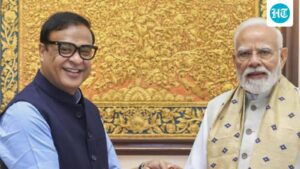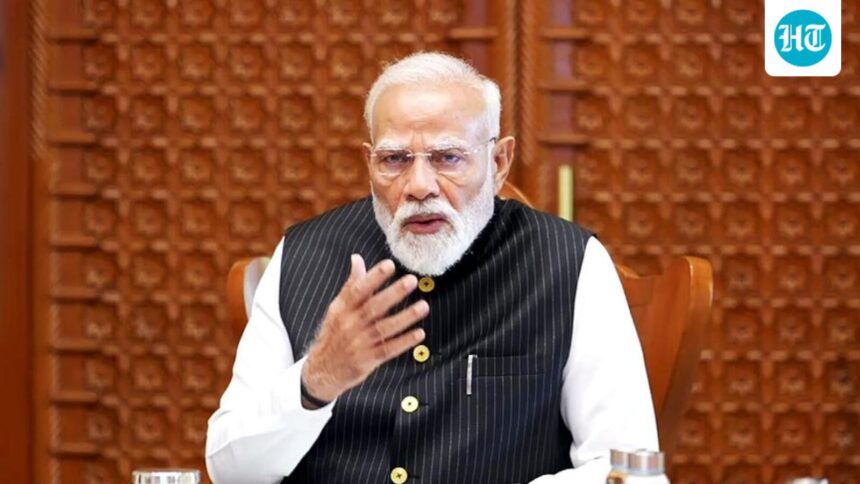
Prime Minister Narendra Modi and Sri Lankan President Anura Kumara Dissanayake on Tuesday discussed the implications of the conflict in West Asia, especially its impact on energy security, and ways to enhance bilateral energy cooperation.

Sri Lanka is among India’s neighbors who have reached out to New Delhi in recent days to obtain additional fuel supplies to overcome the impact of disruptions resulting from the closure of the Strait of Hormuz due to the conflict in West Asia.
Modi said on social media that he and Dissanayake discussed the evolving situation in West Asia “with special emphasis on the disruptions affecting global energy security.”
Modi said the two leaders “reviewed the progress made on key initiatives aimed at strengthening India-Sri Lanka cooperation in the field of energy and enhancing regional security.” He added: “As close and trusted partners, we reaffirmed our commitment to working closely together in confronting common challenges.”
The conversation focused on “the escalating situation in the Middle East” and “its impact on regional and global supply chains, as well as energy and regional security cooperation between our two countries,” Dissanayake said in a social media post.
The Sri Lankan government has carefully watched the economic fallout from the conflict in West Asia as the island nation focuses on rebuilding its economy after one of the worst balance of payments crises in decades. The country’s security was also affected by the sinking of an Iranian warship by a US submarine near the coast of Sri Lanka, marking a significant expansion of the conflict beyond West Asia.