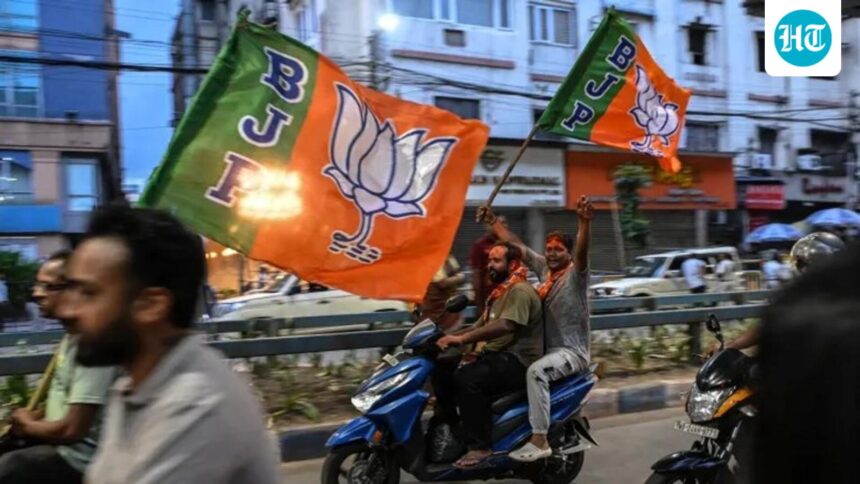
West Bengal will form its first BJP government on Saturday. For the BJP and its larger ideological milieu, this is a long-awaited achievement. Although the Bharatiya Janata Party – formed only in 1980 – and even its ideological predecessor, the Bharatiya Jana Sangh (BJS), never achieved political significance, let alone dominance, in West Bengal until the 2019 Lok Sabha elections – or, to be precise, the 2018 local body polls in the state – political Hindutva had a strong lineage in pre-independence Bengal.

Syama Prasad Mukherjee is one of the founding fathers of the Bharatiya Janata Party. He started his politics from the Congress, joined the Hindu Mahasabha, and then became the founding president of the BJP, a position he held until his death as a detainee in Kashmir in 1953. The BJP has not had a political leader of Mukherjee’s stature in West Bengal after his death.
As the BJP celebrates its victory over what it considers the political intellectual homeland of one of its founding fathers, it is worth looking at the party’s trajectory in the state from its first election in 1982 to the last election that cemented its position as the dominant political force in eastern India’s largest state. It is a story of initial failure, realpolitik experiments, lucky luck due to the political vacuum created by the collapse of the country’s communists, and then a pitched, nearly decade-long political battle before victory on May 4, 2026.
Even the communists were wrong.
When the TMC reinstated itself – thanks to the communists’ corruption of land acquisition from restive peasants, they themselves had caused wider Muslim radicalization and discontent against the communists thanks to the Left government’s policy failures as highlighted by the Sachar Commission report and administrative lapses over events such as the death of a young Muslim boy, Rizwan Rahman, who had an interfaith relationship with the daughter of a Hindu businessman – the TMC did not want to be seen as engaging with the BJP to protect its Muslims. Support. The latter was decisive in expelling the Communists.
In the 2009 Lok Sabha elections and 2011 Lok Sabha elections in the state, the BJP saw from the margins weakening the communists in the state. In the 2014 Lok Sabha elections, in what was a four-way contest between the TMC, the Communists, the Congress and the BJP in the state, the party tied with the CPI(Maoist) by winning two Lok Sabha seats in West Bengal, a first on its own. While the BJP faced a coup of sorts in the 2016 Assembly elections, the Communists dug themselves deeper into the political ideological hole they were in. The Communist Party of India (Maoist) allied itself with the Congress Party in the elections, and ended up behind the latter, thus losing the status of the main opposition party five years after it lost power in the state after 34 years.
The rank and file of the Communist Party of Iran (Maoist) has put up a bigger fight than its confused and misguided leadership. The TMC increased its attacks on them in the run-up to the 2018 panchayat elections in the state. In one of the most violent and contentious elections in the state’s history, in which the ruling TMC won nearly a third of the seats unopposed, the BJP emerged as the second-ranking party in rural West Bengal, known to hold the keys to state power.
In the 2019 Lok Sabha elections held just about a year after the 2018 panchayat elections, the BJP surprised not only the TMC but every political analyst by winning 18 of the 42 Lok Sabha seats of West Bengal by reaching a vote share of 40%. She was now on the cusp of victory in the state and ready for the next phase of the battle.
…and the BJP has completed its transformation from rebel to ruler
The 2021 Assembly elections taught the BJP that the last mile of the Bengal Marathon was nothing but a walk in the park. It saw its vote share fall by just about two percentage points from 2019, but suffered a massive drop in seat share — from 43% in 2019 to just 26% in 2021 — in keeping with the harsh dynamics of India’s first-past-the-post system. 2024 would bring back that pain for the BJP, as vote share and seat shares would be on par with 2021 instead of 2019.
So, what did the BJP achieve in 2026 that it could not achieve in 2021 and 2024? Answering this question requires going back in time to compare the BJP’s performance in the West Bengal Assembly elections before and after 2014. Hizb ut-Tahrir compared BJP’s vote share by type of Assembly constituency (AC) in West Bengal – There are 210 unreserved ECs, 68 Scheduled Caste (SC) Reserved ECs, and 16 Scheduled Tribe (ST) Reserved ECs in the total 294 Assembly ECs. The reserved population centers of SC and ST correspond to the population share of these two communities and are therefore a good proxy for party support among them.
While the BJP has historically had an advantage in the reserved panchayats and SCs in terms of vote share in West Bengal, it has added to this advantage in the post-2014 period and generated tailwinds from these state assemblies to offset headwinds from some Muslim-dominated autonomous assemblies where its chances of success were very difficult. Even in the 2021 Assembly elections, the BJP’s strike rate was only 18.2% in unreserved SCs but 47% and 43.8% in reserved SCs. In the 2026 elections, the BJP’s strike rate in unreserved ACs, reserved SCs and STs has risen to 66.7%, 75% and 100%. (Chart 2)
Who harmed the BJP between 2021 and 2026 to seize power? A district-level comparison between the BJP and the TMC and the vote share of everyone else – the alliances with the Left and the Congress’s ways of secession have changed – is useful to understand. (Chart 3)
If the districts are ranked in descending order by Muslim population – an important variable for political support for the BJP across West Bengal – then both the BJP and others won at the expense of the TMC in the top four districts by Muslim population in West Bengal. This suggests that the TMC may be suffering a double whammy: Muslims are leaving it for parties other than the BJP, and Hindus are uniting behind the BJP.
In every other district of the state except Darjeeling – here the TMC did not field candidates in 2021 and supported independents but did so in 2026, making vote share comparisons irrelevant – the BJP made gains at the expense of both the TMC and non-BJP players outside the TMC. This is perhaps a manifestation of the opposition of a large number of Hindu voters to incumbency in an election where the main opposition party was seen as capable of displacing the opponent as well as the greater ideological pull of BJP politics. That the BJP received a vote share that was highest in Kolkata, the seat of not only political power but also economic and cultural prowess in the state, underscores the rising ideological appeal of the BJP in the 2026 elections.
What’s next for the BJP in West Bengal? Will things go the way of Assam, where the BJP has turned the opposition into a majority party of the… Muslims? Or now that the TMC’s oppressive grip on power in the state has ended, will the non-TCM opposition reinstate itself and be able to mount a renewed political challenge to the BJP that is now in power? And last but not least, can the BJP govern and hold West Bengal without adopting the stifling tools of party society that have been the bane of power there for more than five decades?
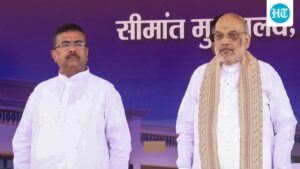
When Suvendu Adhikari, once one of Mamata Banerjee’s most trusted and capable aides, is sworn in as the first BJP chief minister of West Bengal at the historic parade ground on Saturday, the state will witness the beginning of one of the most important chapters in its history. It is foolish to deny history when it changes, and it is arrogant to believe that events, no matter their magnitude, are the end of history.