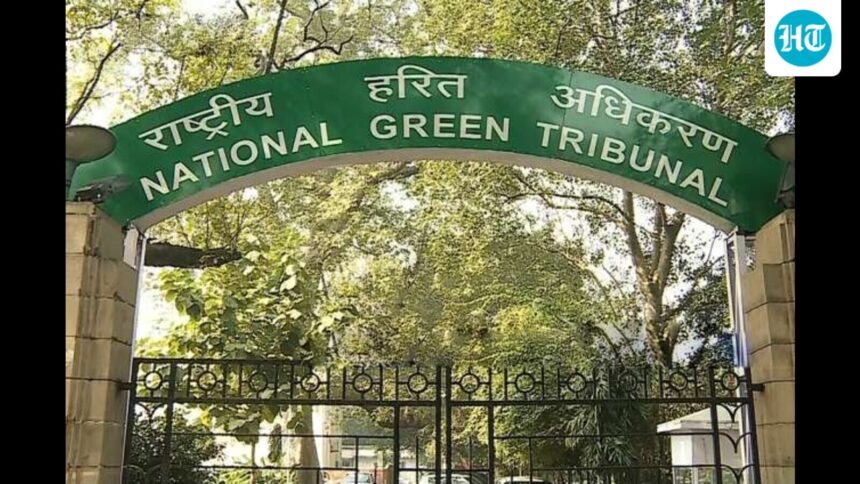
The National Green Tribunal (NGT) has ordered the Odisha government to permanently shut down contaminated wells in the chromite-rich Sukinda Valley, after it was discovered that cancer-causing hexavalent chromium had contaminated groundwater in the area.
The Eastern District bench of the NGT passed a decision on July 10 after a comprehensive study by the Central Ground Water Board revealed alarming levels of cancer-causing hexavalent chromium in the region’s deep aquifers, even though the court expressly ruled out a direct link between industrial pollution and a series of highly publicized kidney-related deaths in the region.
The NGT initiated suo motu action after a letter from Mantu Das, a resident of Odisha’s Jajpur district, alleging that unchecked chromite mining in the Kalyapani industrial area had severely polluted local water sources.
Das claimed that this unchecked toxic pollution has caused an urgent public health crisis, resulting in 10 to 15 people dying from kidney-related diseases within a month.
Sukinda Valley in Jajpur district contains approximately 97% of India’s chromite reserves and supplies 100% of the country’s domestic chromite ore production. With an area of about 40 square kilometres, it is the backbone of the country’s ferroalloy and stainless steel industries.
In his petition, Das named specific victims, including a 42-year-old man and an 88-year-old woman, and urged the court to implement immediate mitigation measures.
Read also:More than half of the water bodies in Noida are no longer recoverable, the NGT said
Although the NGT bench, comprising judicial member Justice Arun Kumar Tyagi and expert member Ishwar Singh, rejected the direct link between local deaths and chromium toxicity, it took serious note of the underlying water crisis in the 180 sq km valley and ordered the Central Ground Water Board (CGWB) to conduct an extensive hydrogeological study.
The CGWB team, which collected 233 water samples across multiple seasons, found that while the shallow, unconfined aquifers (up to 30 meters below ground level) were found to be completely free of hexavalent chromium contamination, the deep, semi-confined aquifers, which are intensively tapped by regional hand pumps, were largely contaminated.
During the pre-monsoon period, 37 out of 183 samples recorded concentrations of hexavalent chromium exceeding the Bureau of Indian Standards (BIS) permissible limit of 0.05 mg/L for drinking water.
The CGWB concluded that this contamination is primarily driven by natural oxidative mobilization of chromium from the abundant chromite-bearing beds in the area, and not solely from industrial discharge.
Hexavalent chromium, or Cr(VI), is classified as a Group I human carcinogen by the International Agency for Research on Cancer, and excessive intake can lead to liver and kidney damage, internal bleeding, and respiratory disorders.
Although direct claims of deaths were rejected, the court took serious note of the underlying water crisis in the Sukinda Valley. Following the guidance of the NGT, CGWB conducted a large-scale hydrogeological study, collecting 233 water samples across multiple seasons. The results painted a complex picture of groundwater pollution.
Although the CGWB investigation exonerated the mining companies regarding wastewater management, the Damsala Nala, the main drainage canal crossing the valley, showed high levels of chromium.
It naturally receives stratified water and runoff from overburdened landfills, making it completely unfit for consumption, officials said.
To mitigate the public health risks, the NGT administration has issued strict directions to Jajpur district officials to conduct routine inspection and permanently seal any contaminated water bodies and wells.
The NGT also ordered installation of arsenic removal plants in affected villages and formation of joint inspection teams between Odisha State Pollution Control Board and CGWB to ensure strict and continuous water quality management.