Power, in theory, is intended to remain in institutions. In democracies, this task is entrusted to constitutions, ministries, parliaments, and elected leaders. But history shows us time and again that between the president and the people there is often another force: the clique. Invisible in formal schemes of power, unaccountable to public scrutiny, and operating through proximity rather than legitimacy, cliques become the shadow government of regimes. In fact, there are times when the leader himself seems less important than those around him.

The reason is simple. Information is power. Access is power. Interpretation is power. The individual who controls who meets with the ruler, what files reach him, and which voices are loudest and which are silenced, gains enormous influence. Such people do not need constitutional authority. Their power derives from intimacy. They have become gatekeepers to power.
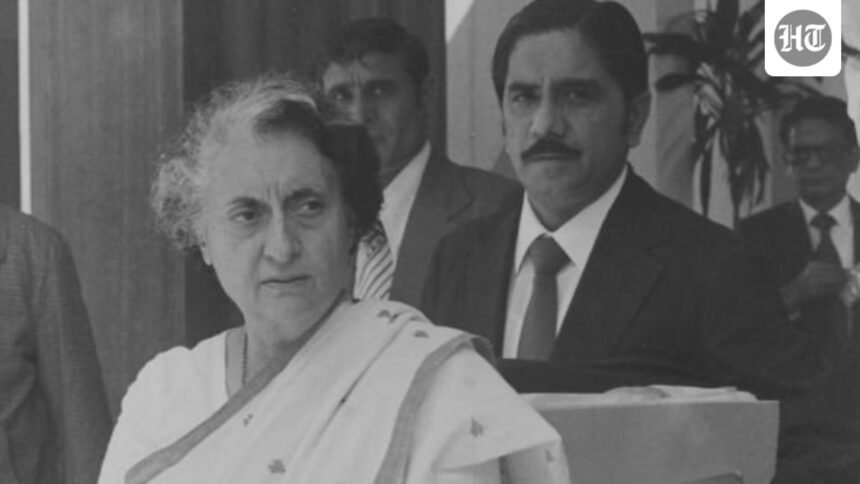
In India, one of the most famous examples was RK Dhawan, Prime Minister Indira Gandhi’s long-serving private secretary. Over time, Dhawan became more than just an effective assistant. He knew the psychology of his boss. Once, Srikant Verma, a well-known poet and a senior leader of the Congress party, told me an interesting story. Verma was editor of the Congress’s flagship bulletin. He needed to get the Prime Minister’s approval for an urgent editorial. Dhawan told him that he would get it done, provided Srikant remained completely silent during the meeting. He himself would deliberately—and indiscriminately—raise a doubt or a question about a sentence or a paragraph; He knew that Indira Gandhi would ignore his objections, and the editorial would be approved within five minutes. This is exactly what happened.
More recently, a striking example of this was the power wielded by Pandian, an ICS officer, who was principal secretary to former Prime Minister Naveen Patnaik. His critics claim that he was, in many ways, the de facto prime minister. Our history is full of such examples.
The greatest power of a clique is ensuring that the leader hears only what he wants to hear. One of our elderly Prime Ministers used to hear better with one ear. The coterie – unlike the others – realized this, ensuring that only their whispered advice always hit the mark. Slowly, the leader begins to live in an artificial reality created by those around him. Outsiders are portrayed as enemies, critics as conspirators, and independent minds as a threat. Leaders, especially strong leaders, gradually lose touch with unfiltered opinions. Human nature conspires in this process. Most rulers prefer reassurance to contradiction. The courtiers learn this quickly. The result is an echo chamber where inconvenient truths are excluded. As time passes, the ruler stops hearing the nation and only hears the clique.
The court of the last Russian Tsar provides a clear example of this. Grigori Rasputin, an itinerant mystic of questionable credentials, gained extraordinary influence over Tsarina Alexandra because of his apparent ability to alleviate the suffering of her hemophiliac son. As Tsar Nicholas II’s power weakened, Rasputin’s influence grew. The decline of institutions hastened the collapse of the system itself.
Adolf Hitler cultivated rival circles around him. Figures like Martin Bormann became extraordinarily powerful because they controlled access to Hitler. Bormann mastered the bureaucratic machinery of the Nazi state and made sure that information reaching Hitler was carefully filtered. Historians have noted that many officials often found it almost impossible to approach Hitler directly without passing through Bormann’s network. In effect, Bormann became the guardian of the Führer’s political world.
Likewise, not only Joseph Goebbels shaped public opinion but also Hitler’s perception of public opinion. Totalitarian regimes thrive on isolation. Once the ruler becomes trapped between classes of loyal intermediaries, illusion takes the place of reality. Hitler continued to believe in victory long after Germany’s defeat had become inevitable.
Modern democracies are not immune. Donald Trump’s presidency has repeatedly demonstrated the enormous influence of advisers, family members such as his son-in-law Jared Kushner, and ideological loyalists. Trump’s governing style, which is intensely personal, instinctive, and distrustful of institutional constraints, has naturally heightened the importance of the inner circle. Officials deemed insufficiently loyal were dismissed; Those who reinforced his worldview flourished.
This phenomenon is not limited to politics. Corporate empires, monarchies, revolutionary movements and even spiritual organizations give birth to cliques. This pattern is almost universal because power attracts middlemen, and middlemen seek continuity by tightening their grip around the source of power.
It is unfortunate that the state suffers when these leaders in the first ranks work only to preserve themselves and their interests. Tulsidas summarized this fact best:
Sachiv peda guru teni john priya bulahain bhai as
Raja dharma tana tini kara hoi bijahin nasa
If the counselor, teacher and doctor
Do not speak sweet words except out of necessity or fear
Then the state, dharma and physical health
It will disappear soon.
(Pavan K Varma is an author, diplomat and former Member of Parliament (Rajya Sabha). Views expressed are personal)