New Delhi: As first reports emerged of a comfortable victory by the Bangladesh Nationalist Party in Friday’s general election, Prime Minister Narendra Modi began an outreach in Dhaka to rebuild bilateral ties by telling BNP chief Tariq Rahman that India is ready to strengthen ties and work for regional peace and progress.
Prime Minister Modi is among the first world leaders to congratulate Tariq Rahman.The Indian side is now faced with the task of restoring bilateral ties, which fell to their lowest level in more than a decade under the Muhammad Yunus-led caretaker administration, by working with the BNP, whose past periods in power have been characterized by uneasy relations with New Delhi.
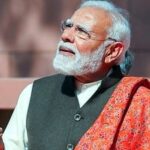
Modi was among the first world leaders to congratulate Rahman as unofficial results showed the BNP ahead in the election, the first since student-led protests toppled former Prime Minister Sheikh Hasina’s government in August 2024, and followed it up by calling Prime Minister Rahman, who is set to become Bangladesh’s next prime minister.
Also read: India will continue to support democratic Bangladesh: PM Narendra Modi
Modi said on social media, “Delighted to speak with Mr. Tariq Rahman. I congratulate him for his remarkable victory in the Bangladesh elections.” “As two close neighbors with deep-rooted historical and cultural ties, I reiterate India’s continued commitment to the peace, progress and prosperity of both our peoples.”
More Read

Modi said he supported Rahman’s “efforts to fulfill the aspirations of the people of Bangladesh”. In an earlier post congratulating Rahman, Modi said the BNP’s “decisive victory” reflected the confidence of the Bangladeshi people in the BNP chief’s leadership.
He said, India will stand in support of a democratic, progressive and inclusive Bangladesh. “I look forward to working with you to strengthen our multilateral relationship and advance our common development goals.”
Indian and Bangladeshi officials often describe former prime minister Sheikh Hasina’s 15-year tenure as a “golden chapter” in bilateral relations, and the proximity of the Awami League’s rule led to accusations from other political forces in Dhaka that New Delhi was putting all its eggs in one basket. However, both sides were able to implement a broad agenda for economic, energy and physical connectivity, and the Awami League government played an important role in addressing India’s security concerns related to the strategic northeastern states.
More Read
People familiar with the matter said the Indian side’s focus will now be on rebuilding bilateral ties and consolidating engagement with political stakeholders in Bangladesh that has been going on for nearly 18 months. New Delhi has taken several steps to signal its readiness to work with the BNP, including Modi’s offer to help with the treatment of Rahman’s late mother, former prime minister Khaleda Zia, and sending Foreign Minister S Jaishankar to represent India at her funeral last December.
Jaishankar met Rahman during the visit and conveyed a message from Modi, reiterating that the BNP should have “no inhibitions” about India’s desire to build better ties and that it should not look to the past, people familiar with the talks said.
However, the Indian side will have to navigate the complex issue of Hasina’s presence in the country – she has lived in self-exile in the capital since fleeing Dhaka in 2024 – especially since the BNP has made it clear that it wants to reiterate the interim government’s demand for her extradition. BNP Standing Committee member Salahuddin Ahmed told reporters in Dhaka on Friday that the party would formally appeal to India to extradite Hasina for trial in Bangladesh. Last November, Bangladesh’s International Criminal Tribunal sentenced Hasina to death in absentia for her role in suppressing protests in July-August 2024.
“We will press for his extradition as per the law. It is a matter between the Ministry of External Affairs of Bangladesh and the Ministry of External Affairs of India. We will request the Indian government to bring him to justice,” Ahmed said.
The Indian side has also been wary of the electoral gains of the 11-party alliance led by Jamaat-e-Islami, which has pursued an agenda that marginalizes the role of women and has been associated with radical elements linked to militancy in northeast India in the past. The Jamaat-led coalition is poised to win more than 75 seats in the 300-strong parliament, marking a significant turnaround for a party that was once banned by Hasina and whose leaders were convicted by the International Criminal Tribunal for crimes committed during Bangladesh’s 1971 war of independence.
Jamaat’s strong showing in many constituencies bordering the Indian states of West Bengal and Assam, both up for election this year Ne is about to go, causing concern for India, the people said.
More Read

Other issues closely watched by the Indian side include the BNP leadership’s push to revive the South Asian Association for Regional Cooperation (SAARC) – started by Rahman’s father, the late former president Ziaur Rahman – and the implementation of a “yes” vote in the referendum on constitutional amendments, including a two-term limit in parliament and increased representation of women.
SAARC has been largely dormant since India pulled out of a planned summit in Pakistan in November 2016 following a terrorist attack on an Indian army camp in Uri. The Indian side has pushed for regional cooperation under other groupings such as BIMSTEC, a message reiterated during Jaishankar’s recent meeting with Rahman, the people said.