Logo text
Documentary maker Marina Zenović has carved out a niche as a filmmaker gifted with drawing on celebrities and challenging their established public images — not necessarily in a rebellious way, but in a way that says: “This is the story you think you know with enough complex information to force you to ponder, if not reconsider.”
It can be frustrating if you’re not convinced that revisiting is worth the effort – see The Four Hours in 2000 bayonetabout Lance Armstrong — but from Roman Polanski to the Duke Lacrosse scandal to her recent CNN doc about Chevy Chase, Zenovich has created a brand.
The truth and tragedy of Moriah Wilson
Bottom line Sad and poignant, but not too deep.
place: SXSW Film Festival (Documentary Spotlight)
Broadcast date: Friday, April 3 (Netflix)
exit: Marina Zenovich
1 hour and 37 minutes
Watch Zenovich The truth and tragedy of Moriah Wilsonwhich premiered at SXSW ahead of Netflix’s April launch, it becomes inescapably clear that Zenovich is far less effective when it comes to finding similar depth in a story people may not know about.
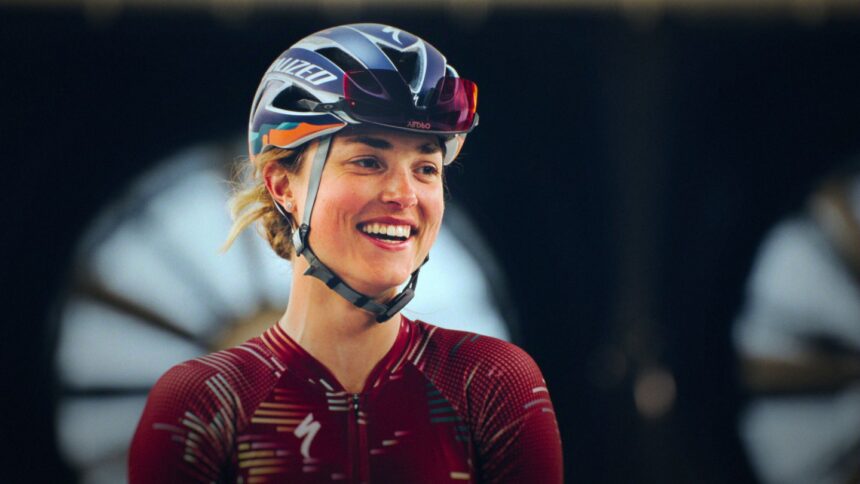
With a million-dollar smile and an increasingly impressive pile of cycling accolades, Moriah Wilson looked like she was on the verge of becoming a national celebrity when she was killed in 2022 in Austin, Texas. The story made headlines for its dramatic, deadly love triangle, but when Lifetime magazine turned it into a spin-off TV movie in 2024, the title became – The Yoga Teacher Killer: The Kaitlyn Armstrong Story – Focus on the convicted killer, not the victim.
Kudos to Zenovich, then, for using it The truth and tragedy of Moriah Wilson To reaffirm Wilson’s presence at the center of the story. But the documentary is an unsavory mix of overly serious hagiography and frivolous true-crime sensationalism, without being entirely satisfying either.
Zenovich’s portrait of Wilson is affectionate but superficial, and although the murder investigation and trial have some meandering and meandering, the whole thing is less brutal than fans of the genre might hope. Even if that’s the goal of a documentary — to strip away the sensationalism and reveal that the “truth” is so basic — the two flocks rarely get along successfully.
Working with the active participation of Wilson’s family — father Eric, mother Karen, and brother Matt, all on camera and clearly providing plenty of documentation — and an assortment of friends, including Kaitlyn Cash, whose Austin apartment was the site of the tragedy, Zenovich offers a snapshot of Wilson’s growth from adorable kid jabbering on home video to aspiring skateboarder to burgeoning cycling juggernaut.
Now you probably know more than I do about gravel cycling and other cycling disciplines, but I don’t think the doc does a very good job of explaining what Wilson actually competed in, its scope and dimensions or what made her particularly skilled beyond her dedication and perseverance. I know it has traveled long distances and sometimes won races by large margins, but it seems only partially useful.
Even people who knew her well speak of her in sanctimonious platitudes rather than detail, and the use of narrated portions of her diary to give additional insight mostly proves that she was a young woman with big dreams. I was glad, at least, that Zenovich enlisted the help of an actress, Olivia Sinnott, to read excerpts from the memoir rather than succumb to the recent documentary film convention and her voice being recreated by artificial intelligence. I wasn’t happy with the segment where Eric reads from his daughter’s diary, which isn’t exactly creepy but definitely feels intrusive.
Aspects of the murder’s backstory — Wilson had romantic feelings for cyclist Colin Strickland, who was living with his girlfriend Caitlin Armstrong — are spotty. If Zenovich doesn’t want things to appear this way, she needs to guide her subjects more subtly. Cycling journalist Ian Dale seems particularly reckless in his take on the relationship between Strickland and Armstrong, smiling and laughing while discussing the situation that ended in murder. It’s a tone that fits terribly with the sobriety of the rest of the documentary, and one that could have easily been avoided in editing.
When the documentary turns to the crime and its investigation, Zenovich has several cops and lawyers giving dry accounts of how things narrowed down to Armstrong as a suspect and her subsequent attempts to flee justice. Again, this tone doesn’t mesh well with memories of grieving family members and the like.
The conclusion everyone comes to is that it’s impossible to know or understand what went through Armstrong’s mind and what role Strickland played in any of this, and if so, it’s unclear what the documentary thinks it’s achieving. Even one or two people who knew Strickland and Armstrong had no idea about their relationship. It eventually emerged that Zenovich was able to reach Strickland for one conversation in which he appeared exhausted, but said nothing of substance.
The moment of nothingness with Strickland shows how he has been permanently changed by this situation, which fits with the closing passages that focus on the long-term impact on the Wilson family and perhaps more powerfully, on Cash, who still lives in the same apartment. But if half the documentary is a true recap of a true crime, and one of the only living souls with unrevealed information shows up and says nothing, then that’s a wet blanket over everything.
The truth and tragedy of Moriah Wilson It depicts a sad story and its aftermath, but I’m not sure I came away with any real understanding of its heroine or her tragic death. Sometimes a tragic death is truly incomprehensible. But he looks so smooth and tidy in this movie.