

Trump’s new budget proposal
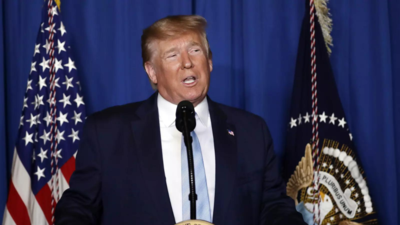
United States President Donald Trump unveiled his discretionary budget request for fiscal year 2027, outlining a change in federal spending priorities toward defense and security while proposing cuts to education, research and domestic programs.The $2.2 trillion proposal includes $1.5 trillion in military spending. This represents an increase of $445 billion, more than 40% above current defense spending levels. This proposal comes at a time when the United States is engaged in a conflict with Iran, the cost of which is estimated at more than a billion dollars per day.To offset part of the increase in defense spending, the administration proposed $73 billion in cuts to domestic programs.
This represents a 10 percent cut affecting federal agencies associated with research and education.The budget proposal, although non-binding, serves as an outline of administration policy. Congress retains the authority to make final spending decisions.Budget documents describe many domestic programs as “woke,” “wasteful” and “ineffective,” and state that the administration is committed to eliminating what it calls “the gun rot in our federal government once and for all.”
Cuts in research funding
The proposal outlines cuts across major research institutions.Funding for the National Institutes of Health would be reduced by $5 billion. The plan includes eliminating multiple institutes and centers, including the National Institute on Minority Health and Health Disparities, the Fogarty International Center, and the National Center for Complementary and Integrative Health.“NIH has broken the trust of the American people with wasteful spending, misinformation, risky research, and the promotion of dangerous ideologies that undermine public health,” the administration states.The National Science Foundation will face a 55% budget cut, reducing funding from $8.8 billion to $4 billion. The proposal also calls for ending funding for the Department of Social, Behavioral and Economic Sciences.Other agencies facing cuts include:
- Reducing the value of advanced research projects in the field of health from $1.5 billion to $945 million
- United States Geological Survey Ecosystem Mission Area, proposed for disposition
- National Endowment for the Humanities, recommended for abolition
- The National Oceanic and Atmospheric Administration is set to lose $1.6 billion in grants for education and climate research
- The National Aeronautics and Space Administration faces a $5.6 billion cut
- The EPA has proposed a cut of more than $6 billion
Proposed changes to education funding
The budget sets a 2.9 percent cut for the U.S. Department of Education and puts it on what the administration calls a “path to elimination.”A total of $8.5 billion in K-12 funding will be reduced or consolidated into block grants. It will be distributed to states under the $2 billion “Make Education Great Again” program, allowing states more control over spending decisions.For higher education, the total proposed cuts are $2.7 billion. These include:
- $354 million cut for minority-serving institutions
- $136 million reduction to the Postsecondary Education Improvement Fund
- Eliminates $81 million for international education and foreign languages
- A reduction of more than $500 million to the Institute of Educational Sciences
- Defund TRIO programs, gain early awareness and readiness for undergraduate programs and graduate assistance in areas of national need
The proposal also reduces federal contributions to the federal work-study program by about 90 percent, requiring employers to cover a larger share of students’ wages.One area of increase is the Pell Grant program. The proposal includes a $10.5 billion increase, bringing total funding to $33 billion and setting the maximum award at $7,395 for the 2027-2028 school year.
Political and institutional reactions
Reactions to the proposal were divided.Senator Lindsey Graham, Chairman of the Senate Budget Committee, described the proposal as “truly historic,” noting that it is “more than justified because of the threats we face around the world.”Senate Minority Leader Chuck Schumer said Democrats “will make sure it never passes.”Senator Patty Murray, Vice Chair of the Senate Appropriations Committee, said, “The vision that President Trump set for America in his budget is bleak and unacceptable,” adding that “President Trump wants to cut medical research to fund costly foreign wars.”The Association of American Universities urged Congress to “reject these short-sighted cuts and increase investments in America’s scientific enterprise.” Forbes Reports.
Concerns about the deficit and its long-term impact
The proposal is expected to increase the federal deficit beyond the $1.9 trillion projected for fiscal year 2026, adding to the national debt, which currently exceeds $39 trillion.The Center on Budget and Policy Priorities criticized the proposal, saying it uses “unreasonable assumptions to make its numbers look better than they might be” and “does not provide a road map for seizing the opportunities or addressing the challenges we face.”The Cato Institute also raised concerns, noting that “the presidential budget is supposed to be the administration’s opportunity to explain to the American people how it will get our budget back on track,” adding that the proposal “does not include a comprehensive ten-year financial plan.”The budget proposal sets out the administration’s priorities but requires approval from Congress, which is responsible for federal spending decisions. Previous proposals of a similar scope have met with resistance.The outcome will depend on negotiations in the coming months. Meanwhile, the proposal offers an early indication of how federal funding for education, research and social programs will change in the coming years.