“Hide your strength and bide your time,” China’s transformational Premier Deng Xiaoping once advised. He was referring to keeping external factors at bay, focusing instead on internal development, urging patience, strategic restraint and the quiet accumulation of national power.
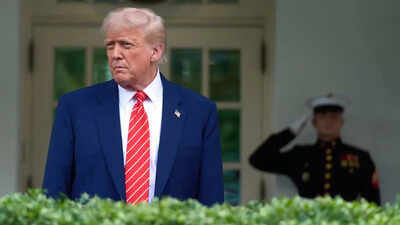
In China under Xi Jinping, the accumulation of power and control over institutions has become unprecedented. Interestingly, Xi Jinping appears to have found a partner, as thousands of miles away in the United States, Beijing’s biggest rival, there appears to be an uncanny similarity between one action he and US President Donald Trump have taken – military purges. The sweeping changes in the ranks of the US military under Trump have raised eyebrows about whether the administration is undertaking a structural reform, or something closer to a purge. Since returning to power, the Trump administration has overseen the exit or dismissal of at least 13 senior military commanders, a development that comes as the United States remains engaged in a widening conflict in the Middle East. The scale and pace of changes have raised concerns about their impact on institutional continuity and operational decision-making. These developments draw striking parallels with Xi Jinping, under whom China has witnessed repeated purges within the military and political establishment aimed at consolidating control.
While the contexts differ, both cases involve leadership reshaping key institutions amid broader strategic shifts. The recent dismissals, including those of Army Chief of Staff General Randy George and General David Howden, have reportedly caught sections of the military by surprise, raising concern within defense circles about the direction of the reforms.
Expanded list of exits
Among the most notable departures is Gen. Randy George, the Army’s top officer, who was asked to retire before completing his four-year term. A defense official told Axios that the move came despite his extensive operational experience, including roles in Desert Shield, Desert Storm, Iraqi Freedom, and Enduring Freedom.Two US officials, citing the outlet, said personal differences contributed to his exit.Gen. David Howden, who led the Army’s Transformation and Training Command, and Maj. Gen. William Green Jr., the head of the Army’s chaplain corps, were also removed from their posts, defense officials said.The tremor extended through the branches. Navy Adm. Alvin Hulsey resigned amid tensions with Defense Secretary Pete Hegseth, while Air Force Lt. Gen. Jeffrey Cross was ousted after heading the Defense Intelligence Agency during a politically sensitive period that included intelligence assessments on Iran.The naval high command also witnessed turmoil. The Pentagon said Vice Admiral Shoshana Chatfield was removed due to a “loss of confidence in her ability to lead,” while Admiral Lisa Franchitti, the first woman to serve as chief of naval operations, and Deputy Commander of the Air Forces General James Slive were among those whose exits were announced earlier.
Recalibrate leadership or enhance control?
The administration framed the changes as part of an effort to “simplify” military command. However, critics and some former officials say these moves may marginalize experienced officers. Trump had previously announced plans to replace Chairman of the Joint Chiefs of Staff Gen. CQ Brown Jr., a four-star fighter pilot and only the second black officer to hold the position. Hegseth had previously argued that those associated with diversity, equality and inclusion initiatives should be removed, saying anyone involved with DEI should leave.Other notable exits include General Timothy Hof, who led the National Security Agency and US Cyber Command, and Coast Guard Commander Admiral Linda Fagan, who was removed for “command deficiencies, operational failures, and inability to achieve strategic objectives.” The departures also extended to Commander of the Navy Reserve Vice Adm. Nancy LaCour and Chief of Naval Special Warfare Command Adm. Jimmy Sands.
Strategic timing amid ongoing conflicts
The leadership reform comes at a time when the United States is engaged in an active war in the Middle East with Iran. Axios noted that experience at the highest levels of leadership remains crucial as the administration considers its military options.Some changes have been linked to internal disputes or political sensitivities. For example, intelligence assessments related to strikes on Iran reportedly became controversial after they were leaked, leading to greater scrutiny of leadership roles.
China model – and key differences
The developments appear similar to those in China, where Xi Jinping has carried out repeated purges within the People’s Liberation Army to assert control and impose discipline.Although there is no official indication that the United States is following a similar model, the scale of recent removals has sparked discussion about whether the current approach threatens to politicize military leadership, a concern that has surfaced periodically in US civil-military relations.Currently, the Trump administration maintains that the changes are aimed at improving efficiency and alignment with its strategic priorities. However, with multiple senior roles changing, questions remain about how the evolving command structure will shape US military policy in the months ahead.(With inputs from agencies)