

For those unfamiliar, there’s a website called Jmail that has repurposed Jeffrey Epstein’s emails into Gmail format, so it looks like someone is actually browsing the late pedophile’s inbox.
It’s a treasure trove of nonsensical information that showed just how deeply entrenched a former high school teacher with no formal graduate degree was in manufacturing connections between the powerful and the powerful.In this treasure trove of gems, there are many exchanges with Noam Chomsky, the man who explained how elites create consent but who perhaps still cannot avoid the temptation to hang out with those who made it.Among the letters exchanged was a funny paragraph, in which Jeffrey Epstein wrote to Noam Chomsky: “Donald Trump has written three books. This makes him one of the few people in the world who has written more books than he has read.”So, it is highly unlikely that he would have heard of Thucydides (pronounced thu-SID-ih-deez), the 5th century BC Athenian historian who argued that war between the ruling power and the emerging power was inevitable.
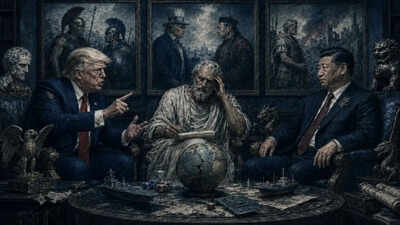
He anticipated the problem, saying: “It was the rise of Athens and the fear which this instilled in Sparta that made war inevitable.”This is the trap that the “Philosopher King” Xi Jinping wants to avoid when confronting Don Tzu, but who is Thucydides anyway? What trap did he set? Will the United States and China go to war?
Thucydides – Who, What and Why
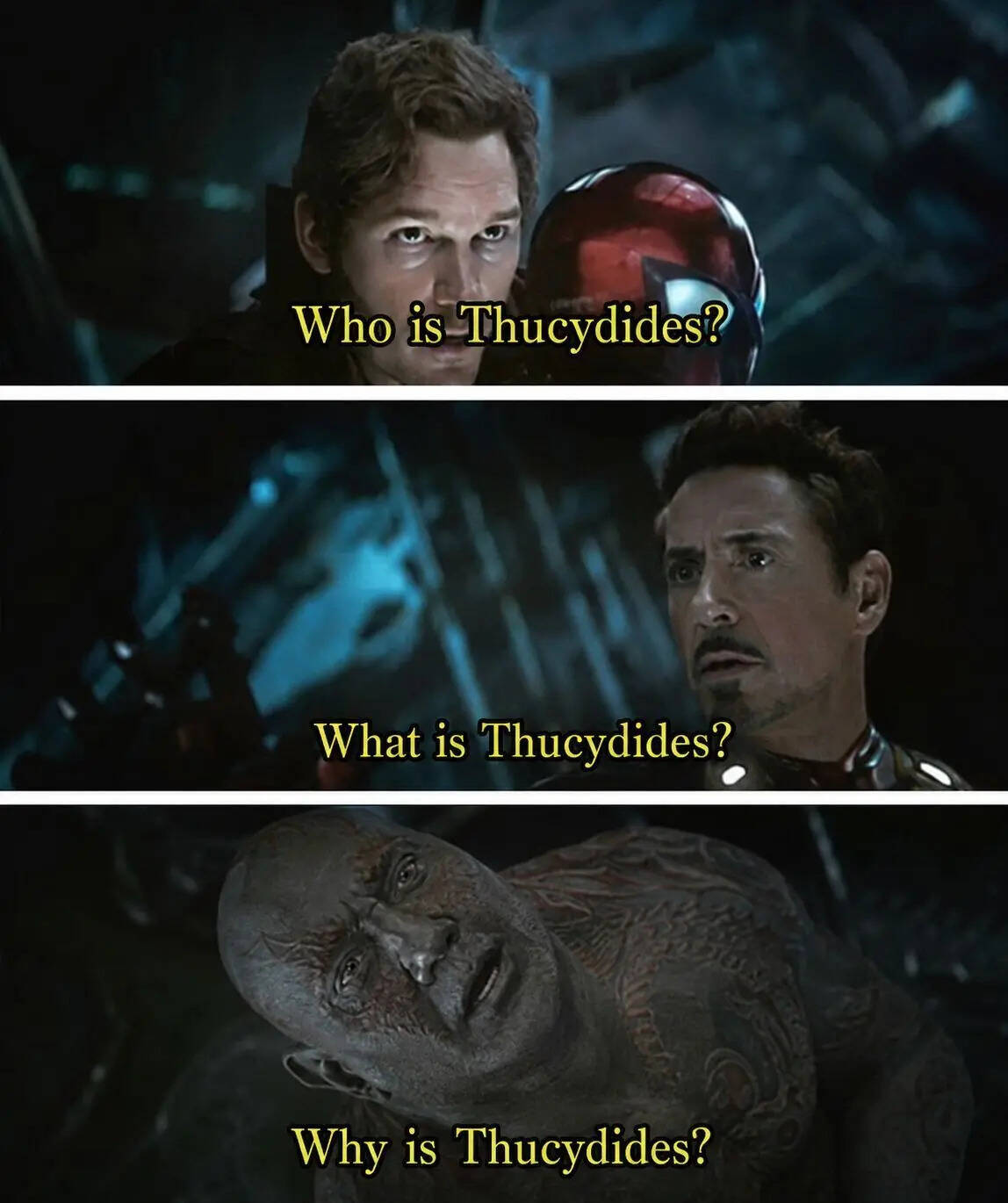
There’s an existential moment in Avengers: Infinity War when Star-Lord asks Iron Man: Where’s Gamora? Iron Man says he’d better ask, “Who’s Gamora?” Drax, who should never be left behind, joked: “Why Gamora?”So who is Thucydides? Why is it mentioned here? What is Thucydides’ trap?
Thucydides was an Athenian historian and general who wrote The History of the Peloponnesian War, an account of the devastating conflict between the city-states of Athens and Sparta, which lasted from 431 BC to 404 BC, about 50 years before Leonidas showed up with 300 orange men with CGI abs to fight the Persians.Thucydides wrote the book because he had a healthy disdain for historians who embellish accounts of war with talk of gods and storytelling, writing: “…but I have not written for immediate applause but for posterity, and I will be satisfied if the future student of these events, or other similar events which are likely to occur in human nature after ages, will find my account of them useful.”It is a useful account, explaining how Athens, a rising power, threatened Sparta, leading to the devastating war mentioned above.In modern parlance, the term “Thucydides trap” was popularized by Graham Allison, a professor of political science at Harvard University, to describe the danger of how an established power interacts with an upstart. The Allison Project at the Harvard Belfer Center studied 16 such cases over 500 years and found that 12 of them ended in war, although none of them were in the post-World War II period, not since the global economic system became so interconnected or since the arrival of the Big N in our lifetimes.But before that, it was a free-for-all.
Lesson from history
History is not a spreadsheet, but certain patterns repeat. When a new power emerges, the old power becomes strained and things go south.This is what happened in the Franco-Prussian War of 1870-1871. France wanted to prevent Prussia from becoming too powerful. Instead, Bismarck used the war to unify the German states, defeat France, seize Napoleon III and proclaim the German Empire at Versailles in 1871.
France tried to stop the future it feared and helped create.The same fear shaped Europe before World War I. Germany was rising rapidly after its unification in 1871. Britain feared German naval power. Germany feared being surrounded by Britain, France, and Russia. Russia’s recovery after its defeat by Japan in 1905 made German planners believe that time was running out. Then in 1914, a single assassination in Sarajevo helped turn Europe’s fears into a world war.But history also shows that escape is possible. Portugal and Spain avoided war over overseas empires. Britain and America avoided war in the early twentieth century because Britain gradually accepted American hegemony in the Western Hemisphere. During the Cold War, from 1947 to 1991, the United States and the Soviet Union fought through proxies, spies, arms races, and ideology, but never directly.
USA vs. China – clash of world views
The first time Trump was elected in 2016, Xi had great difficulty wrapping his head around the idea of America electing Trump, telling Barack Obama: “If an immature leader throws the world into chaos, the world will know who to blame.”The words prove strangely prophetic, which is what makes Xi’s invocation of Thucydides so interesting as America and China grapple over tariffs, Taiwan and semiconductors.
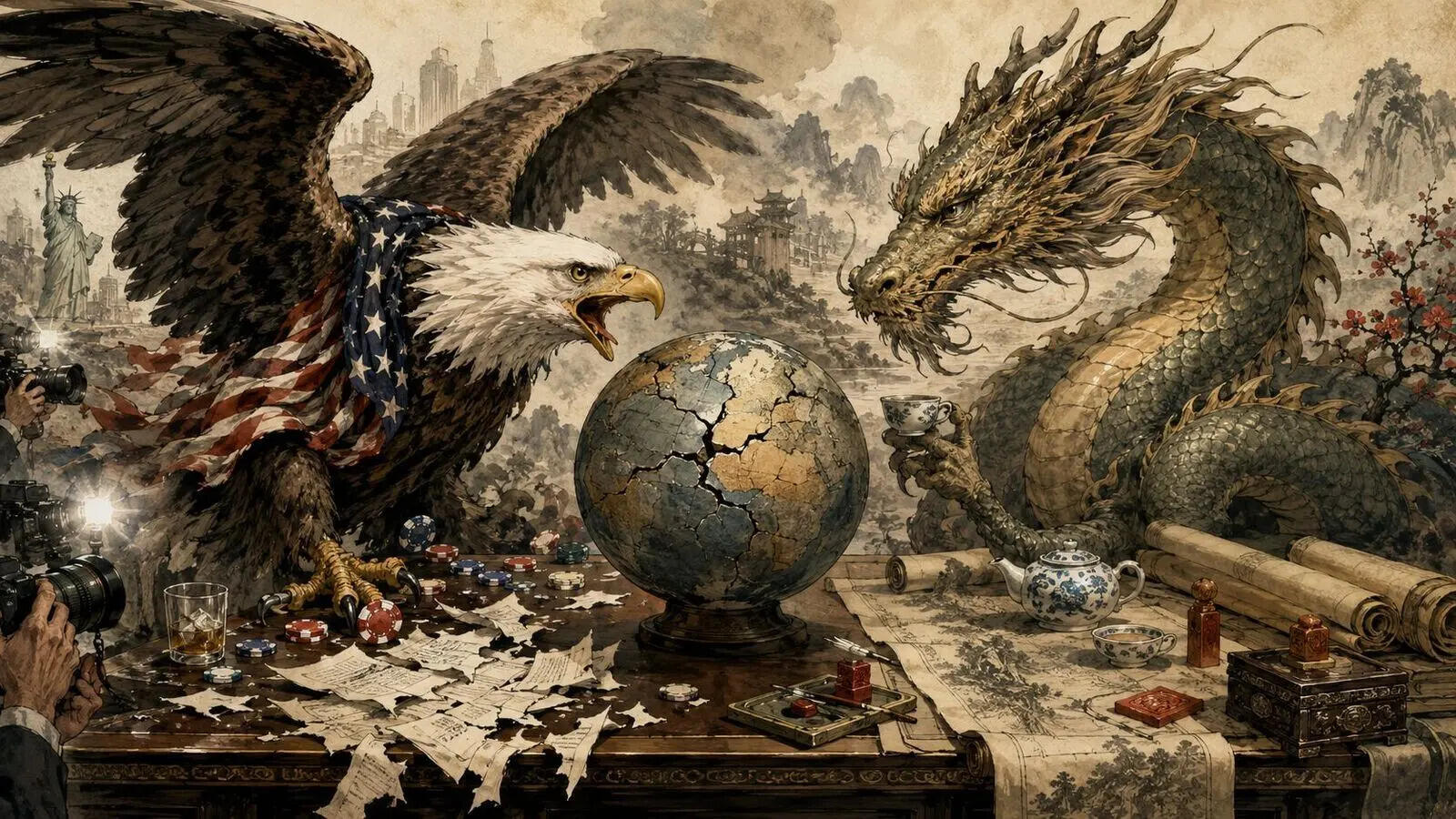
And at the heart of the battle there is something more. If the Cold War was ostensibly about ideology, then the differences between America and China come from a different philosophical worldview, although one could argue that America no longer fully subscribes to that worldview in light of the global alliance against America.America was formed because it did not want to be ruled by a king again. Its founding myth is rebellion: tea thrown in the harbour, pamphleteers denouncing tyranny, farmers taking up rifles against empire, and a republic built on the suspicion that any ruler who gains too much power will eventually begin measuring the curtains for the throne room. The American state is designed to thwart power: divide it, examine it, sue it, ridicule it, drag it through Congress, turn it against it, subpoena it, and vote it down before it begins to speak in the form of a royal “we.”Today, it also sees itself as heir to Athens, Rome, the Magna Carta, the British constitutional tradition, and the European Enlightenment, as Marco Rubio noted when he warned Europeans against “civilizational erasure.”China, on the other hand, does not fear the king; Mostly he sanctifies him. What he fears is chaos: the collapse of the kingdom. Her ultimate nightmare is the collapse of the dynasty, as warlords run amok, and even a demagogue who failed the imperial examination imagines himself as the younger brother of Jesus and sets up a parallel government.The Chinese political imagination is haunted by this broken world. The ruler may be harsh, distant, or stifling, but the absence of order is remembered as worse.So America’s founding warning is: He will never be king again.The civilizational warning issued by China is: It will not become a broken kingdom again.This is why the two countries talk about each other. When America talks about freedom, China hears chaos waiting to happen. When China talks about stability, America hears that tyranny washes itself off as wisdom.
America built a republic to stop Caesar. China built a state to prevent the empire from collapsing.Xi’s authoritarian philosophy is unique: he uses Confucius to legitimize, Han Feizi to discipline, Lenin to regulate, and Silicon Valley to monitor: LG An ancient civilizational method to justify a modern party state that relies on technological censorship, control, and discipline.On the other hand, Washington, which gave China much aid during the Cold War and then helped integrate it into the global economy, now views Beijing as its first real competitor since the Soviet Union.There are fundamental differences between a bear and a dragon. The Soviet Union cajoled, threatened, and seduced the world with ideology, establishing outposts all the way from Vietnam to Cuba.
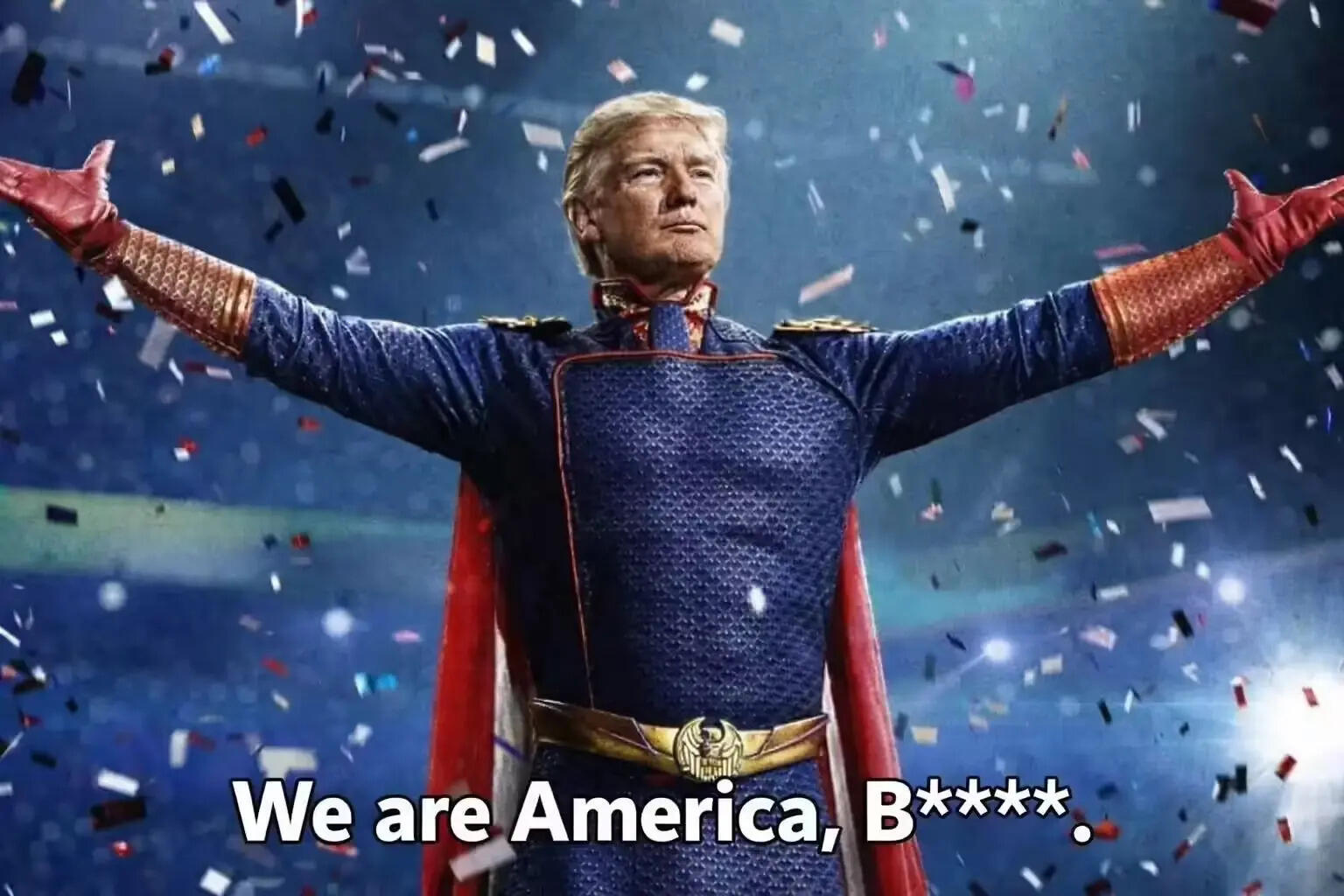
China, on the other hand, is like a giant Avatar Tree, with the world plugged into its glowing sockets. They dominate supply chains, procure commodities, build infrastructure, compete in artificial intelligence, and sit within the global economy in a way that may not be trusted, but can never be eradicated.Of course, America today is less Monroe and more Dunroe, whose doctrine is much simpler:1. Don’t even pretend that a rules-based international order exists. 2. Admit that America is the best. 3. Make a deal. 4. Seeking revenge. 5. We are America, b****, we do what we want.The problem is that China is a country that Trump cannot force or bully into submission. On the other hand, Xi wants to avoid the Thucydides trap because he realizes, more than anything else, that given the nature of American democracy, MAGA may dominate a season, but it is not the American state.
He’s not just negotiating with Trump; He is negotiating with a system that will eventually produce successors, factions, reversals, and corrections.
N deterrence and the global economy
Of course, the final word on the Thucydides Trap involves two things the Athenians and Spartans never had to confront: nuclear weapons and economic dependency.Since 1945, the great powers have discovered that direct war between nuclear states is not so much a political tool as a suicide note with launch codes.
Ultimately, the rivalry between the United States and the Soviet Union was never heated because Washington and Moscow knew that all-out war would mean annihilation for both sides. So they fought through proxies, coups, spies, arms races, propaganda, ideology and on Ivy League campuses.Additionally, unlike the United States and the Soviet Union, the United States and China are interconnected when it comes to the economy. America needs Chinese manufacturing, minerals, markets, and supply chains.
China needs American consumers, access to technology, capital flows, and, as much as it hates to admit it, global legitimacy.This does not make war impossible. Humans have never allowed common sense to permanently interfere with stupidity. But it makes war much more destructive than the old model suggests.In Thucydides’ world, rivals could burn each other’s cities. In our country, they can burn down the global economy, ignite the future, and still discover that neither side has achieved a technical win.For this reason, the Athens-Sparta template is incomplete. Since 1945, the great powers have not avoided direct war because they have become wiser. They avoided it because nuclear weapons and economic interdependence turned victory into a very costly form of suicide.
Curse of Carthage
Finally, there is something beyond Thucydides’ trap that requires China and America not to deviate from their course: the Curse of Carthage. Sallust, the Roman historian and disciple of Caesar, warned in Bellum Catilineae: “After the destruction of Carthage, when the fear of a rival had passed away, fortune began to grow crueler.
All the evils that prosperity fosters: luxury, greed, and arrogance, have flourished. Because before that time, it was fear of the enemy that kept the state intact.
When that fear was gone, pleasure and pride entered, and with it decadence.”
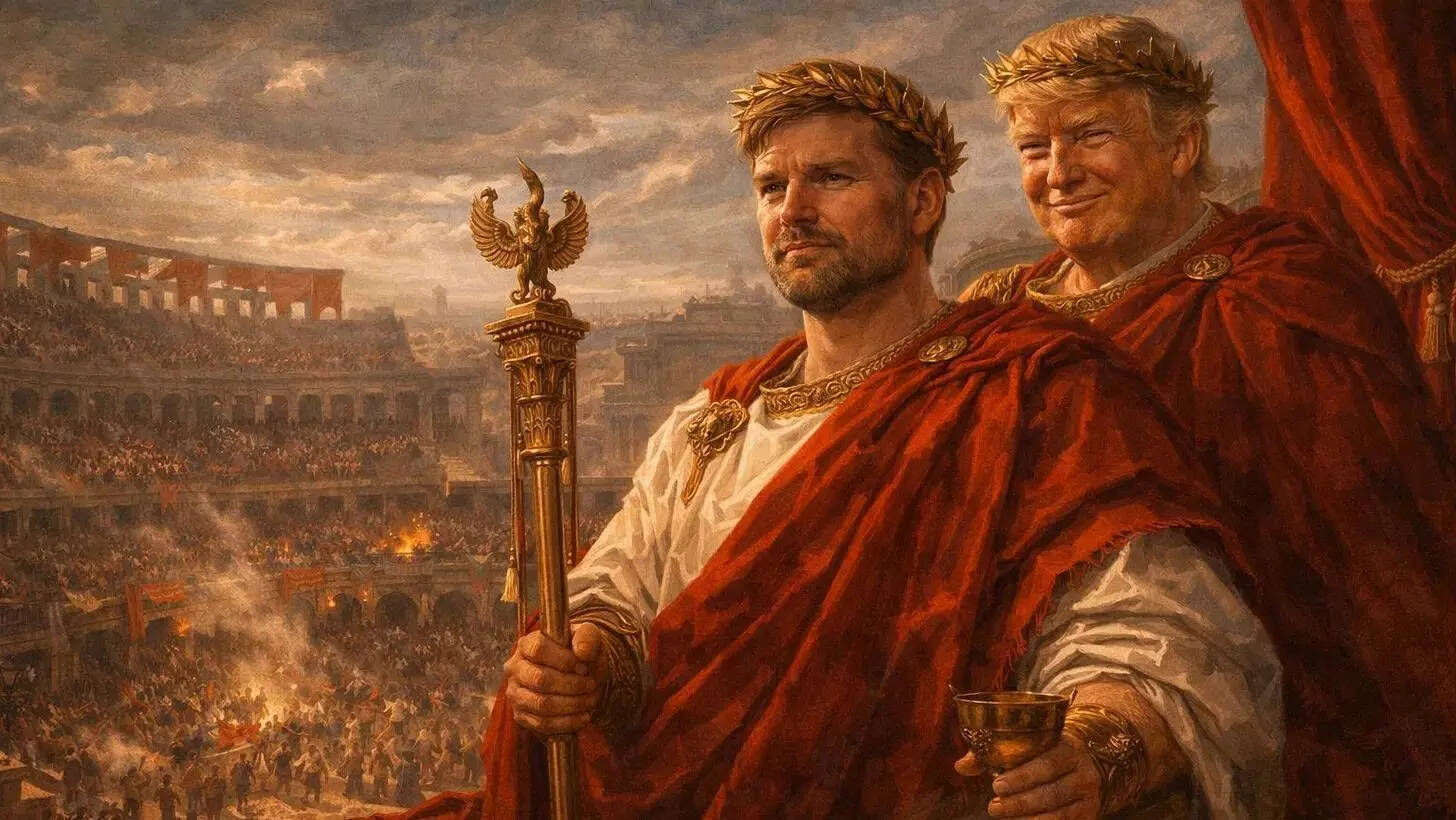
In Thucydides’ trap, the ruling power and the rising power can destroy each other through fear. In the Curse of Carthage, power destroys itself because there is no longer a rival to discipline it.This is the darkest warning. A competitor can kill you.
But the absence of a competitor can ruin you.America discovered this after the collapse of the Soviet Union. The unipolar moment arrived, “The End of History” became mood music for the elite, then came transgression, Iraq, financialization, institutional decadence, culture war, conspiracy politics, and finally Trump. America did not begin to deteriorate because of the rise of China. In many respects, China has ascended into a world where America has already begun to argue with itself in the mirror.China should read Sallust too. America is Beijing’s disciplinary enemy. Its pressure allows Xi to demand unity, sacrifice, technological self-reliance, and obedience. But if China were to get the world it wanted, with America humbled, Asia reordered, and the party-state vindicated, then what might happen? Will discipline remain, or will victory breed its own arrogance, corruption, and decadence?This is the ultimate trap. Thucydides warns that fear of a rival can lead to war.
Sallust warns that the absence of a competitor may lead to rot. In between lies the damned logic of great powers: too much fear can destroy you on the outside, too little fear can destroy you on the inside.So, even if America and China avoided Thucydides, Carthage would still wait for him. Because the cruelest joke in history is that empires can survive their enemies and still lose to themselves.However, for now, the world does not need to experience either lesson. It only needs the two most powerful nations on Earth to avoid turning history into a live show. So hopefully Trump will TACO and declare victory. Xi will persuade Iran to back down, not out of charity, but because China needs oil, shipping lanes, and a global economy that has not caught fire. And the rest of us can breathe a little more peacefully.