

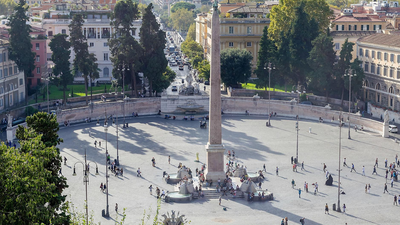
A view of Piazza del Popolo in Rome, where the curved architectural design can allow sound to travel across the square in unexpected ways.
In parts of Rome, a whisper can travel far beyond where it is spoken. Stand near a curved wall or under a wide dome, and even a quiet sound can transmit clearly through the space. The effect is eerie, as if the building itself is listening.
In fact, it is the result of engineering and materials working together. Built with smooth stones and carefully designed interiors, ancient Roman structures could direct sound in ways that made it focused and audible across the distance, transforming everyday speech into something that moved through space with surprising precision.
How does the Roman wall sound?
When sound is produced near a curved surface, it does not simply spread in all directions. Instead, it follows the perimeter of the wall, moving along it in a controlled path.
This is known as the whispering gallery effect. In spaces with domes or circular walls, sound waves are reflected efficiently and remain focused rather than quickly fading out. As a result, a whisper can move across a room and be heard several meters away with unexpected clarity.One of the clearest examples of this behavior in Rome is the Pantheon. Its wide dome and smooth inner surfaces allow the sound to resonate and travel with remarkable consistency.
Even small noises can travel through space, especially in quiet conditions.Roman theaters offer another look at how sound was managed. Designed for large audiences, these open-air structures feature semi-circular layouts and tiered seating to project sounds from the stage. Without any modern amplification, the performers can still be heard clearly by spectators seated far away. This reflects a practical understanding of how shape and structure affect sound.
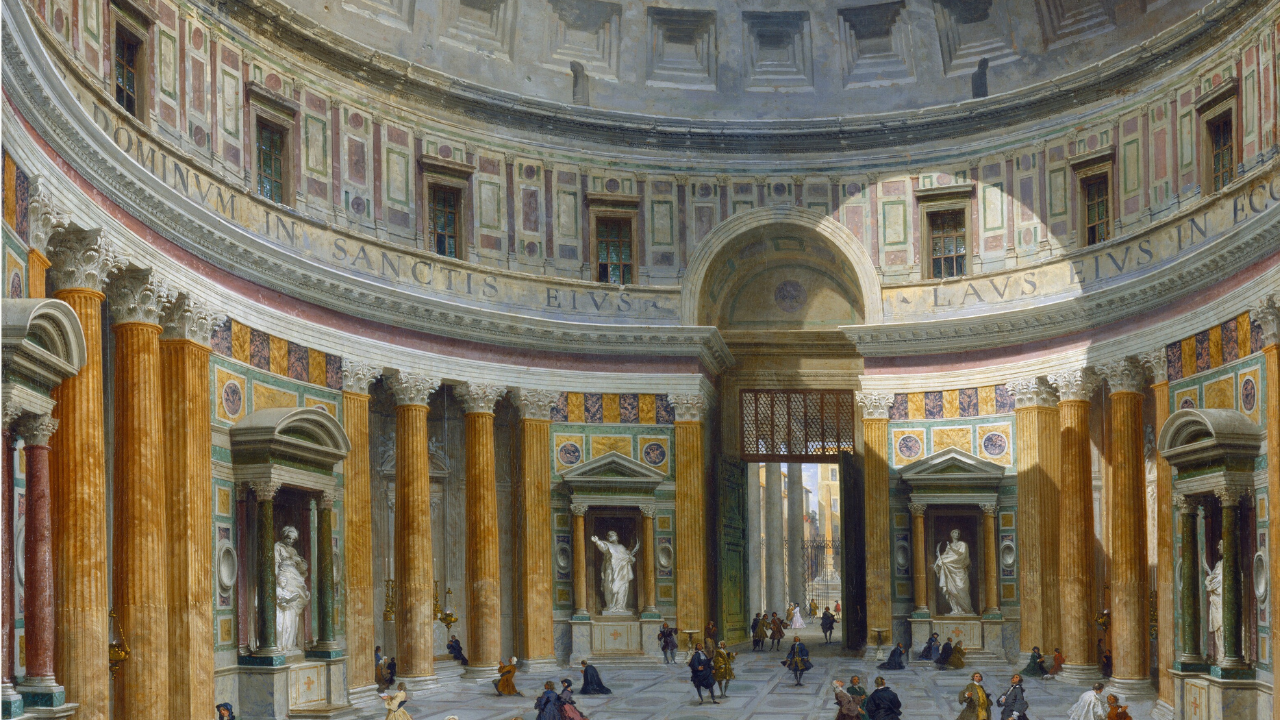
Sound clarity in these environments comes from a combination of architectural features. Stone and marble surfaces reflect sound rather than absorb it, allowing the waves to retain their strength. Curved shapes direct those waves along predictable paths, while closed interiors limit how quickly sound dissipates. Smooth finishes reduce distortion, keeping sound clear as it travels. Together, these elements allow smooth sound to remain clear across the distance.
A legacy that still speaks
Ancient Roman builders focused on sturdiness, symmetry, and size, but their designs continued to exhibit complex acoustic behavior. In these places, the sound doesn’t simply fade away. It reflects, travels, is carried through the air, shaped by stone and structure. A whisper can easily cross a room, creating the impression that the walls are listening, when in fact they are directing sound with quiet precision.