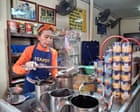
A crowd of customers, phones held aloft, watch intently as Auntie Nid mixes her bestseller: iced Thai tea.
Condensed milk is poured into a glass, followed by three tablespoons of sugar, and then freshly brewed tea. The final product — a deep orange, creamy treat — is poured into a plastic bag filled with ice.
“I like to spoil my customers,” says Aunty Nidd, 68, who prefers to be known by her nickname.
But the Thai government is trying to reduce sugar in the country’s most popular drinks.
This month, nine of the country’s major coffee chains committed to halving the amount of sugar, considered “simple sweeteners,” in their drinks as part of a new campaign to reset people’s taste buds and improve people’s health.
Thai people consume an average of 21 teaspoons of sugar a day – well above the World Health Organization’s recommended daily limit of six teaspoons.
Sugary drinks are a major culprit, with Thailand historically one of Asia’s biggest consumers of calories from sweetened beverages.
Thailand has taken other measures to tackle sugar, including a sugar tax, which has been gradually introduced since 2017, with the final phase launched last year. It targets pre-packaged sugary drinks.
Pojana Hunchangsit, assistant professor at Mahidol University, said the tax helped. “One of the biggest impacts is product reform, with many manufacturers reducing sugar levels to avoid higher tax rates,” she said.
However, the tax will not affect street vendors or cafes, where menus are filled with dizzyingly sweet options – from boba milk teas and iced cocoa, to lemon tea and pink milk, a Thai drink made with sala syrup. “These are the most important sources of sugar intake in Thailand,” Pozzana added, but controlling freshly made drinks is difficult.
The latest government initiative involves some of the country’s biggest cafe chains. Many stores already display cards that offer customers different levels of sweetness: 0%, 25%, 50%, 75% and 100%. According to the new campaign, for some drinks, 100% sweetness is half as much sugar as before.
Ann Thumthong, 55, a taxi driver in Bangkok, welcomed the measures, saying it was difficult to avoid sweets when buying food and drinks.
It’s possible to regain your sweetness preferences so you need less sugar, says Thamthong, who says she’s become more health-conscious with age. “For me, in the past, when I finished a meal I went straight to desert, but now I opt for fruit instead,” she says.
Phumsit Mahasuweerachai, associate professor at the Faculty of Economics at Khon Kaen University, said even simple adjustments could encourage customers to make better choices. He conducted a study that found that giving consumers the option to choose how sweet their drinks should be made them more likely to choose less sugary drinks. Providing calorie information did not significantly change their choices, he added.
“If we do not blaspheme [customers] Or prompt them, it’s hard for them to make a change,” he said. “They go to a coffee shop and it’s automatic.”
At Auntie Nid’s shop, customer Phakamas, 39, bought an iced cocoa during her lunch break to relieve the Bangkok heat.
“I think it’s OK to have sugar, I just don’t have it very often – I might have a cup or two a week,” she says.
Auntie Nid, who has been serving teas and coffees in Bangkok’s Oldtown for 30 years, couldn’t fathom changing her recipe.
“No, no, no,” she said, as a queue of tourists, as well as some locals, workers and students, spread out the door. The shop has always been popular, but has become especially popular among overseas visitors thanks to social media.
“The reason these drinks are popular is because of their strong, intense flavor,” she says. “Without sugar, coffee and tea are bland and bitter.”