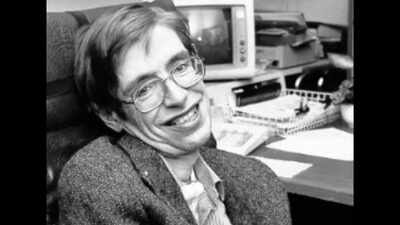
Stephen Hawking quote of the day
Some quotes seem clever right away and then disappear from memory a few minutes later. Others seem to sit quietly in their minds and become more interesting over time. This quote, widely associated with Stephen Hawking, seems like one of those lines that gets heavier the longer someone thinks about it.
At first glance, it seems to be a simple statement about learning. But if you look closely, it seems like a commentary on human behavior itself.People generally assume that ignorance is the greatest obstacle to understanding. This assumption seems logical. If someone doesn’t know something, learning should solve the problem. Schools exist because of this idea. Books exist because of this idea. The questions exist because of this idea.However, Hawking points elsewhere entirely.He points out that the biggest risk may be knowing too little. The real problem may begin when people become convinced that they already know enough.This seems a bit uncomfortable because almost everyone has gone through it without even realizing it.
Quote of the day by Stephen Hawking
“The greatest enemy of knowledge is not ignorance, but the illusion of knowledge.”
Understand the meaning behind Stephen Hawking’s quote
This quote seems to suggest that being unaware of something is not necessarily the worst situation you can be in. A person who publicly admits to not knowing something can still ask questions.
This person can still listen, learn, and change their understanding.The illusion of knowledge works differently.It creates a situation where people think they already have the right answer even when they don’t. Once this happens, curiosity often begins to disappear. Questions become less important because certainty has already arrived.And here the difficulty begins.Imagine a person driving through a city completely convinced that he knows the way.
If they realize they are unsure, they may stop and ask for directions. If they think they already know where they are going, they may continue to confidently move in the wrong direction for a very long time.Trust itself becomes the problem.Knowledge usually grows through curiosity. The illusion of knowledge can quietly close a door even before curiosity enters the room.
Modern life makes this quote seem strangely relevant
There was a time when I felt it was difficult to access information.
People searched in books, visited libraries and waited for answers. Today, information arrives instantly. Phones provide explanations within seconds. Social media feeds constantly offer opinions, facts, and endless streams of advice.Oddly enough, access to more information does not always lead to greater understanding.Many people have experienced moments when they read a headline and instantly felt informed about a topic.
Sometimes a short video creates the impression of expertise. Sometimes people hear one explanation and begin speaking as if they fully understand a complex problem.A person watches some clips about economics and suddenly feels ready to explain global markets.Someone reads a health article and starts acting like a medical professional.Another person spends ten minutes reading about space and begins debating with scientists.Most people smile at such examples because they seem familiar.Many people have probably done something similar themselves.This is what makes Hawking’s statement interesting. It doesn’t seem to be directed at a small group of people. It quietly points in a direction that many humans share.
There is a difference between not knowing and thinking you know
People are often embarrassed to admit uncertainty.Someone asks a question and there is pressure to provide an answer quickly.
Sometimes saying “I don’t know” is uncomfortable. Some people worry that it makes them appear uninformed or unprepared.Interestingly, real experts often look completely different.Scientists, researchers, and specialists often leave room for uncertainty. They might say that the evidence points to something. They may say their current points of understanding are in a certain direction. They often acknowledge that future discoveries could change what is known.This approach may seem less trustworthy to people listening.However, it often reflects a stronger rather than a weaker understanding.The more individuals learn, the more they often realize how much remains unanswered.Trust and knowledge don’t always travel together.Sometimes the highest certainty comes from shallow understanding.
Stephen Hawking spent his life asking questions
Stephen Hawking has devoted much of his life to understanding some of the biggest questions imaginable.
He studied black holes, time and space, and the origins of the universe itself.These topics do not come with easy answers.Part of what made Hawking interesting to many people was his ability to discuss complex ideas in ways that ordinary readers could follow. He brought scientific questions into the public conversation and made people curious about topics they might otherwise have ignored.His work often reflects something important about learning.He never approached knowledge as a final destination.Science itself acts this way. It changes. adjusts. Old assumptions sometimes disappear after new evidence emerges. The questions keep coming towards new questions.This process requires humility.The moment people think every answer has already been found, discovery slows down.
Human history contains examples of this idea
History repeatedly shows situations in which certainty delayed understanding.For long periods, people believed that the Earth stood at the center of everything. This belief has seemed unquestionable in many societies.Medical practices were previously based on ideas that were later proven incorrect.There were periods when people rejected discoveries because established assumptions were too certain to be challenged.Looking back, those mistakes are obvious.People often wonder how entire societies can adopt beliefs that later turn out to be false.The hard truth is that individuals living in those moments probably felt as confident as people feel today.This thought may seem a little alarming.Future generations may eventually view current assumptions in the same way.
Other famous quotes by Stephen Hawking
- “Intelligence is the ability to adapt to change.”
- “Remember to look up at the stars, not at your feet.”
- “Life would be tragic if it weren’t funny.”
- “People who brag about their IQ are losers.”
- “Work gives you meaning and purpose, and life is empty without it.”
Stephen Hawking’s quote reveals why certainty can become our biggest obstacle
Stephen Hawking’s quote does not argue against knowledge itself. He almost says the opposite. Knowledge remains powerful. Learning remains important. Questions remain important.The warning appears to be directed elsewhere.People usually recognize ignorance because it is visible. Someone knows he doesn’t understand something.The illusion of knowledge behaves differently. It often hides behind certainty and confidence. People may continue to believe that they fully understand something while never realizing that there is more to learn.Perhaps this is why this quote still resonates with so many readers.Human progress has often depended on people being willing to acknowledge a simple sentence that can sometimes be difficult to say:There may be more to learn here.