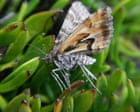
A small dangerous moth named for the Avatar films due to the proposed reason Mining operations are threatening its primary habitat, earning it the crown of New Zealand’s bug of the year.
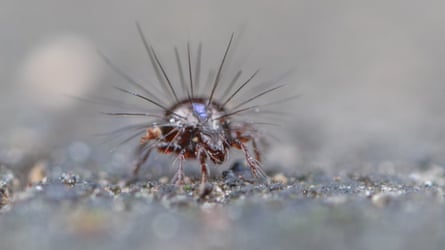
Avatar Moth won by a huge margin with 5,192 votes out of more than 11,000 votes cast. It garnered 2,269 more votes than runner-up Mahonui Giant, one of the world’s largest insects.. Other contenders include the spectacular spiky hellraiser mite, the country’s heaviest spider – the black tunnelweb – and a giant glow-in-the-dark earthworm.
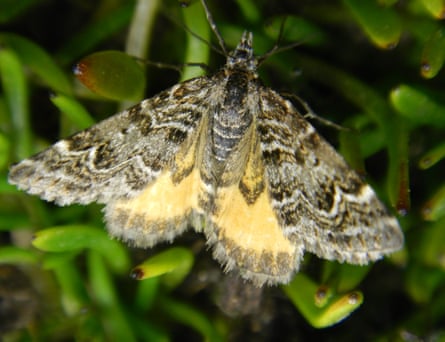
The Arctestes Avatar The moth belongs to the family Geometridae and is native to New Zealand. It is a diurnal moth with brown and marigold wings and lives only on the west coast of the South Island on the Denniston Plateau and nearby Mount Rochefort.
Entomologist Brian Patrick discovered the moth in 2012 during a “bioblitz” — an intense scientific survey to identify species in a particular area — conducted by Forest & Bird. The organization held a contest to name the moth, with the winner – an avatar – chosen to highlight the moth’s plight.
In the fictional world of James Cameron’s Avatar films, a unique ecosystem faces destruction from a mining company. In New Zealand, the environmentally significant Denniston Plateau is subject to a mining expansion proposal that, if approved, could lead to a significant area being mined for a large open-cast coal mine. The proposal is being pushed through a new regulatory regime where fracking mining and infrastructure projects will be fast-tracked for approval.
“It’s avatar species – created to warn us about mining – is now facing real-world extinction through fast-track approvals on public conservation land,” said Nicola Tocchi, chief executive of Forest & Bird and who backed the moth to win the country’s annual Bug of the Year competition.
Along with Forest & Bird, which has hundreds of thousands of online followers, groups and individuals have taken to social media to discuss the moth and highlight its precarious existence.
“It’s a special kind of creature, no less important than a kakapo or a panda, and we can’t write it off,” Toki said. “I think there’s a point where New Zealanders feel very uncomfortable about planned extinctions.”
Bathurst Resources, the mining company behind the proposal to mine the Denniston Plateau, said it would limit its impact on landscapes and ecosystems and seek to “offset” the impacts on species or biodiversity. Resources Minister Shane Jones previously told the Guardian that opening up New Zealand to more mining projects was necessary to boost the economy and boost employment, even if it led to environmental trade-offs.
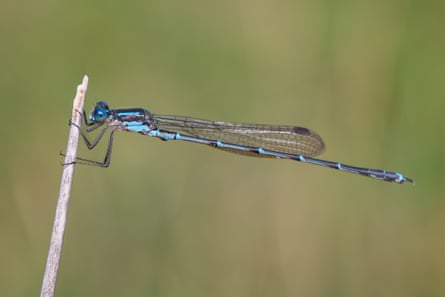
The Entomological Society of New Zealand has launched a Bug of the Year competition in 2023, inspired by Forest & Bird’s hugely popular Bird of the Year competition.
Toki said it was “gratifying” that other groups wanted to expand the New Zealand species.
The Bug Award is growing in popularity as this year’s competition received the highest number of votes so far. Each contestant has “a champion” — volunteers, including enthusiasts, museums or environmental groups, who promote their favorite bug. The winning champion will decide how the public donations raised by the competition will be spent.
University of Otago senior zoology lecturer Dr Jenny Zandt, who helps coordinate the competition, said it brought communities together while highlighting New Zealand species.
“We have such a unique fauna in New Zealand,” she said. “We really want to draw attention to some of these things and say … the insect world is bigger than the sand flies that bite you and the bumblebees that pollinate your garden.”