
Teresa Romero was in Rome to celebrate a milestone birthday and the first thing she did on Monday was visit the Trevi Fountain to take part in the ritual of tossing a coin into the water of the late Baroque masterpiece.
But before the Portuguese tourist could approach the fountain, she had to hand over €2 (£1.70) – a cost The access fee was finally implemented by the Council of Rome After years of negotiations, officials.
“I think it’s normal and €2 is nothing – the price of a coffee,” Romero said as she exited the monument. “Preserving history is a very important thing.”
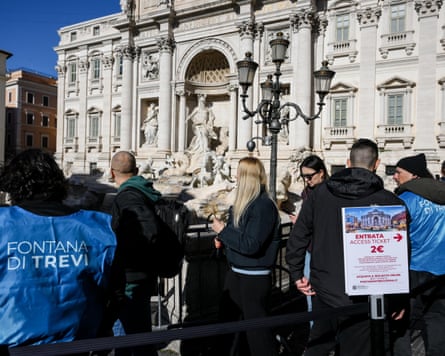
The aim of the charge, which is applicable from 11.30 am to 10 pm on weekdays and 9 am to 10 pm on weekends, is to help authorities manage crowds better and raise funds for the maintenance of the fountain. More than 10 million people will visit Trevi by 2025 alone.
Pay only for visitors who walk up the fountain steps to reach the basin. They can enjoy as much time there as they like, throwing coins over their shoulders and posing for selfies in a ritual that is said to guarantee a return to the Eternal City. They cannot eat, drink or smoke in the basin area. Persons living in Rome with disabilities and children under six years of age are exempt from the fee.
The fee is expected to bring in €6.5m a year, with the money used to invest in fountains and other monuments in the Italian capital.
Rome tourism chief Alessandro Onorato described the move as a “healthy revolution”. “Until a year ago, visiting the Trevi Fountain was an absurd experience,” he says, referring to the huge crowds that gather at the basin, some of whom jump.
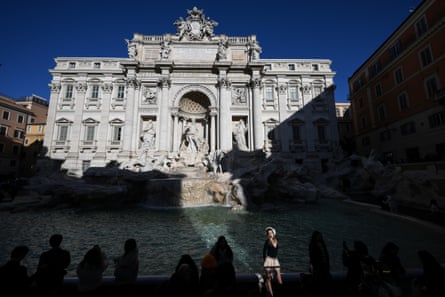
The white marble of the Trevi Fountain glittered under a clear blue sky on the first day of the access fee, and many people seemed happy to pay it in cash or through contactless payment machines. Tickets can also be purchased online.
But there were whispers among some. “It’s not a good thing at all,” said Irma Pavitashvili, a tourist from Georgia, walking away from the monument after she asked for 2 euros. “This fountain should be for everyone.”
Alma Peterson, a visitor from the US, agreed. “It’s not fair to charge people – it’s history, it’s free.”
Onorato dismissed the complaints. “I think tourists are surprised because the city of Rome is only asking €2 for a site of this scale,” he said. “If the Trevi Fountain had been in New York, they would have asked for €100, not €2.”
As the number of visitors to Rome and throughout Italy Increasingly, charges to visit popular sites that were previously free are becoming commonplace.
Since 2023, a €5 fee has been in place at the Pantheon, which was built by the Roman emperor Hadrian and is famous for its oculus – a hole in its large dome. Day trippers to Venice must pay a fee to enter the city during peak season, and from December, tourists must pay to enter the courtyard in Verona associated with Shakespeare’s Romeo and Juliet.