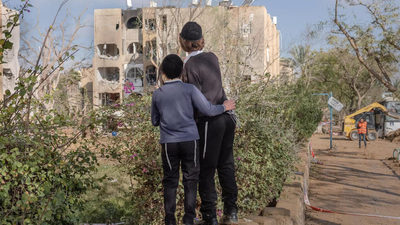
There are few sites in Israel better protected than the main nuclear research facility and reactor, 8 miles from the city of Dimona in the southern Negev Desert.So, when two Iranian ballistic missiles rained down on residential neighborhoods in Dimona and another nearby city, Arad, on Saturday night, evading the country’s vaunted air defense, even battle-hardened Israelis seemed alarmed by the scenes of devastation.Perhaps as troubling as it was damaging was the military’s admission that it tried to intercept missiles that landed about three hours apart. These failures raised questions about Israel’s multi-layered missile defense system and its ability to protect its citizens.It has renewed fears that the military may be reluctant to launch its more expensive and sophisticated missiles, after reports that its stockpiles may have been exhausted in the 12-day war with Iran last year.
Israeli military officials say they are investigating what went wrong, but have remained silent on the details.During a visit to the bombing sites on Sunday, Prime Minister Benjamin Netanyahu said it was a “miracle” that no one was killed. He urged the Israelis to take advantage of the time provided by incoming missile warnings to head to shelters. “Don’t be complacent,” he warned. He offered no explanation for the failed interceptions, nor did he mention the air defense system in which Israel and the United States have invested heavily over decades.
While the military estimates the interception rate of Iranian ballistic missiles at more than 90%, officials and experts stress that the defenses cannot be 100% impeccable. Ran Kochav, a brigadier general in the reserve forces, said, “Dimona is protected by multi-layered defense systems – Israeli and American. But nothing is perfect. There have been operational failures.” Brigadier General Yves Devrin, the army’s chief spokesman, said on Sunday.
New York Times