

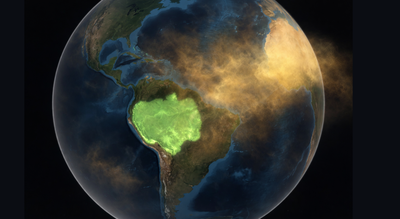
About 27 million tons of desert dust transports nearly 22,000 tons of phosphorus to the Amazon annually/Image: NASA
In 2015, scientists reported evidence that vast plumes of dust from the Sahara are helping to replenish phosphorus in the Amazon rainforest, connecting the world’s largest desert to the largest rainforest through what researchers describe as one of the most important natural nutrient transfers on the planet. The findings are detailed in research led by atmospheric scientist Hongbin Yu of the University of Maryland Interdisciplinary Earth System Science Center (ESSIC), working with NASA’s Goddard Space Flight Center in Greenbelt, Maryland. The results were published in Geophysical Research Letters In a related study in Remote sensing of the environment.
An atmospheric river 10,000 miles long
Scientists have known for decades that large plumes of Saharan dust travel thousands of miles across the Atlantic Ocean, forming huge, tan clouds that can be seen from space before settling over South America. In April 2015, NASA described the connection as a “10,000-mile-long intermittent river of atmospheric dust” linking Africa and the Amazon Basin.
Using data from the Cloud-Aerosol Lidar Satellite and the Infrared Satellite Observing Satellite, CALIPSO, launched in 2006, Yu and his colleagues have for the first time estimated how much dust completes the journey across the Atlantic Ocean. According to the team, an average of 182 million tons of dust comes out of the Sahara every year. Of this, 27.7 million tons, or about 15 percent, are deposited over the Amazon Basin annually. Another analysis reported that 28.8 million tons reached the region. NASA estimated this at 689,290 truckloads of dust leaving the Sahara and 104,908 truckloads of dust dumped in the Amazon each year.
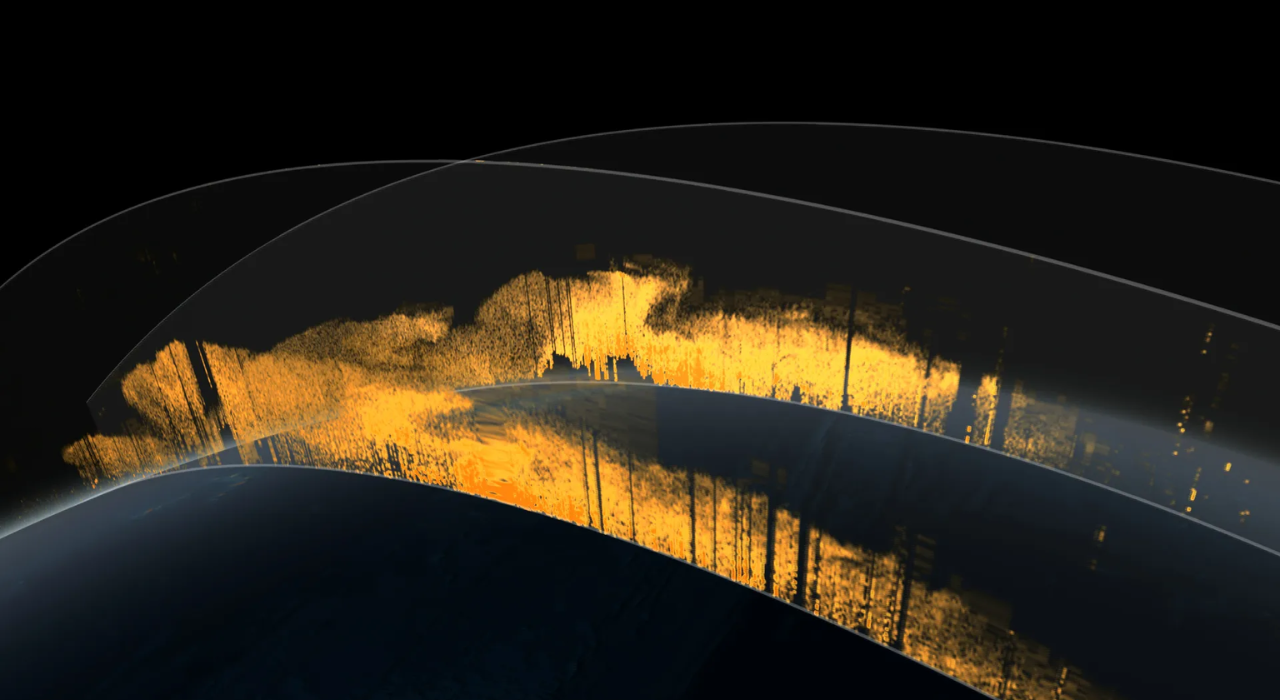
The lidar instrument on board the CALIPSO satellite sends out pulses of light that bounce off particles in the atmosphere and return to the satellite. It distinguishes dust from other particles based on optical properties. Credits: Scientific Visualization Studio, NASA Goddard Space Flight Center
Calypso, short for Lidar and Infrared Pathfinder Aerosol Cloud Monitoring, uses a laser-based lidar instrument to scan the atmosphere and measure the vertical distribution of dust and other aerosols, enabling 3D tracking of the Sahara-Amazon plume between 2007 and 2013.
Phosphorus: a missing nutrient
The Amazon rainforest is known for its biodiversity but is also characterized by its nutrient-poor soil. About 90% of Amazon soil is deficient in phosphorus, an essential nutrient for plant growth.
Heavy rains and river systems wash tens of thousands of tons of nutrients, including phosphorus and nitrogen, from the basin each year. Across the Atlantic, the Sahara contains large deposits of phosphorus, especially in the Bodélé Depression in Chad, an ancient lake floor rich in the remains of long-dead microorganisms. Frequent dust storms from this area lift phosphorus-rich particles into the atmosphere. In a 2015 paper in Geophysical Research LettersYu and his colleagues provide the first satellite-based estimate of the amount of phosphorus transported within this dust. After analyzing Calypso data along with dust samples collected from research stations in Chad, Barbados and Miami, the team concluded that approximately 22,000 tons of phosphorus reach the Amazon annually from the Sahara.
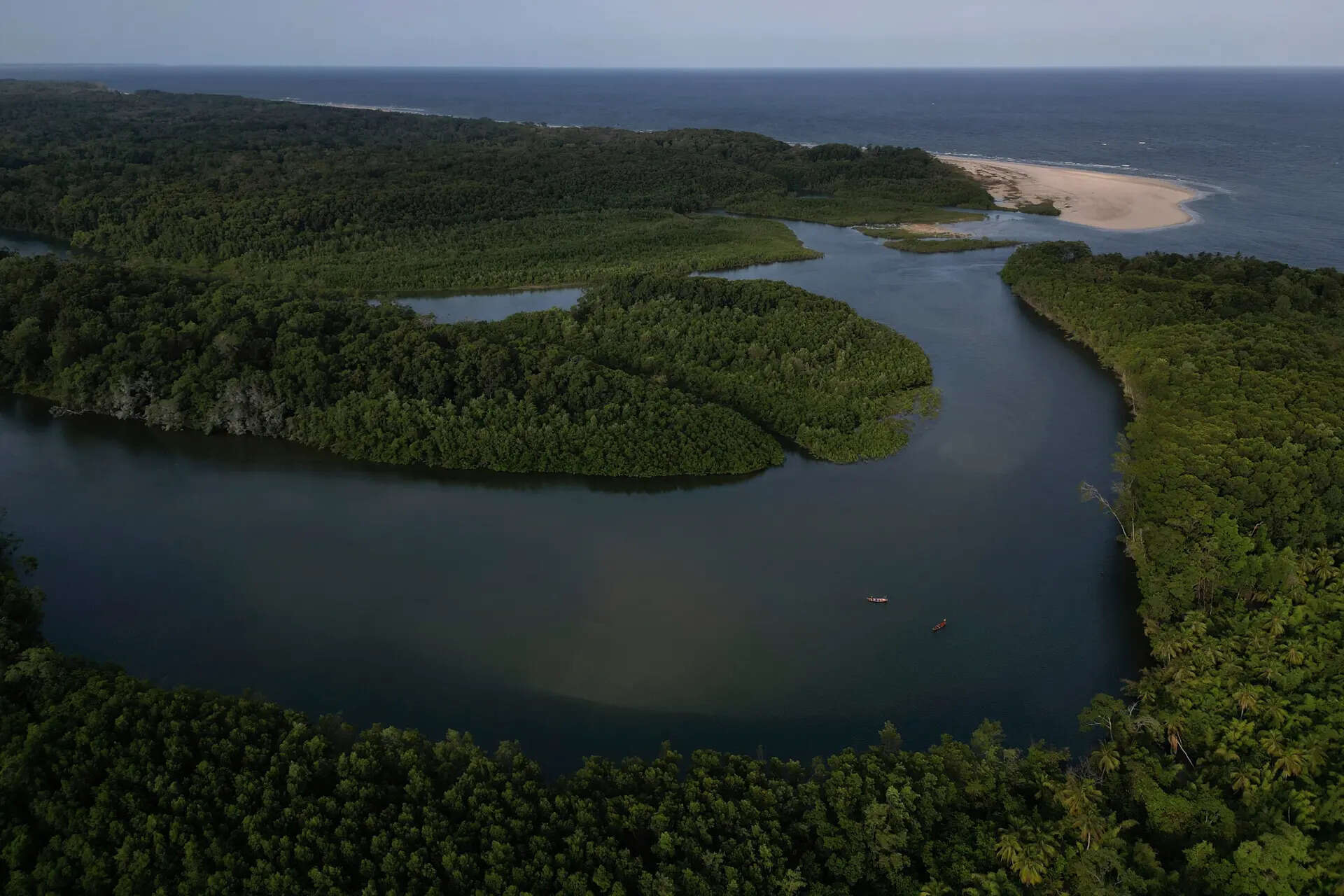
An aerial view of fishing boats from the Cajo Ona community fishing in the Porto River, Marajó Island, Pará State, Brazil, Saturday, November 1, 2025. (AP Photo/Eraldo Peres)
This number closely matches the estimated amount of phosphorus lost each year from rainforests through hydrological processes. “This is a small world, and we are all connected together,” Yu said at the time. “This suggests that African dust may have an important impact on maintaining the long-term health of the Amazon rainforest,” the researchers wrote in their paper. “Without phosphorus inputs from African dust, hydrological loss would significantly deplete soil phosphorus reservoirs over a time period of decades or centuries and impact the health and productivity of the Amazon rainforest.” But they cautioned that uncertainties remain, noting that they still do not know “how much dust is needed to provide sufficient phosphorus to maintain the productivity of the Amazon rainforest.”
High volatility and coastal connectivity
The researchers also found that the volume of dust transported across the Atlantic Ocean fluctuates sharply from year to year. Between 2007 and 2011, there was an 86% difference between the largest dust plume recorded in 2007 and the smallest dust plume recorded in 2011. Yu and his colleagues identified a possible link between rainfall in the Sahel, a semi-arid region south of the Sahara, and dust transport. When rainfall was higher in the Sahel, the amount of dust transported across the Atlantic Ocean decreased.

Dust and sand from the Sahara desert have blanketed parts of Europe, turning the sky and snow orange.
The exact mechanism is still uncertain. Yu suggested that increased rainfall may promote vegetation growth in the Sahel, reducing the exposed soil available for wind erosion. Instead, precipitation patterns may be linked to wind systems that lift dust into the upper atmosphere, which acts as a transport corridor toward the Americas. “We know that dust is very important in many complex ways,” Yu said. “Dust affects climate, and at the same time, climate change will affect dust.” He added: “As researchers, we ask ourselves two basic questions: How much dust is transported? And how does climate change affect the amount of dust transported across the Atlantic Ocean?”
ScienceCasts: Saharan dust fuels the Amazon forests
Global Earth System Connectivity
Each dust particle is only a fraction of the width of a human hair, yet together they constitute one of the largest transcontinental material transfers on Earth.
The work by Yu and his colleagues underscored the extent to which remote ecosystems remain interconnected through atmospheric processes. By measuring both total dust flux and its phosphorus content, the 2015 studies provided evidence that the desert plays a measurable role in maintaining long-term nutrient balance in the Amazon rainforest, even as scientists continue to investigate how climate variability affects this delicate exchange across the Atlantic.