Welcomed by industry organizations and leaders in both India and the US and across sectors Declaration of agreement Under tariffs on India between India and the US It is decided to reduce it from the present 50% to 18%.
India-US Trade Agreement Updates on February 3, 2026
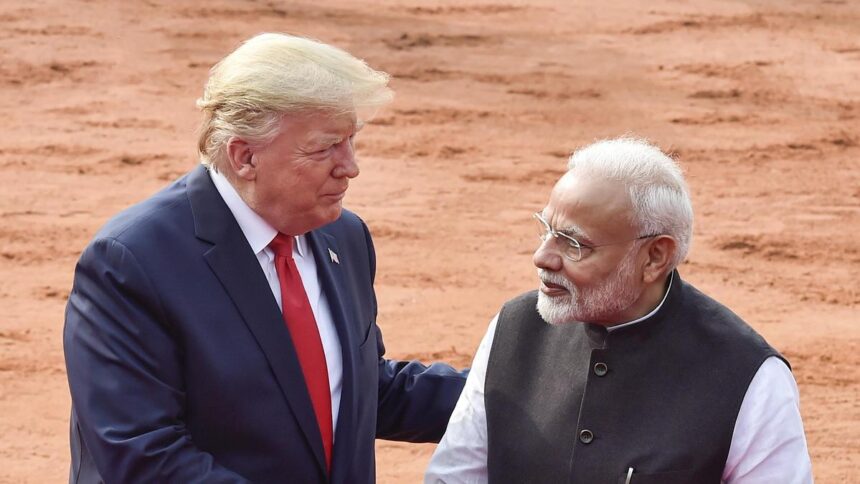
US President Donald Trump took to social media network Truth Social late on Monday (February 2, 2026) to announce that he had spoken to his “great friend” Prime Minister Narendra Modi on the phone and that they had agreed to a deal to reduce India’s tariffs.
While Mr. Trump’s post also specified various other commitments made by India, Mr. Modi’s post on X regarding the call only confirmed the tariff cuts without confirming or denying other points.
A resumption of orders to India is expected
“The reduction in reciprocal tariffs – from around 50% to 18% as suggested – will be a major game-changer for the competitiveness of Indian exports against other Asian suppliers,” said Federation of Indian Export Organizations (FIEO) president SC Ralhan.

In a significant relief to several labor-intensive sectors affected by the US’s 50% tariffs, the newly announced tariff cuts are expected to lead to an “immediate and substantial” release of orders that were previously held back, especially in global seasons such as apparel, textiles, leather and footwear, typically during the summer season.
Rajiv Memani, president of the Confederation of Indian Industries (CII), also said the agreement would “enhance the global competitiveness of Indian products and accelerate manufacturing growth, job creation and the development of resilient supply chains”.
The agreement was welcomed by industry bodies in the US, noting that the announcement to lower tariffs and non-tariff barriers would benefit American and Indian companies and workers in both countries.
“We are optimistic that this is the first step toward a comprehensive trade agreement that unlocks even more private sector collaboration, and we look forward to reviewing the details of the agreement,” said US Chamber of Commerce President and CEO Suzanne P. Clarke said.
According to Ashok Chandak, president of Semi India and India Energy Storage Alliance, the electronics sector, which accounts for a large portion of India-US trade, is expected to experience a “major catalyst” from the deal.
“By improving market access, enabling the smooth flow of capital equipment and advanced technologies and – when complemented by the iCET and TRUST initiatives – strengthening reliable supply chains and deepening technology collaboration, the agreement will significantly enhance India’s attractiveness as a global manufacturing and innovation hub,” said Sri.
Namit Joshi, Chairman of Pharmaxil, said that America accounts for 30-40% of the total revenue of the pharmaceutical industry.
“This agreement will promote greater market access for Indian generics and biosimilars, strengthening India’s position as a global leader in affordable medicines,” Mr Joshi said.
The Gem and Jewelery Export Promotion Council (GJEPC) said US tariffs of 50% have “sharply” disrupted trade flows to the US, which will account for 31% of the sector’s exports in 2024-25.
“This [the tariff cut] It is poised to revive demand and stabilize operations,” the body added.
Increases competitiveness and future
Apart from industry bodies, heads of several Indian companies reacted positively to the deal, saying it would have a positive impact on them.
“The Aditya Birla Group is the largest Indian investor in the US and this agreement will help create more resilient supply chains, unlock manufacturing opportunities and enhance long-term economic competitiveness in both the US and India,” said Kumar Mangalam Birla, Chairman, Aditya Birla Group.
US Ambassador to India Sergio Gore today announced that US President Donald Trump has spoken to Prime Minister Narendra Modi amid strained India-US ties over several issues, including tariffs. @janussmith Reports.https://t.co/hA1zbnt3JQ
– The Hindu (@the_hindu) February 3, 2026
He said the group is committed to expanding its presence and investments in the US
TVS Motor Company Chairman Sudarshan Venu highlighted the fact that India now has trade agreements with major economic partners around the world.
“In a challenging global environment, openness and openness in trade will help Indian industry scale, innovate and create jobs,” said Mr. Venu.
Anish Shah, Group CEO and Managing Director, Mahindra Group, said the reduction in tariffs on Indian exports, along with a commitment to progressively reduce tariff and non-tariff barriers, will “accelerate growth and businesses can grow with confidence. DK will improve the future,” he said.
A few issues to keep in mind
According to Rahul Ahluwalia, founder-director of the Foundation for Economic Development, India’s tariffs are now lower than China’s and some geographies such as the UK, EU and Japan attract lower US tariffs than India on a level playing field with competitors such as Vietnam and Bangladesh.
“However, we should not take this trade deal lightly,” cautioned Mr Ahluwalia. “Trump has shown great unpredictability in following through. Our most urgent task must remain internal reforms that help our regulations and institutions become globally competitive.”
Also Read |A parallel track on continuing US-India relations
Sanjay Mariwala, executive chairman and managing director, Omniactive Health Technologies, while hailing the deal and the potential end of trade barriers between India and the US, said it again raised some specific concerns related to the nutraceuticals sector.
“Drugs have a clear pharmaceutical trade identity, which helped them avoid similar hurdles, while nutraceutical products are often considered as common food items,” said Mr Mariwala. “That distinction has real implications, from duty exposure to contractual risk.”
Giving nutraceuticals a “more appropriate” classification framework would remove recurring uncertainty and allow the sector to grow “with the expected stability of the health-related industry,” he said.