

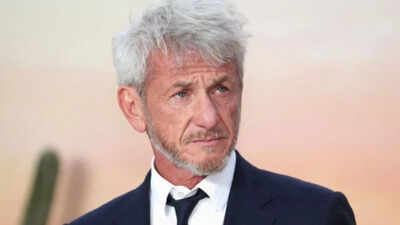
Sean Penn didn’t just become an actor. He became one of the most respected and serious artists in cinema. Films like Mystic River and Milk proved that he could take on major dramatic roles and win major awards.
He’s won Oscars. He has been nominated for a Golden Globe Award. He played characters that required incredible depth and vulnerability. He has worked with top directors on films that challenged audiences. He’s also been one of the most outspoken actors in Hollywood about the issues that matter to him. He has traveled to war zones. He has interviewed world leaders. He has used his platform to challenge power structures and eradicate injustice.
He was a complex figure in an industry built on simplicity and easy narrative.But when you look at his entire career, there is a pattern. A detailed line from someone who seems genuinely uncomfortable with the machinery of stardom itself. Someone who questions the entire system even after achieving everything it is supposed to offer. An example of this can be seen in his lyrics which often highlight different aspects of life, work and more.
As he said: “Turning your back on stardom may be the highest form of common sense.
One I aspire to be more complete with.”
Quote of the day from Sean Pennsylvania
“Turning one’s back on stardom may be the highest form of common sense. And it is the form with which I aspire to be most complete.”Sean Penn said this in January 2012 during the Sundance Film Festival. He was there to promote his film This Must Be the Place, and when reporters asked him about his character, he was honest.
His character in the film is a retired rock star who left his fame behind to live a quiet, isolated life. When they asked him if he could relate to this desire to escape fame, Sean Penn admitted that he often thinks about stepping away from the Hollywood spotlight himself.
He felt that stepping away from stardom was actually a very smart and sensible choice. Which he hopes he can fully achieve.But he didn’t stop there. In that same interview, he didn’t hold back his frustration with recent fame.
He described celebrity culture as an “obscene disease” that degrades the quality of culture. He was not a diplomat. He wasn’t playing the game. He was honest about how he really felt about the system he had been a part of for decades.
What does it actually mean?
Sean Penn describes something most successful people in entertainment never say out loud. That the whole thing might be a trap. This stardom may actually be the opposite of what it’s supposed to be.
Achieving everything the industry asks of you can actually be a form of losing yourself.When he talks about turning your back on stardom as the highest form of common sense, he’s saying that if you can see the whole system clearly, if you can extract yourself from the psychology of it, you’ll realize that the pursuit of fame actually works against your own interests. This is a bad trade. You’re trading your privacy for attention.
You’re trading your authenticity for a brand. You are trading your peace for chaos.But then it adds something important. “One I aspire to be more fully with.” He does not say that he achieved this. He doesn’t judge people who stay in the game. He says he wishes he could do it better. He wishes he could walk away more completely than he did. That even though he knew all of this, and even understood it intellectually, he could not fully achieve it.This is the truest thing an actor can say. Because the truth is that once you enter the system, once you taste success and recognition, it is almost impossible to fully extract yourself. Do you want? You know it will be better for you. You see how he corrupts and harms people. But you’ve already been arrested. You’ve already been introduced to it. Your entire identity is wrapped in it.The part about celebrity culture being an “obscene disease” is that Sean Penn has been vocal about what he sees happening in entertainment.
It talks about how the obsession with celebrities, the way we treat celebrities, the way the industry creates and exploits celebrities, creates a sick system. It’s not healthy. It’s not good for the people who fall into it. This is definitely not good for the culture as a whole.In “This Must Be the Place,” his character lives out the fantasy that Sean Penn describes. He has to stay away. He must give up fame, money, and attention and find peace in obscurity.
It’s a fantasy because in real life, it’s almost impossible to do that when you’re at Sean Penn’s level. The machines won’t let you go. Your own history won’t let you go. Your own habits and attachments will not let you go.But the fact that Sean Penn keeps coming back to this idea, keeps making films about characters escaping the system, and keeps talking about wanting to get away, suggests that he sees something very wrong with the whole enterprise.
And he dares to say it out loud, even though saying it might hurt his brand and standing in an industry that doesn’t take kindly to criticism from within.
Who is Sean Penn?
Born Sean Justin Penn in 1960 in Los Angeles, California, Sean Penn has emerged as one of cinema’s most respected and talented actors by consistently choosing challenging and complex roles and bringing depth to each character. According to IMDb, he has appeared in films including “Fast Times at Ridgemont High,” “The Falcon and the Snowman,” “Colors,” “Casualties of War,” “State of Grace,” “Dead Man Walking,” “The Game,” “Sweet and Lowdown,” “I Am Sam,” “Mystic River,” “The Interpreter,” “Into the Wild,” “Milk,” and “The Tree of Life.” “Gangster Squad”, “Gunman” and many others.He’s already been nominated for two Oscars for acting and won two for Best Actor, so he could certainly do so in a career-defining role. He has won many prestigious awards at international film festivals, and has also been nominated several times for Academy Awards. In addition to his acting career, Sean Penn has been a director of films and documentaries, where he has showcased his directorial talents.
He has taken his platform to conflict zones, met with world leaders, and spoken about political issues. He criticized celebrity culture and the entertainment industry, rather than being a victim of it. He has made films that shake audiences and the industry.What distinguishes Sean Penn is not only his talent as an actor. It’s his refusal to play the Hollywood game. He was critical of the system even when it succeeded. He made films about characters running away from fame and success, which reflects his ambivalence about these things. His statement about celebrity culture being an obscene disease, and how stardom can be a trap, is representative of someone who has spent decades at the top of the entertainment industry and has truly come to question whether getting to the top is actually worth the cost.