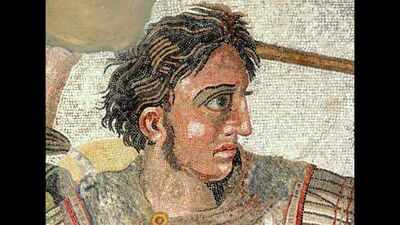
Alexander the Great (Image: Wikipedia)
Numbers and weapons are important in battle, but they rarely represent the entire story. Sometimes the deciding factor is who stands in front and gives the orders. This idea lies behind one of the most famous lines associated with Alexander the Great.
The quote reads: “I am not afraid of an army of lions led by a sheep, but I am afraid of an army of sheep led by a lion.” Whether or not Alexander himself said these exact words, it is clear that the point behind them persisted, repeated across more than two millennia of history, and carried over from one century to the next long after the man himself was gone.
Today’s quote by Alexander the Great
“I am not afraid of an army of lions led by a sheep, but I am afraid of an army of sheep led by a lion.”
What is the meaning behind Alexander the Great’s saying?
The quote works through two simple images. The Army of Lions represents individually brave and capable fighters.
However, if the person leading them lacks judgment or boldness, all that individual strength can be in vain. The army of sheep represents ordinary people, not naturally brave, but capable of achieving much more than expected once they are guided by a truly strong leader.The point is clear and direct. Leadership can completely change what a group of people can achieve together, and sometimes it’s more important than the raw talent within that group.
Why the idea is still important even without a confirmed source
None of this uncertainty removes the value of the idea itself. A leader does much more than simply distribute instructions. They build a shared sense of purpose, give people something to trust, and help the group stay focused when things get tough. When people truly believe in those who lead them, they often begin to believe more in themselves as well, and this shift alone can change what the entire group has been able to achieve.
Why is talent by itself rarely enough?
Many teams and organizations are filled with talented people, but talent without real direction can lead to surprisingly inconsistent results. A skilled group that has no coordination or common goal often struggles to reach anywhere near its actual potential. This is exactly why serious organizations invest heavily in leadership development, not just technical skills, as the two rarely achieve results alone.
Why trust and courage It tends to spread
People often take their emotional cues from the person leading them. A calm leader during a real crisis tends to calm everyone down as well. A leader who clearly believes in the ability of his team often ends up creating the same belief within the people he leads. In other words, confidence is rarely just a special individual trait. It moves through a group, usually starting at the top.Courage works in a similar way. It never means the absence of fear, only the choice to act in spite of it.
When a leader displays this kind of courage publicly, he or she tends to give everyone around him/her permission to do the same.
Why this goes beyond the battlefield
Although this particular image comes from war, it is clear that the underlying lesson reaches much further. Teachers form entire classes. Managers shape workplaces. Coaches shape how athletes perform under pressure. Parents form families. In each of these settings, the quality of leadership tends to shape how people respond to real challenges and real opportunities, whether or not there is a fight anywhere.
How to use this idea in practice
Lead by consistent example rather than title or authority alone. Help build trust in others, especially during really difficult moments. Focus on developing the people around you rather than just directing them. Build trust slowly, through consistency, rather than expecting it to appear automatically. Remember, leadership itself often decides the extent to which the group’s raw capacity is actually used.
Other quotes attributed to Alexander the Great
- “Nothing is impossible for those who try.”
- “I would rather be better than others in knowing what is excellent than how strong I am.”
- “The sky cannot bear two suns, nor can the earth bear two masters.”
Why this still resonates today
Leadership remains one of the most powerful forces within any group, whatever the century. Technology continues to change, and the challenges people face become more complex, yet people still respond strongly to leaders who inspire true confidence and give others a real sense of direction. This particular saying, whoever said it first, has survived more than two thousand years for a simple reason.
Ordinary people, well guided, can ultimately achieve things that seem nothing short of extraordinary.