As the sun rose over the flat, calm Florida Straits, two ships came out of Havana harbor: the Isla Holbox, a squat logistics ship, followed by the more aggressive-looking Papalopon, its bow ramp giving off the appearance of a large beetle.
Two ships from the Mexican Navy arrived on Thursday with humanitarian aid MexicoEfforts for support Cuba Amid a crisis exacerbated by Donald Trump’s economic pressure campaign.
The boats arrived in the Caribbean nation with more than 800 tons of aid two weeks after Trump signed the executive order. Allows the US to impose tariffs on any country that sells or supplies oil to Cubaeffectively reducing fuel consumption per island.
President of Mexico Claudia Sheinbaumsaid Thursday that his government was seeking diplomatic measures to resume oil shipments to Cuba, but stressed that as soon as the ships returned, “we will send various forms of support.”
The Isla Holbox carried about 536 tons of food, including milk, rice, beans, sardines, meat products, cookies, canned tuna and vegetable oil, as well as personal hygiene items. According to the Mexican government, the Papalopan carried only 277 tons of milk powder.
Mexico’s willingness to help Cuba in its time of need — despite bowing to pressure from Washington to stop sending oil — speaks to the complex historical relationship between the three countries that spans more than a century.
“The power that Trump is showing is pressure Cuba “The full history of diplomatic relations with the United States and Cuba puts Mexico in a dilemma,” said Rafael Rojas, a Cuban historian at the College of Mexico.
Rojas said Mexico’s ties to Cuba stretch back to the 19th century, when revolutions in both countries for independence from Spain saw waves of migration between the two countries.
Emigration from Cuba to Mexico increased again under Fulgencio Batista’s dictatorship, which extended from 1952 to 1959. Among those who went to Mexico were Fidel and Raul Castro, as well as an Argentine exile named Ernesto “Che” Guevara.
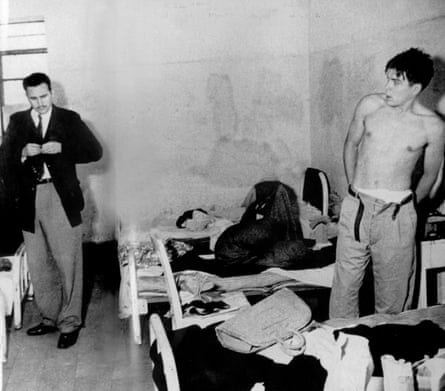
Guevara met the Castro brothers in Mexico City in 1955: together they began planning the Cuban Revolution that overthrew Batista in 1959. After that, Mexico was one of the few countries in the region that did not bow to US pressure and maintained relations with the island.
“The relationship with Cuba has historically served the Mexican government to distance itself from the United States,” Rojas said.
Despite the tacit agreement that Cuba would never actively support guerrilla movements in Mexico, the Cuban Revolution inspired the Mexican left to protest and Even to take up arms against the country’s one-party state.
“In Mexico, there is a certain fraternity and solidarity even with the revolution,” said Ricardo Pasco, a former Mexican ambassador to Cuba. “People saw it as a good option in the debate about how to fight poverty in Latin America.”
During the Cold War, Mexico became a safe jumping-off point for Cubans who wanted to go to other countries, including its revolutionary leaders.
However, despite openly maintaining solidarity with Cuba, the Mexican government was well aware that it could not sever ties with its powerful northern neighbor and did not share intelligence with the United States about Cubans coming in and out of the country.
In the following decades, including the fall of Communism, Mexico maintained this ambivalent relationship, in which it maintained strong ties to the island through trade and humanitarian aid – although its relationship with the United States was more important.
That changed in 2018 with the election of Andrés Manuel López Obrador, who, along with his leftist Morena party, aligned more closely with the Cuban government, touting public support for the island and condemning US trade embargoes.
“When Morena came to power, there was not only fraternity and solidarity, but also ideological identification,” Pascoe said.
That leaves Sheinbaum in a particularly precarious position between wanting to appease his party’s pro-Cuba base while maintaining a good relationship with the Trump administration, especially with the upcoming renegotiation of the US-Mexico-Canada treaty.
Even after Mexico cut off oil deliveries to Havana, Sheinbaum suffered Show it as a “sovereign” decision.
“There’s a delicate balance … for her to appease her base is showing this policy of solidarity and, on the other hand, she cannot hide the transaction with the United States,” said Rojas. “The fact Mexico stopped sending fuel to Cuba under pressure from Donald Trump It means that Mexico has complied with the oil embargo imposed by the United States.
As Cuba’s energy crisis worsens and life on the island becomes more desperate, Sheinbaum offered Mexico as a host for talks and said Thursday that her government was in talks with the US about Cuba “being able to get oil.”
But if the regime breaks down, Sheinbaum will have to change his tune.
“That pro-Cuba rhetoric won’t work for her if the administration falls — she’s going to have to modify her message,” Pascoe said. “But for now, she’s at a crossroads, talking about sending food, medicine or humanitarian aid, but no more oil.”