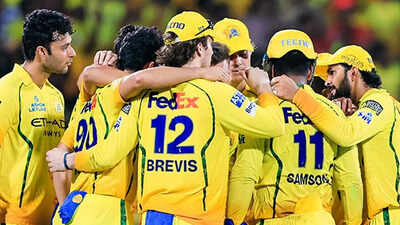
Chennai Super Kings players (Photo: CSK)
Five-time champions Chennai Super Kings are in uncharted territory after missing out on the playoffs for the third successive season. For a franchise that was once viewed as an ordinary top-four team, the decline has been steep and uncomfortable.Despite an erratic campaign, CSK remained sportingly alive until their final league match against the Gujarat Titans. They needed a win to keep their slim playoff hopes alive, but instead suffered the heaviest defeat in their ISL history – 89 runs in Ahmedabad. The loss not only ended their season, it summed it up: shaky bowling, inconsistent batting, and a team that never settled.After making 10 consecutive playoff appearances, CSK have now missed out on qualification five times in the last seven seasons.
The only positive aspect is that they qualified twice during this stage, winning the title. But that statistic alone can’t mask the larger concern, which is that a franchise that once defined consistency is now looking for direction.
CSKV EPL 2026: Six wins from 14 matchesSeven wins are generally seen as the minimum requirement for an IPL play-off spot, and CSK have not reached that mark. They finished with just six wins and 12 points from 14 matches.
Their home level, which was once the source of their strength, failed to save them, while their away level never took shape. Four wins in Chibok and only two away wins will never be enough in a busy season. Their crushing defeat to Gujarat Titans in the final league match highlighted how far they are from the team that lifted the trophy in 2023.
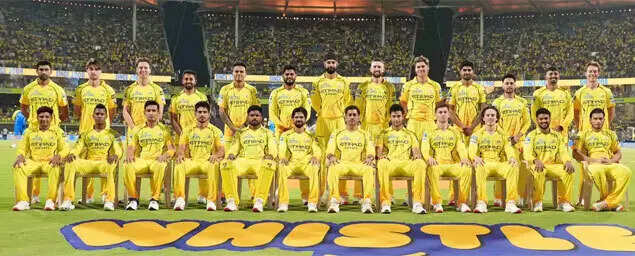
Chennai Super Kings Class of 2026 (Image Credit: CSK)
Key reasons behind CSK’s struggles in IPL 2026
1. Injuries derailed the seasonInjuries were the biggest reason behind CSK’s downfall. Almost every stage of the season was disrupted by fitness setbacks, forcing constant changes to the playing lineup and preventing any momentum from building.MS Dhoni missed the entire season due to a calf strain, depriving the team of experience and leadership during moments of pressure. Jimmy Overton, arguably CSK’s best overseas player this season, suffered a thigh injury during the offseason and returned to the UK. Young player Aayush Mhatre, one of the standout players of the season, also suffered a hamstring tear after just six matches.The problems did not stop there. Ramakrishna Ghosh was ruled out after one game with a broken foot, Khaleel Ahmed suffered a torn quadriceps muscle early in the tournament, while Nathan Ellis missed the season with a recurring hamstring problem.The result was an ever-changing side with little stability. CSK have had to rely heavily on inexperienced players and makeshift squads, something that rarely allows teams to survive over a long IPL season.2. The outer core is never tappedCSK’s overseas outfit also failed to deliver consistent performance. With the exception of Jimmy Overton and, to some extent, Noor Ahmed, the outsiders have never been able to dominate the tournament.Overton was one of the few positives of the season, contributing 14 wickets and a low-value run before injury cut short his campaign. Noor Ahmed took 13 wickets, but lacked consistent control during the crucial stages.The biggest problem was the failure of remaining foreign investments. Dewald Previs struggled badly despite extended support, Matt Short never fully settled in, while Spencer Johnson failed to make the impact expected after replacing Nathan Ellis.CSK continued to mix up the away sets throughout the tournament. But the constant changes only reflect a larger issue, which is the lack of a stable core abroad around which the side can build.3. A season without rhythmNothing sums up CSK’s season better than the timing of their defeats. They started the campaign with three straight defeats and ended it with another three straight defeats.There was a brief revival midway through the season when CSK won three matches in a row and briefly revived their playoff hopes.
But every time momentum seemed within reach, another setback followed. Injuries, inconsistent performances and unstable combinations have repeatedly pushed them back.Unlike CSK’s peak years, where the team rarely looked shaky, the 2026 edition always looked like reacting rather than taking control of situations.
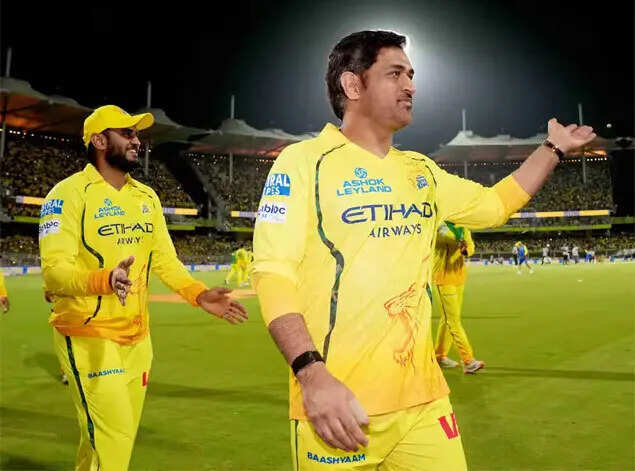
MS Dhoni during CSK’s final home match of IPL 2026 at Chepauk. (Image credit: CSK)
IPL 2026: CSK report card
1. High performersDespite the disappointing season, a few players have given CSK real reasons for optimism.Sanju Samson
in his first season with the franchise, became the batting pillar of the side. He scored 477 runs at a strike rate above 165 and smashed two centuries, often carrying the batting line-up during difficult periods.Youngsters Kartik Sharma and Ayush Mhatre were also impressed. Mhatre, in particular, stood out with his bold shots and strike rate of 178 in limited opportunities.With the ball, Anshul Kamboj has emerged as CSK’s most reliable wicket-taker, taking 21 wickets in a difficult season for the bowlers.
Although his form eventually dipped slightly, the youngster showed enough promise to become a long-term starter.Jimmy Overton’s contribution before injury was equally valuable. His ability to contribute with both bat and ball gave CSK the balance they lacked for most of the season.Best rackets:
| Matches | Runs | Ave. | SAR | 100 seconds / 50 seconds | |
| Sanju Samson | 14 | 477 | 43.36 | 165.62 | 2/1 |
| Kartik Sharma | 11 | 295 | 32.78 | 136.57 | 0/2 |
| Aayush Mhatre | 6 | 201 | 33.50 | 177.87 | 0/2 |
Top bowlers:
| Matches | Wicket | Ave. | economic. | better | |
| Anshul Kamboj | 14 | 21 | 25.23 | 10.52 | 3/22 |
| Jimmy Overton | 10 | 14 | 17.78 | 8.89 | 4/18 |
2. The performers are inconsistentCSK’s campaign was largely defined by players who showed flashes of brilliance but failed to sustain the impact.captain
Ruturaj Gaikwad
Enduring a difficult season. He finished with 337 runs but did not look completely in control at the top of the order.
His strike rate of 123.44 reflects CSK’s biggest batting problem – a lack of urgency during pressure situations.Shivam Dube (270 runs from 13 matches) played many aggressive innings and maintained a healthy strike rate (158.82), but the lack of setting a match-winning innings hurt the team.Among the bowlers, Noor Ahmed (13 wickets from 14 matches) and Akil Hossain (8 wickets from 7 matches) produced strong spells occasionally but could not consistently dominate surfaces where CSK traditionally relies heavily on spin.
Hussein’s omission midway through the season has made the team more balanced.Mukesh Choudhury (8 wickets from 8 matches) also had his moments with the new ball, but inconsistency prevented him from becoming a reliable option.3. Complete failureMany players failed to justify their opportunities or assigned roles, exposing flaws in team building and backup planning.Gurjapneet Singh (4 wickets from 8 matches), Khaleel Ahmed (2 wickets from 5 matches) and Spencer Johnson (2 wickets from 3 matches) struggled badly with both wickets and economy rates, leaving CSK without a reliable pace attack for most of the season. The batting disappointments were equally damaging. Dewald Previs (151 points from 11 games) couldn’t find a rhythm despite extended support, averaging less than 19%.
Sarfaraz Khan
(161 runs from 8 matches) and Urvil Patel (129 runs from 7 matches) He produced an isolated cameo but failed to turn debut into impactful roles.While Orville posted a batting average above .200, his lack of consistency made him unreliable in pressure situations. Prashant Vir (90 points from 6 matches) also failed to prove himself in limited opportunities.
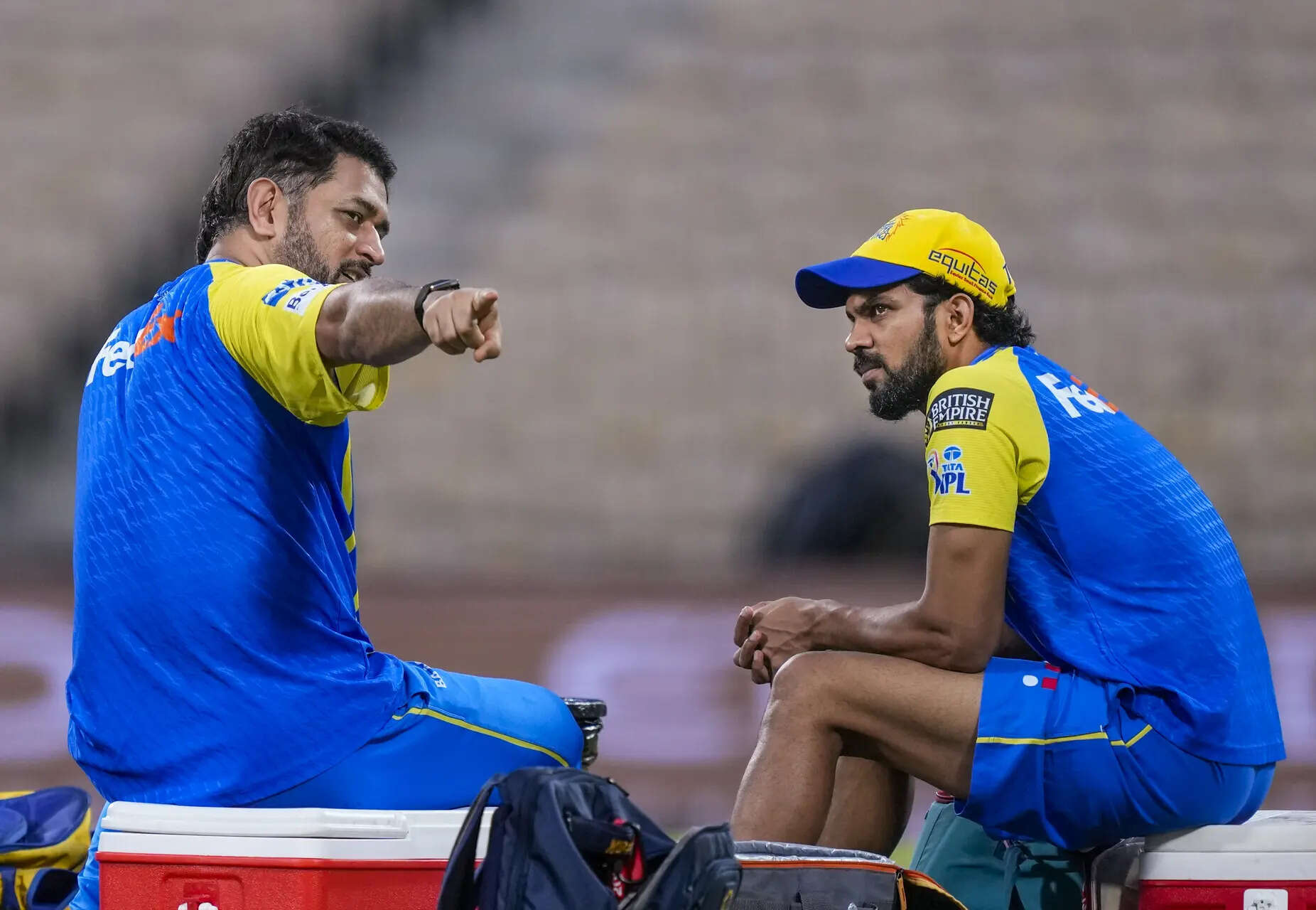
CSK skipper Ruturaj Gaikwad, right, and MS Dhoni during a training session. (PTI photo)
What’s next for CSK?
- Does CSK need a tactical reset?
After three consecutive exits from the league stage, it is clear that CSK needs a tactical rethink ahead of IPL 2027.For years, the franchise has built its success on stability, experienced players and improved conditions in Chibok. But in 2026, this formula stopped working consistently. Their top-heavy approach no longer guaranteed control at home, while constant changes due to injuries prevented rhythm from developing.Modern IPL teams are increasingly built around aggressive batting depth and adaptable pace attacks – two areas in which CSK have appeared behind the curve. Outside of Anshul Kamboj, they lacked a reliable fast bowler to take wickets, while the batting often struggled to accelerate under pressure.The franchise now faces an important choice: continue to trust the old formula or adopt a leaner, more flexible approach.
- Can Gaikwad lead the next era?
Ruturaj Gaikwad’s third season as captain was far from smooth as he failed to take the team to the playoffs in all three.
Injuries, Dhoni’s absence and constant adjustments have made leadership very difficult.Questions also remain about his tactical flexibility and batting intent. A return of 337 runs at a strike rate of 123.44 lacks the authority expected from a modern IPL captain.Despite this, CSK are looking to continue looking to Gaikwad as the face of their transition into the post-Dhoni era. The biggest challenge will be whether he can develop into a more active leader and able to build a new identity for the team.The emergence of young players like Aayush Mhatre, Kartik Sharma and Anshul Kamboj at least gives CSK a foundation to build on.
- How can CSK become contenders again?
For CSK to become a genuine contender again ahead of the 2028 mega auction, IPL 2027 must be approached with long-term clarity rather than short-term fixes.Their biggest priority should be rebuilding the pace of the attack around Anshul Kamboj and finding fast bowlers outside off after repeated injury setbacks for Nathan Ellis and Jimmy Overton.
They also need more middle-order firepower and reliable knockouts, with a lot of responsibility falling on Sanju Samson’s shoulders this season.The positives from 2026 provide a starting point. Mhatre, Kartik Sharma and Kamboj showed that the next generation is already within the team. The challenge now is to build a stable core around them rather than relying too heavily on the experience of growing older.