Constitutional Amendment No. 131 regarding the quota for women in parliament failed. This happened despite the bill receiving more yes votes than no votes.

Constitutional amendment bills require a simple majority of the total members of the House of Representatives, but also a special majority of two-thirds of the total members present and voting. While the draft women’s quota law met the first criterion, it failed the second criterion.
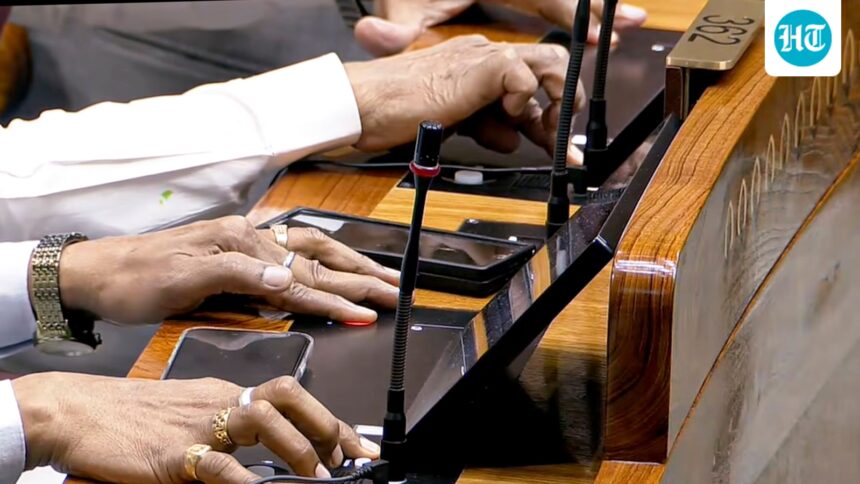
The proposed legislation received 298 votes in favor and 230 votes against. This means that although the bill had a simple majority, it did not receive the two-thirds vote required to pass as a constitutional amendment. Of the 528 members who voted, the bill needed 352 votes to obtain a two-thirds majority.
As per the Constitution Amendment Bill, Lok Sabha seats were to be increased to a maximum of 850 from the current 543 to “give effect” to the Women’s Reservation Act before the 2029 parliamentary elections. Seats in state assemblies and union territories were also to be increased to accommodate the 33 per cent reservation for women.
Two other bills, including one to demarcate boundaries and increase the number of seats in the Lok Sabha, were not put to a vote after the first lost, with the Center saying they were “substantially linked” to legislation on women’s reservation.
The reason behind failure
While motions to introduce bills to amend the Constitution are adopted by a simple majority, a majority of the total membership of the House and a majority of not less than two-thirds of the members present and voting are required for the adoption of effective provisions and for the consideration and passage of such bills.
Bills to amend the Constitution affecting vital issues as provided under the proviso to Article 368(2) of the Constitution, after passing by both Houses of Parliament, must also be ratified by not less than half of the State Legislative Assemblies.
Opposition parties strongly objected to the demarcation bill and said the government should immediately implement reservation for women in the current strength of the House. They expressed their full support for the reservation of women.
In his speech during the debate, Congress leader Rahul Gandhi criticized the government over the delimitation bill and said it had “nothing to do with women empowerment” and was “an attempt to change the electoral map of India.” Nearly 130 members participated in the debate.
Modi government criticizes the opposition
Ahead of the vote, Union Home Minister Amit Shah responded to the marathon debate on three bills in the Lok Sabha.
He criticized the opposition parties’ position on draft laws implementing women’s reservations in the 2029 general elections, and said that when they run in the next elections, they will face the wrath of women.
After the Lok Sabha failed to pass the Constitution Amendment Bill, Parliamentary Affairs Minister Kiren Rijiju said the government has no intention of pursuing the other two bills.