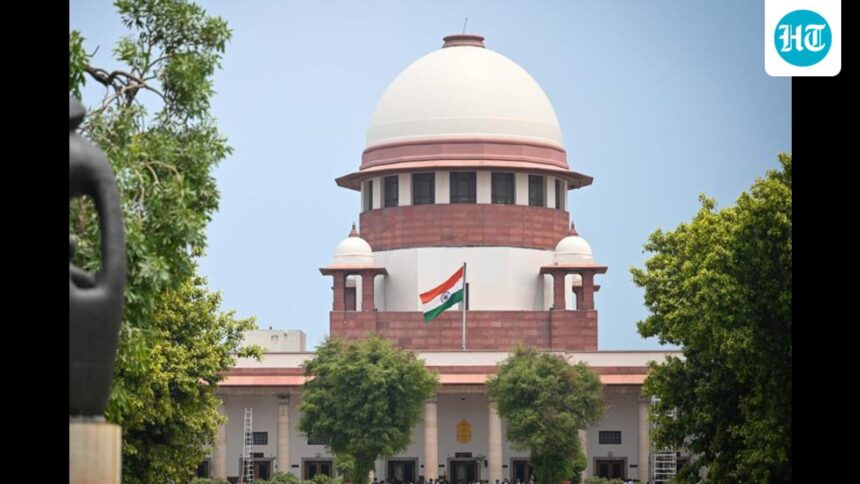
The Delhi Police on Tuesday cited various views of Supreme Court benches on bail under the Unlawful Activities Prevention Act (UAPA) and said the matter requires consideration by a larger bench.

Additional Solicitor General SV Raju, who appeared before a bench of Justices Aravind Kumar and BP Varali in the bail applications in the 2020 Delhi riots of accused Taslim Ahmed and Abdul Khalid Saifi, referred to the May 18 statements of a two-judge bench that expressed disagreement with the court’s January 5 decision to deny bail to Jawaharlal Nehru University researcher Omar Khalid and Sharjeel Imam. Justice Aravind Kumar headed the bench that denied bail to Khalid and Imam.
Raju said the May 18 ruling in a separate case stated that bail remains the rule and imprisonment the exception, and that the presumption of innocence should govern courts when considering bail under the UAPA. Raju said the presumption of innocence takes a back seat in special laws like the anti-terrorism law UAPA.
The judge asked him: Do you say that? [May 18 judgment] He has an error. Raju replied that he had not yet issued a ruling. He added that a larger judicial body should decide the case, while he sought a day to study the ruling. The case is listed back for hearing on Wednesday.
Section 43D(5) of the UAPA imposes strict restrictions on bail. The court has to conclude whether the allegation against the accused appears to be true prima facie while fixing bail. Assistant Secretary-General Raju said that such language is unique to special laws and represents a departure from ordinary criminal law, which is governed by the presumption of innocence.
It is unprecedented for a body of the court to comment negatively on another decision and raise doubts about its legitimacy. The May 18 ruling cited the January 5 decision to deny bail for Khaled and Imam and said: “We have serious reservations about various aspects of the ruling… including dropping the right of the appellants.” [Khalid and Imam] To request a one-year guarantee.”
It raised doubts about the way the January 5 ruling interpreted the three-judge bench’s 2021 order in Najib’s case, which denounced pretrial detention. The May 18 order states that the decision of the three-judge panel is binding on all courts, including the less powerful bench of the Supreme Court.
Khaled’s review petition against the bail denial was rejected on April 16. He has not yet filed a curative petition. The imam did not submit a review request.