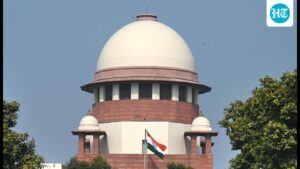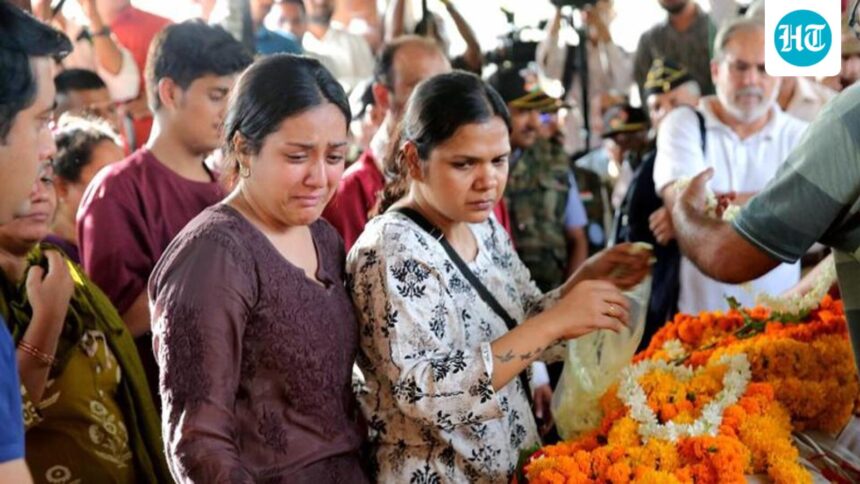
The Central Bureau of Investigation (CBI) is expected to take over within a day the probe into the unnatural death of 32-year-old actress-model Twisha Sharma at her marital home in Madhya Pradesh, the Supreme Court was told on Monday, amid mounting allegations of institutional bias, procedural irregularities and possible loopholes in the investigation.

A bench led by Surya Kant and comprising Justices Joymalia Bagchi and Vipul M Pancholi recorded the Madhya Pradesh government’s statement that it had already written to the Center recommending a CBI probe into the matter.
Solicitor General Tushar Mehta, representing the state, told the bench that the Department of Personnel and Training (DoPT) notification enabling the CBI to formally take over the investigation is likely to be issued within the day.
“The investigation must be conducted fairly and impartially at all times,” the bench noted, while asking both sides to refrain from making public statements and urging the media not to publish or broadcast statements of potential witnesses while the investigation is underway.
“We are against the narrative being created. That is why the CBI should take charge,” the bench said during the hearing, adding that while it had “no doubt” about the integrity of the state police, setting up an independent agency investigating the matter would inspire greater confidence in the facts of the case.
Read also: Twisha Sharma SC Live Hearing: Solicitor General Tushar Mehta says ‘It is better to have a divorced daughter than a dead daughter’
The Supreme Court also expressed concern about the public discourse surrounding the case and allegations that the judiciary was influencing the investigation because the deceased’s husband is a lawyer and her mother-in-law is a former judicial employee.
The court commented: “We feel a little pain from the developments… It is unfortunate that it is said that the judiciary is derailing the trial.”
The matter was registered suo motu by the Supreme Court under the title “In reply: Alleged institutional bias and procedural discrepancies in unnatural death of a young girl in matrimonial home”, based on media reports and attendant circumstances.
In its order, the panel noted that a news report published on May 18 raised questions about “institutional bias and contradictions” in the investigation, especially since the deceased’s husband was a practicing lawyer and her mother-in-law was a former district judge.
“A narrative has been created that a fair investigation has been denied due to interference by the judiciary. That is why the proceedings were initiated suo motu,” the court recorded.
The court noted that the second autopsy had already been conducted in Bhopal by a team from Delhi’s AIIMS as per the directions issued by the Madhya Pradesh High Court, and cremation had since taken place.
“The only issue that so far remains for consideration is the approval of the recommendation to conduct an investigation into the CBI,” the bench said in its order, recording the Solicitor General’s assurance that the matter would be taken up with the authorities so that the CBI “can take up the investigation immediately.”
During the hearing, senior advocate Siddharth Luthra, representing the Sharma family, said the case involved concerns of “institutional bias”, alleging delay in registering the FIR and failure to preserve evidence. “Every day evidence is lost,” Luthra said.
In response to these concerns, the Council assured the family that the Supreme Court would ensure an impartial investigation.
“We will ensure an impartial investigation into this incident. Record your statements,” the council said, reiterating the request to the media not to turn witness accounts into “audio clips.”
The bench also stressed that “a fair trial has now been ensured” once the CBI takes over the investigation.
At one stage, Mehta told the court that the controversy intensified after one of the “potential accused”, referring to Sharma’s mother-in-law and former district judge Gribala Singh, gave media interviews in which he allegedly abused the deceased.
Mehta informed the court that Giripala Singh had been granted anticipatory bail on May 15, which has since been challenged by the state government and the victim’s family before the Madhya Pradesh High Court.
He also said that the police repeatedly asked her to record her statements, but she refused to come, after which the investigators offered to visit her home to record her statements.
Senior advocate Siddhartha Dev, who represented the accused side, also expressed concerns over the media reports, telling the bench that even his statement made before the police had been published in newspapers and urging the bench to ensure a fair investigation for both sides.
The panel then warned all parties against litigating the matter publicly.
“We would like to assure the family of the victim that instead of making statements in public or before the media, they should record their version before the investigating agency so as not to create any bias or adverse impact on the ongoing investigation,” the order said.
The court also asked the media to “avoid recording the statements of people who are likely to be potential witnesses.”
“This will avoid unnecessary premature impression of the outcome of certain cases to be investigated,” the order added, while asking the public to “refrain from speculation and have confidence in the premier investigating agency.”
The bench clarified that it did not express any opinion on the merits of the allegations, and said that it was entirely up to the investigating agency to study all aspects of the case.
Sharma was found dead at her home in Bhopal’s Katara Hills area on May 12, just five months after she married advocate Samarth Singh. Her family claimed that she was subjected to dowry harassment, psychological and physical torture, and murder, allegations that the accused side denied, and confirmed that she died by suicide.
Singh, who was on the run for 10 days after an FIR was registered against him and his mother, surrendered before the Bhopal police on May 22 and is currently in police custody.
The case has drawn widespread public attention amid allegations regarding the handling of forensic evidence, CCTV footage, delay in lodging an FIR and potential impact on the investigation. The National Commission for Women had earlier taken suo motu cognizance of the matter, describing the death as “suspicious” and seeking a report from local authorities on the action.