After a US strike on a commercial ship in the Gulf of Oman killed an Indian sailor, there are pressing questions about sailor safety, accountability and India’s response. DW spoke with Al-Bahar’s family.

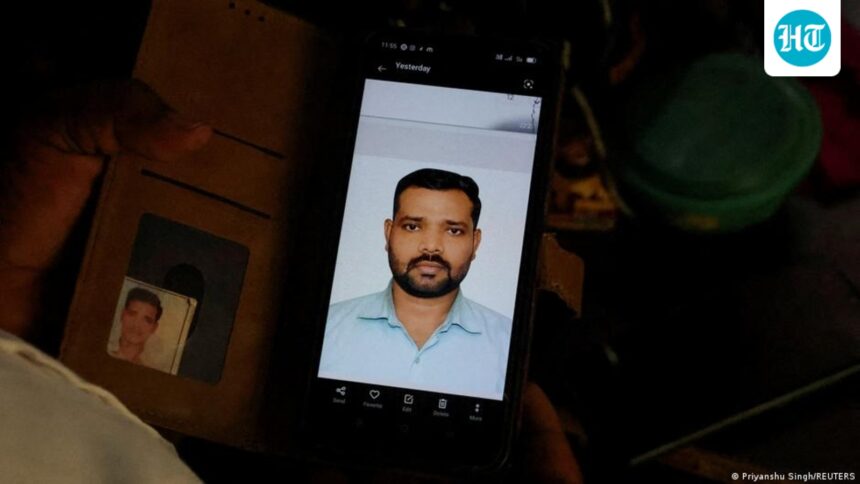
Sushila Devi is in deep grief after her husband, Indian sailor Shivanand Chaurasia, was killed on June 9 in a US raid on the merchant ship MT Setibulu in the Gulf of Oman. Chaurasia, who has experience in engineering, had spent years training to work at sea, hoping to build a better future for his family. Instead, his family is now left trying to come to terms with a future without him. Follow live updates on the US agreement with Iran
Chaurasia was one of three Indian sailors killed when the US military struck the Palau-flagged oil and chemical tanker earlier this month. The US military said it was imposing a blockade on Iranian oil exports amid the Iran war. Patnala Suresh, a chief engineer, and Aditya Sharma, a student on deck, were also killed. The other 21 Indian crew members on board were rescued.
US officials said the tanker was carrying Iranian oil, and had received repeated warnings. The ship’s manager disputes this, saying that the ship has no connection to Iran and did not receive any warning before it was hit. “America killed my husband” “They stole all my happiness. America killed my husband. That’s why the prime minister” [Narendra] Moody and [Uttar Pradesh] Chief Minister Yogi Adityanath is silent.
“They had to stand up for their people and ask why they did this to us,” she told DW. Shivanand Chaurasia’s family lives in a farming village in Deoria district in eastern Uttar Pradesh. It is a small cluster of mud and brick houses amidst a few miles of rice fields. The family sits silently inside their modest brick home as relatives and neighbors move in and out, offering words of condolence. His sister, Soni Chaurasia, said: “My brother’s death has caused us a lot of pain.” “I don’t feel like living in this world now, because the family has lost their only hope.” The family feels abandoned by the Indian government’s silence. No leader visited the bereaved family.
Read also: “They pushed him to death and screamed” Help, Help: Siya’s first words after allegedly killing Ketan
“We are poor. That’s why the Modi government doesn’t care. If we were rich, they would have visited us,” Soni said. Like most families in this part of Uttar Pradesh, Chaurasia’s family survives on agriculture, barely producing enough to feed everyone. The sea was supposed to be the exit of Shivanand Chaurasia. To pay for the marine engineering course, his family sold land and borrowed approximately 860,000 rupees (8,000 euros, 9,000 dollars).
Finally he got a job on an oil tanker. Maritime Manpower in India India provides one of the largest maritime workforce in the world. According to industry estimates, Indian nationals account for approximately 12% of global seafarers. Tens of thousands work on commercial ships crossing some of the world’s most volatile shipping routes.
Read also: NCERT Class 9 book adds emergency and drops preamble and secularism
Under a tree near Chaurasia’s house, a group of men gathered to discuss what had happened and what it meant to them. Many of them have relatives working at sea, including the Persian Gulf. For families already carrying debt, maritime work once seemed like a way out. Now it feels like a gamble associated with life. “We will not send our men to the sea anymore,” one of the villagers said, and the others nodded. They are trying to make a living, but they are stuck in the war, and Indian sailors have been injured by Iranian strikes since the war began. Bomesh, who uses only his first name, is a sailor who survived an Iranian attack on the Skylight oil tanker on March 1, when Tehran imposed a blockade of shipping in the Strait of Hormuz.
It was one of the first ships to be attacked during the war. Bomesh was on the bridge of the ship when it came under fire. “I didn’t know if I would survive or not. I kept thinking how [my family] “I will deal with it without me and whether I will ever come back,” Bumish said. The explosion killed the captain and another Indian sailor. Part of him never left that ship, Bomish said. For weeks, he couldn’t sleep.
“Sailors don’t go there to fight wars,” he said. “We go there to make a living.” Unable to return to the sea, he now drives a truck and lives in a rented room on the outskirts of Delhi. More than three months later, he is still waiting for compensation from the shipping company. Bumesh’s trial is one of dozens being tracked by the Seafarers’ Union of India. “It’s very worrying,” Manoj Yadav, secretary general of the Indian Seafarers’ Union, told DW.
“Why were they attacked without any warnings?” Throughout the day, Yadav fields call from stranded sailors who report that many ships stuck in the Gulf are short of food and supplies. The union also receives numerous calls from concerned family members every day. “They want to know if their son is safe, if their husband will come home,” Yadav said. Even as negotiations between the United States and Iran continue and tensions in the strait ease, many bottlenecks remain preventing each ship from being removed. The United Nations’ International Maritime Organization this week launched an operation to evacuate more than 11,000 sailors and hundreds of ships trapped in the Strait of Hormuz.
Diplomacy and a family tragedy For days after the attack, India’s political leaders remained largely silent as the victims’ families waited for information. This silence quickly turned into a political issue. New Delhi lodged what it described as a strong protest with a senior US diplomat, while Sarbananda Sonowal, India’s Minister of Shipping and Ports, said the incident was a “huge loss to our maritime family.” The opposition accused the government of doing little and questioned Prime Minister Modi’s silence on the attack.
Eventually, at the G7 summit, Modi raised the issue with US President Donald Trump, stressing the importance of protecting Indian seafarers working across global shipping routes. But for the Chaurasia family, such high-level diplomacy seemed out of reach. They still have unanswered questions, such as whether they deserve compensation because they were suddenly deprived of their primary breadwinner while still burdened by debt. They also want to know if enough is being done to protect other Indian sailors working in these dangerous waters. In the end, they just wanted the remains of their family members returned.
For days, Rampravesh, Shivanand Chaurasia’s younger brother, was glued to his phone. Each episode brought new hope. Then, on the ninth day, the call finally came. Shivanand was finally returning home. Hours later, hundreds of villagers joined the funeral procession and later watched flames rise from the funeral pyre. The final rites were complete. The wait is over. But for Shivanand Chaurasia’s family, the search for accountability, compensation and justice has only just begun.