The Ministry of Defense said that the draft Defense Acquisition Procedure (DAP-2026) highlighted India’s proprietary defense technology and not just Made in India, a step towards becoming “a design powerhouse of the world”.
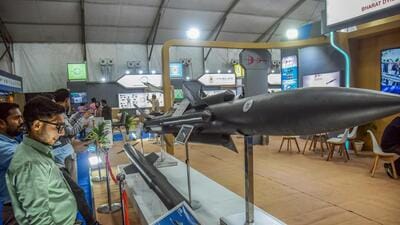
People visit the Department of Defense Production (DDP) pavilion during the India International Trade Fair at Bharat Mandapam in November 2025. (ANI file)This marks a doctrinal departure from the initial phase of ‘swadeshisation’ which primarily involves manufacturing foreign equipment or components on Indian soil, said the draft DAP released on Tuesday.
“For the next decade, the metric of success is not just ‘Made in India’, but ‘Owned by India’.
“We are shifting focus from technology transfer (ToT), which often results in reliance on legacy systems, to co-development and intellectual property (IP) ownership. Capital acquisitions will prioritize source code, critical design data and upgrade authority within Indian firms.”
DAP seeks to promote Indian-designed and developed equipment with new aggressiveness, ensuring that the country’s money recirculates within the domestic economy, nurturing a supply chain that spans from semiconductor labs to precision manufacturing in the country.
More Read

“At the same time, the cutting-edge of national defense will be maintained by initiating parallel development of indigenous options while procuring critical equipment through overseas routes. The developing human and industrial capital of the country coupled with the demand of defense forces, foreign direct investment and infusion of high technological skills by foreign plants will also be supported by this DAP.”
The Ministry of Defense has sought comments from all stakeholders on the DAP by March 3.
The ministry said the primary challenge for the acquisition process in the near future will not be budgetary constraints, but obsolescence.
More Read

“Artificial intelligence, quantum computing, new technological drones, and the rate of technological change in directed energy weapons now exceed the traditional 2-3-year acquisition cycle. This DAP has introduced a “procurement protocol” for such rapidly-evolving systems. It recognizes that we use software as much as software. With hardware weapons, this DAP focuses on upgrades as an equally important part of acquisition as equipment.”
This DAP is the navigation chart for the intermediate phase of India’s journey in 2047, the ministry said. “It cements the modernization of the defense forces and the development of a complete defense manufacturing ecosystem. By the end of the next decade, when the impact of this DAP will materialize in the defense environment, India will no longer aspire to great power status; we will practice it.”
The Directorate of Defense has drafted DAP-2026 to advance the pace of acquisition with jointness, self-reliance and integration, forced modernization and scaling of production, leading to the growth and development of the defense ecosystem in the country, the ministry said in a statement.
“The draft aims to align India’s defense acquisitions with the rapidly evolving geo-strategic landscape, the growth of the Indian economy, the efficiency of human capital, the growth of the private defense industry in the country and the technological requirements of modern warfare.”