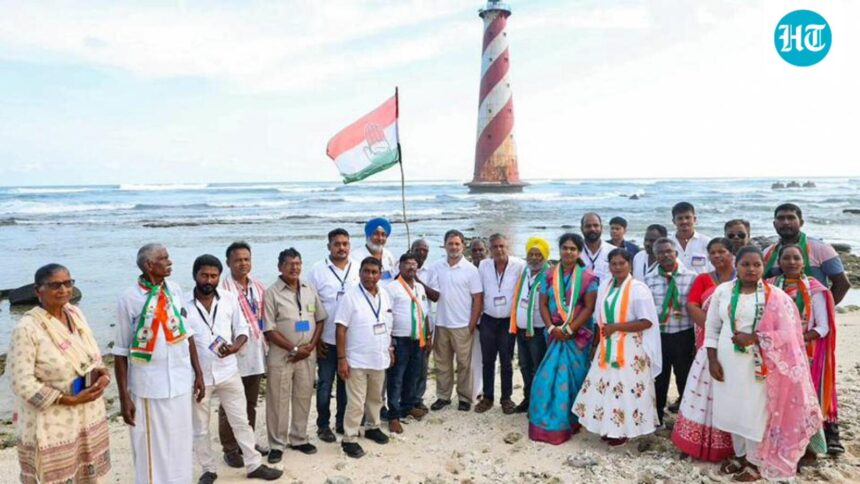
Congress leader Rahul Gandhi on Wednesday attacked the Center over the Grand Nicobar Comprehensive Development Project, calling it “one of the biggest scams and most serious crimes against the natural and tribal heritage of the country” and vowed to raise concerns of locals in Parliament.

“The government is calling what they are doing here a ‘project’. What you saw is not a project. It is millions of trees marked with an axe. It is 160 square kilometers of rainforest doomed to death. It is the communities that have been ignored while their homes have been taken away,” Gandhi said in a post on X, where he also shared a video of himself traveling through the forest.
The project includes an international container terminal, an international airport, a power station and a town on an area of 166.10 square kilometers, of which 130.75 square kilometers are forests and 84.10 square kilometers are tribal lands.
Gandhi said the island is inhabited by a number of communities, including tribals and settlers from the defense forces, all of whom want to ensure the safety of the land. He added: “They asked me to raise this issue in Parliament, and I will gladly do so.”
The Congress leader further said that “everyone” on the island is against the project, has not been consulted, and does not know what compensation they will get for their land. “The people on this island are just as beautiful – Adivasi and settler communities alike – but they are being taken away from what is rightfully theirs,” he added.
Describing the project as “destruction dressed in the language of development,” he said, “So I will say it clearly, and I will keep saying it: What is going on in Greater Nicobar is one of the biggest frauds and most serious crimes against the natural and tribal heritage of this country in our lifetime. It must be stopped. It can be stopped — if Indians choose to see what I saw.”
Gandhi urged the youth to pay special attention to this issue as it relates to their future.
Meanwhile, the National Green Tribunal (NGT) ruled in February that adequate safeguards had been provided in the conditions of the Environmental Clearance (EC) for the Greater Nicobar Comprehensive Development Project, asserting that there were no valid reasons for its intervention.