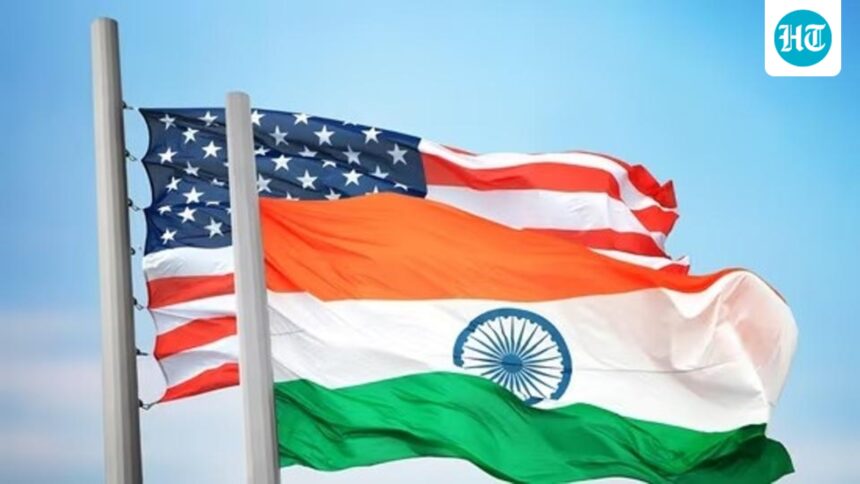
An Indian delegation is expected to visit Washington later this month to advance talks on an interim bilateral trade agreement, as New Delhi seeks preferential market access for Indian goods at the expense of competing countries under the new US tariff structure, people familiar with the matter said.

The original framework, jointly announced on February 7, was thrown into limbo when the US Supreme Court on February 20 struck down President Donald Trump’s sweeping global tariffs as exceeding his legal authority. With the legal basis for the proposed 18% tariff on Indian goods invalidated, the two sides are working to rebuild the agreement on a more solid legal foundation – even as Washington launches new Section 301 investigations against 16 countries, including India, as part of its efforts to rebuild tariff pressures through alternative legal mechanisms.
US Ambassador to India and Special Envoy to South and Central Asia Sergio Gore on Thursday referred to the upcoming visit after a meeting with US Trade Representative Jamieson Greer in Washington. “Very productive meeting with USTradeRep Ambassador Greer to discuss advancing US trade priorities in South and Central Asia. The US and India have previously agreed to a trade agreement, and we look forward to welcoming an Indian delegation to Washington later this month,” Gore said in a post on X.
The visit is expected to give renewed momentum to trade talks and help resolve issues including the Section 301 investigations launched by the US Trade Representative on March 11, said the people, who requested anonymity. Indian Foreign Minister Vikram Misri is already on a three-day visit to Washington starting April 8, adding significant diplomatic heft to this engagement.
One of the people cited above said that finalizing an interim bilateral trade agreement would automatically resolve many trade disputes between the two countries. However, India will submit a formal response to the USTR’s Section 301 investigation – the deadline for which is April 15. A public hearing on the matter is scheduled for early May.
India currently faces two investigations under Section 301: one relating to alleged industrial overcapacity in sectors such as solar modules, and the other relating to the use of forced labour. A total of 16 economies and blocs are under USTR scrutiny – China, the European Union, Singapore, Switzerland, Norway, Indonesia, Malaysia, Cambodia, Thailand, South Korea, Vietnam, Taiwan, Bangladesh, Mexico, Japan and India. According to the people mentioned above, the United States could use Section 301 as a bargaining tool against some of these countries after the Supreme Court blocked their reciprocal tariffs.
However, India is in a better position than most countries given that New Delhi and Washington have already established a framework for an interim bilateral trade agreement. The two sides were on track to sign a “mutually beneficial” interim trade agreement in March. But before the deal — which proposed an 18% tariff on most Indian goods — could be finalized, the US Supreme Court struck down Trump’s use of emergency powers to impose tariffs of his choosing. The completion of any deal now awaits a legally defensible tariff structure, the people said.
The background to the joint statement issued on February 7 is very important. Before that, India faced a 25% reciprocal tariff and an additional 25% punitive tariff for purchasing sanctioned Russian crude – a combined tax that hit Indian exporters hard. The joint statement removed the punitive 25% tariff on the condition that India restrict its imports of Russian oil, leaving only the 25% reciprocal tariff, which was then negotiated down to 18% – giving Indian goods a comparative advantage over competing countries like China.
The February 20 Supreme Court ruling invalidated those reciprocal tariffs. With that framework dismantled, the Trump administration invoked Section 122 of the Trade Act of 1974 to impose a new unified tariff – raised to its legal ceiling of 15% within days – on imports from all countries. That tax is valid for 150 days and is scheduled to expire in July, creating a hard deadline that the ongoing Section 301 investigations are expected to help meet.