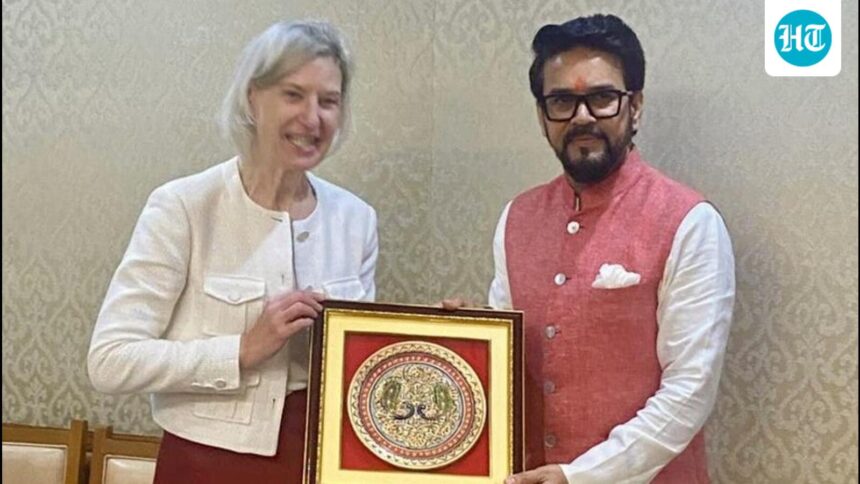
The European Parliament will examine the India-EU free trade agreement as part of the agreement’s approval process to ensure it is fair and balanced, though no major hurdles are expected as agriculture has been largely kept out of the deal, the head of the European Parliament’s delegation for relations with India said on Tuesday.

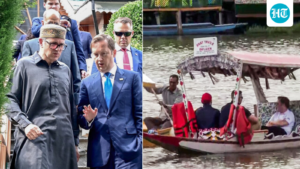
Angelika Niebler, who is currently in New Delhi with an 11-member delegation for consultations with Indian parliamentarians, government officials and civil society, described India as a “trustworthy partner” at a time when Europe is looking to forge new partnerships to address challenges arising from global geopolitical tensions. The delegation met External Affairs Minister S Jaishankar and Commerce Minister Piyush Goyal on Monday.
With India and the European Union looking to sign the free trade agreement, negotiations for which ended in January, by the third quarter of 2026 so that it can come into force next year, Niebler emphasized the role of the European Parliament in approving the deal. “I am very positive because I think it is a good agreement. But it is our duty to examine the agreement carefully, and the devil is always in the details. We have to take a hard look at it,” she said in an interview with HT.
Niebler said the 11 members of the delegation visiting India, who represent various groups in the European Parliament, are all “very positive” about the free trade agreement with India. However, she pointed to the large protests that erupted in Europe after the European Union and South American bloc Mercosur concluded a free trade agreement in January, largely due to concerns over agriculture.
“I don’t expect such obstacles regarding the EU-India FTA because agriculture has been largely left out of the agreement, but you never know. We have high environmental standards, we have regulations like CBAM [Carbon Border Adjustment Mechanism]“So colleagues will take a hard look at whether this is the balanced approach that was taken in the FTA but again, I think, let’s be positive,” Niebler said.
Noting an “EU-India moment” amid geopolitical turmoil, Niebler said the 27-member bloc has an opportunity to “get closer to a new, trustworthy partner” like India, with the FTA providing momentum to boost bilateral cooperation. “Due to geopolitical tensions around the world, I believe trustworthy partnerships play a vital role now, and India is one of our trustworthy partners,” she said. “This moment was brought about by recent developments and US administration policy – which showed us that we have to look for other partners, and was a wake-up call for us in the EU to become more flexible in a lot of sectors. [and] India is doing the same, she said.
Niebler reiterated Europe’s concerns about the Russian-Ukrainian conflict and acknowledged the issue that emerged in her delegation’s meetings in New Delhi. “Ukraine for us is a security issue, and this is what we always emphasize, and I think the Indian government has taken note of that,” she said.
She criticized the US waiver of sanctions for a month to allow India to buy Russian oil, calling it a “wrong decision.” She said: “This does not help stop the escalation. It does not help reach a ceasefire or even begin negotiating peace.” [deal]… It is only a postponement of the problem… You are only filling the coffers of the Russians. So this is not helpful.”
Niebler stressed the role that India can play in facilitating de-escalation in the conflict in West Asia, given New Delhi’s relations with all major players in the region. “India follows a multi-aligned foreign policy, which is helping a lot at the moment. They have close relations with Iran and Israel.” [and] Gulf Cooperation Council countries [Gulf Cooperation Council] Countries… Ten million Indian citizens live in the Gulf Cooperation Council countries. There is great interest in everything [being] “We did this to calm the conflict and this is very much in line with our policies in the European Union,” she said.