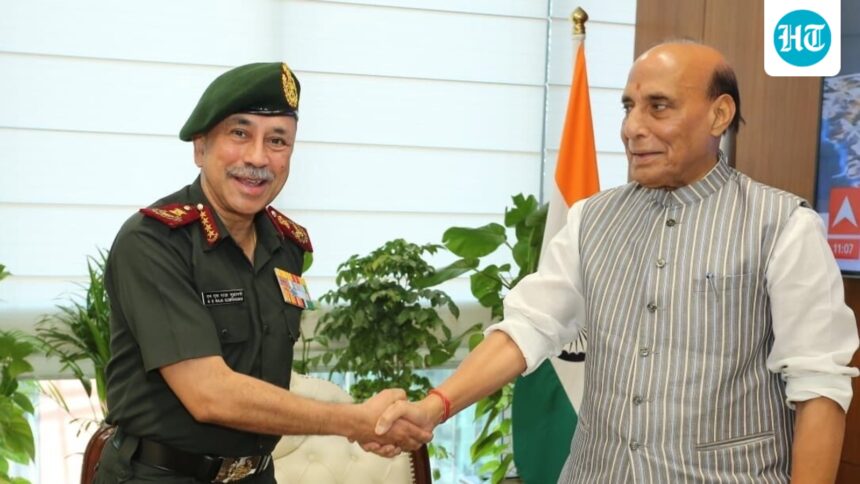
General NS Raja Subramani, who recently took charge as India’s third Chief of Defense Staff (CDS), is set to push the theatrics and make a crucial presentation on the way forward to Defense Minister Rajnath Singh by the end of this month, people familiar with the matter said.
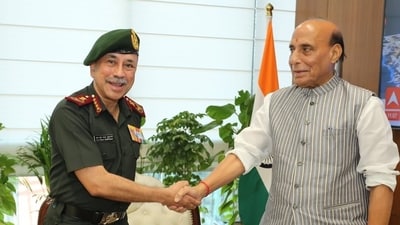
While General Subramani’s predecessor, General Anil Chauhan, had submitted his final draft proposal on the issue before leaving office on May 31, the new CDS is expected to make a detailed presentation of the same before all stakeholders and the minister, the people added. Once the minister gives the go-ahead to the proposal, the theater command plan will be sent as a memorandum to the Cabinet Committee on Security (CCS) for final approval by Prime Minister Narendra Modi. The plan has been in implementation since 2022.
At the heart of the theater command plan are the Northern (facing China), Western (facing Pakistan), and Maritime Theater Command (with Andaman and Nicobar Island Command). Under the proposal, four new four-star posts, equivalent to existing service chiefs, will be created, including the position of Deputy Chief of Defense Staff (VCDS). Each theater command will be headed by a four-star officer, according to the plan.
While the political leadership fully supports the theater commands as part of much-needed military reforms, the three service headquarters remain in a state of confusion about diluting the powers of service chiefs; Under the new structure, they will not have any executive role. Their responsibilities will be limited to training and supply, with theater commanders receiving instructions directly from the Secretary of Defense in times of war. The civilian military bureaucracy is understandably cautious about creating four more positions for four-star officers, who would hold the same ex-officio Cabinet Secretary rank as service chiefs. While there is justification for not making the command structure overburdened with senior responsibilities, the counterpoint is that the uniformed services thrive on hierarchy and seniority. Simply put, if the three theater commanders were three-star officers, the service chiefs would dominate them and the whole exercise would fail.
Read also | The theater is on track, it could take shape in the next 2-3 years: Army Commander
Although all the then Chiefs of Staff had written to General Chouhan, signing the theater orders, it had been known for some time that while the Indian Army and Indian Navy were fully in favor of the reforms, the Air Force was not yet fully on board. The Air Force has concerns about the plan, including the risk of overcommitment and dividing its limited air assets among theater commands.
While the 1st SDC, General Bipin Rawat, adopted a top-down approach to unify the three services, the 2nd SDC, General Chouhan, used a softer, bottom-up approach to bring them together through joint military operations and sophisticated intelligence and communications. The responsibility now falls on General Subramani to implement the much-needed military reform.