Speculation about the NCP-NCP’s (Sharadchandra Pawar) merger mounted on Friday, with people familiar with the details saying the BJP was keen on strengthening the NDA and was in favor of a merger of the two parties.
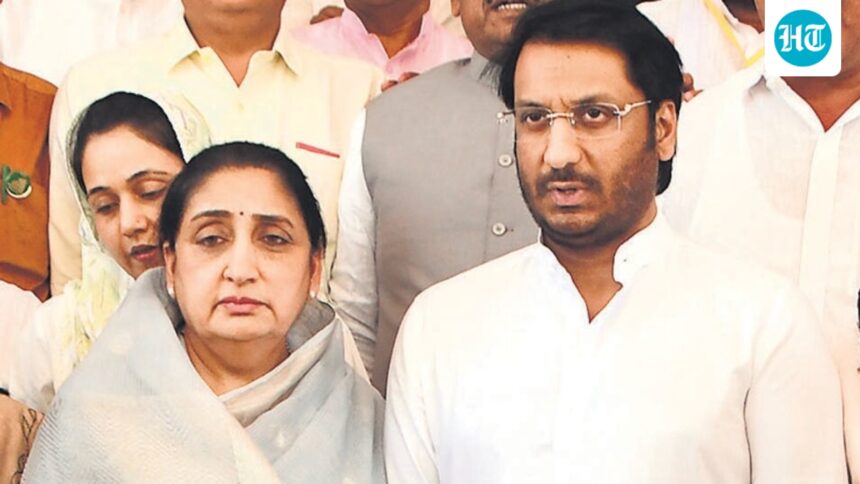
Currently, the NCP is part of the NDA, while the NCP (Socialist Party) is part of the opposition India Bloc. NCP chief Sunetra Pawar and her eldest son, Rajya Sabha MP Parth Pawar, are certainly not in favor of the merger, a close aide to Sunetra Pawar said, even as some NCP leaders look to muster support from a majority of party lawmakers in favor of the move.
Read also: ‘Absolute recklessness’: Former Japanese minister criticizes India over delay in bullet train project, and MEA responds
“Both the NCP chief and her son are strongly against the merger as they do not want NCP chief Sharad Pawar and his daughter Supriya Sule to regain control of the party,” a close aide to Sunetra Pawar said.
On Thursday evening, Parth Pawar met Chief Minister Devendra Fadnavis.
On Tuesday night, Nationalist Congress Party (SP) Jayant Patel was at Fadnavis’s official residence, where senior leaders of the rival NCP faction Praful Patel and Sunil Tatkare were also present. NCP leaders Jayant Patil and Jitendra Awhad met Deputy Prime Minister Eknath Shinde at his official residence in Mumbai on Thursday evening.
In his meeting, Parth sought to know what happened between the Prime Minister and the two NCP leaders, people familiar with the matter said. They added that Fadnavis refused to divulge any details, saying that he would discuss the matter with Sunetra Pawar.
If the merger becomes inevitable, the mother-son duo could push for Sunetra Pawar to continue as deputy chief minister and party president, the aide quoted above said.
According to a person familiar with the details, the BJP leadership has held talks with leaders of both parties to put aside differences and unite, thus giving the NDA the required heft to pass key bills including the Constitution Amendment Bill implementing women’s reservation and delimitation. The National Democratic Rally, the largest coalition in both chambers, does not have the two-thirds majority required to pass the bills.
In an attempt to bring the two parties together, the BJP has offered both of them a place in the Union Cabinet, the person quoted above said.
Earlier this week, NCP leader Supriya Sule said her party would consider supporting the proposed legislation if it provided for a uniform 50% increase in Lok Sabha seats in all states. She also clarified that the party’s official position has not yet been decided.
Read also: “It was difficult to open the books again”: NEET re-exam covers on paper leakage, second attempt
The above-mentioned person said that the party has expedited efforts to unite the two sides keeping in mind the upcoming monsoon session starting on Monday, where it intends to table the Constitution Amendment Bill, which failed to get the required support in the previous session.
“The differences are over power sharing and who will retain which post. It has been conveyed (to the BJP) that Parth, son of the late Ajit Pawar, who has now been nominated to the Rajya Sabha, is keen on his mother retaining the post of deputy chief minister, her current portfolio in the Maharashtra government, and the post of national president of the NCP as well. The issues need to be settled between the two sides,” the person quoted above said.
Read also: When Indira Met Sonam: How the 1984 Story Slowly Brought Kong to Siam Wangchuk
Fissures in the NCP emerged after former Deputy Chief Minister Ajit Pawar died in a plane crash in Barmati on January 28. These differences have deepened over a period of time with a section of leaders within the party working to isolate the leadership, said a senior NCP leader.
“Parth’s attempt to control the party by assembling a team of close aides – and outmaneuvering the veterans who ran the show with Ajit Pawar – has led to a great deal of unease among party members. Many have raised doubts about the ability of the Sunetra-Parth alliance to lead the party effectively, especially when Mahioti’s allies, the BJP and Shiv Sena, are run by seasoned politicians like Fadnavis and Shinde,” a senior NCP MLA said. The leader, who requested to remain anonymous.
He added that efforts are continuing to garner support from MLAs for the merger. “Many MLAs have spoken in favor of the merger if Sharad Pawar joins the NDA,” he said.
But he ruled out any possibility of an immediate coup in the National Congress Party. “The Prime Minister may play a crucial role in the merger talks,” the NCP leader said.
The current strength of the Lok Sabha is 540 votes, and the two-thirds mark is 360. In April, the government got 298 votes and the opposition 230. The NDA’s tally has since risen to 319 votes. If the NCP supports the bill, the NDA’s vote tally will rise to 327, which would still be 33 votes short of the two-thirds mark, but the government hopes some parties will opt in. Abstain from voting rather than vote against the bill.
Amid the confusion, NCP vice-president Udaykumar Ahir accused leaders within his party of trying to end Parth’s political career and demanded a seat in the Union government from him.
“An unfair perception has been created that Parth Pawar lacks political maturity. Some within our ranks are trying to spread the impression that Parth cannot do justice to either the party or the people. This is an open secret. At the age of just 38 years, attempts are being made to end his political career before it truly begins, especially after the death of Ajit Dada (Pawar),” the three-page letter addressed to NCP chief Sunetra Pawar said.
She added, “Giving him a place in the Union government will allow him to prove his abilities and provide an appropriate response to those who spread such misconceptions.”
Officially, both parties have denied any merger talks.
“When my brother (Ajit Pawar) was alive, the merger was on the table. But after his death, the other side strongly opposed it. The issue ended there for us,” Sule told reporters on Friday.
Maharashtra NCP chief Sunil Tatkare was more cautious.
“As of today, there are no talks. But tomorrow, when the demarcation bill is voted on, we don’t know what might happen. Politics is changing very quickly. We have already seen significant political developments after the Legislative Assembly elections in West Bengal and Tamil Nadu,” Tatkare said in New Delhi.
“Political equations can change quickly.”