The Supreme Court on Friday asked the Railways to clarify and reconsider the continued use of the term “second class passenger” in its operating manuals and official documents, noting that the connotation of class should relate to the coach and not to the passenger, as the expression is “offensive to the spirit of the Constitution of India.”

A bench of Justices Sanjay Karol and N Koteswar Singh made this observation while deciding a compensation suit arising out of the death of a passenger who fell from a running train in 2015. The court also suggested that the railways should consider a “massive increase” in manpower at stations and trains to ensure effective implementation of safety measures aimed at preventing overcrowding and accidental falls.
The ruling was issued in an appeal filed by Lata, whose husband Chandrakant Thakkar died after falling from the Ahmedabad-Howrah post office between Khandpada and Khatgaon while traveling from Raipur to Ahmedabad on November 28, 2015.
The Railway Claims Tribunal and the Madhya Pradesh High Court refused compensation on the ground that it could not be proven that the deceased was a bona fide passenger as his ticket was not refunded after the accident. The Supreme Court overturned both decisions, holding that the absence of a ticket was not fatal to the claim and ruled $8 thousand compensation for the widow.
While examining the Indian Railways Commercial Manual and other operational documents, the bench observed that the phrase “second class passenger” is still used in several provisions relating to passenger accommodation and overcrowding.
“One aspect that caught our attention while going through the guide and other relevant documents, is the use of the term ‘second class passenger’. While ostensibly linked to the expenses incurred by the passenger for travelling, we may suggest that the connotation of class be attached to the bus and not to the passenger, in recognition of the history of caste divisions in our country which is the same as offending the spirit of the Constitution of India.”
The observation came after the authority reproduced several provisions of the Railway Commercial Manual, including those dealing with passenger accommodation, preventing overcrowding, checking tickets and safety precautions before departing trains.
The court noted that the evidence repeatedly refers to “upper and lower class passengers” and “second class passengers,” language that, according to the panel, requires reconsideration in a constitutional democracy committed to equality and dignity.
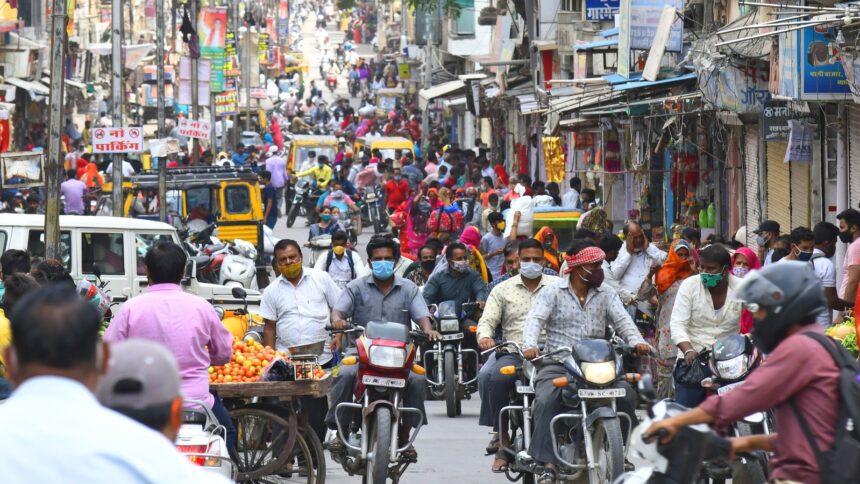
The ruling also focused extensively on the problem of overcrowding on trains, which the council described as a frequent occurrence and “the cause most often of such unfortunate incidents.”
Referring to the provisions of the Railway Commercial Manual, the court noted that guards, conductors, ticket collectors, station managers and ticket examiners were assigned specific responsibilities to prevent passengers from traveling on foot platforms, ensure doors were closed before trains started, distribute passengers evenly across compartments and report overcrowding.
The bench observed that though the Railways has laid out detailed guidelines, “thoughtful thinking is clearly visible, but the implementation leaves much to be desired.”
The Court acknowledged the practical difficulties in implementing some of these measures, and said that effective implementation would require a significant increase in staff.
“It will require a massive increase in the workforce serving railway stations and trains. While we are in the era of modernization, we may suggest that it may be beneficial to the organization and the country as a whole if the youth of today are employed by the organisation, not only to give them a stable source of livelihood but also to sustain human lives,” the bench observed.
The court added that such an increase in manpower could help ensure better ticket screening, crowd management and passenger safety, thus reducing the risk of deaths resulting from overcrowding and accidental falls from trains.
According to the judgement, Chandrakant Thakkar was traveling from Raipur to Ahmedabad for business purposes in November 2015 when he fell from the running train and died on the spot from his injuries.
His wife filed a claim under the Railway Claims Tribunal Act, claiming compensation on the basis that the accident was an “undesirable accident” under section 123(c)(2) of the Railway Act 1989. She stated that her husband had purchased a valid ticket, but it had been kept in a suitcase which had been lost after the accident.
The Railway Claims Tribunal accepted that the incident was an “undesirable incident” but dismissed the claim because the ticket had not been refunded. The Madhya Pradesh High Court confirmed the decision, citing discrepancies regarding the date of travel and the lack of a ticket.
The Supreme Court held that both courts erred in adopting a technical approach. Relying on its previous decisions, the court reiterated that “the mere absence of a ticket with such injured or deceased person will not negate the claim that he was a bona fide passenger.”
The court held that the widow had discharged the initial burden by submitting an affidavit stating that her husband had purchased a ticket and that it had been lost with his suitcase. Since there was no dispute that the deceased was a passenger on the train and died in an unforeseen accident, the Railways was liable to pay compensation.
Regardless of the orders of the court and the Supreme Court, the court directed the Union of India to pay $8 million to the appellant within four weeks, otherwise the amount will bear interest at 8% from the date of filing of the claim petition.
Ends