The state government on Wednesday released a draft policy to address digital usage among students through a school-first framework that prioritizes mental health and cyber safety.

The policy was prepared by the state Department of Health and Family Welfare, in collaboration with the National Institute of Mental Health and Neurosciences (NIMHANS), officials said.
“With nearly one in four teens showing signs of problematic internet use, the policy recognizes the growing burden of mental health issues such as anxiety, sleep disorders, poor academic performance, and social isolation associated with excessive screen time,” the document reads.
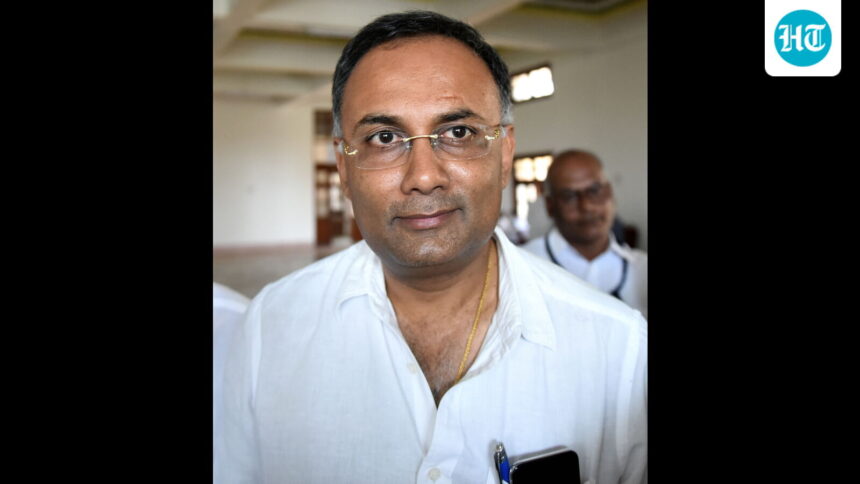
State Health Minister Dinesh Gundu Rao said the ill effects of mobile phone use were evident in both education and social life, citing concerns such as anxiety, cyberbullying, insomnia and reduced interpersonal interaction.
He added: “You should also notice that family members talk less to each other because of mobile phones. They disturb our social structure. We have learned to use them and not their negative impact on people, including digital addiction and its effect on our minds.”
The draft policy proposes to integrate digital literacy, mental health awareness and cyber safety into school education. It assigns roles to schools, teachers, parents, students, and government systems.
Key measures include issuing state-level guidelines, training teachers on healthy use of technology and enhancing communication between schools and parents. Digital wellness will be integrated into life skills and ICT curricula, including social media literacy, ethical use of technology and cyber safety.
Schools will be required to set their own digital use policies, including setting screen time standards while capping recreational use at one hour per day, addressing cyber misconduct and ensuring access to counseling support.
Teachers will be trained to recognize early signs of digital dysphoria and refer students to mental health services. Schools will also create digital wellness committees.
The policy calls for regular awareness programs for students, teachers and parents, and promotes offline activities such as physical exercise, hobbies and designated “technology-free” periods. Monitoring systems have been proposed to track digital disruptions and connect students to support services, including Tele-MANAS.
The policy suggests training teachers under ‘digital detox’ through the 5C model – Desire, Control, Coercion, Adaptation and Consequences – so that they can properly intervene in cases of digital distress.
Parents will be expected to enforce screen time rules, create device-free zones at home and model responsible digital behaviour, with schools helping to get involved through guidance sessions.
The policy aims to improve digital literacy, reduce technology addiction and related mental health issues, enable early intervention and enhance coordination between schools and families.
The draft comes on the heels of a proposal announced in the state budget to restrict access to social media for younger users. While presenting the Budget 2026-27 in the Karnataka Legislative Assembly, Chief Minister Siddaramaiah said that the government plans to ban children below the age of 16 from using social media platforms.
“With the aim of preventing the harmful effects of increased mobile phone use on children, the use of social media will be banned for children under the age of 16,” he said.
If implemented, Karnataka will be the first state in India to impose such a restriction. Similar measures have been considered internationally, including legislation passed in Australia in December that would require social media companies to prevent users under 16 from maintaining accounts.
This issue was also discussed within the government. During a recent meeting with vice chancellors of state-run universities, Siddaramaiah sought views on restricting mobile phone use among children below 16 years of age.