In an unusually frank criticism of both judicial interference and government policy, Supreme Court Justice Ujjal Bhuyan on Saturday warned that the court’s “erratic rulings” and “reactionary” decisions by the Union Finance Ministry had undermined India’s ambition to become a global hub for arbitration, questioning how to reconcile the centre’s recent approach with Prime Minister Narendra Modi’s vision of strengthening institutional arbitration.
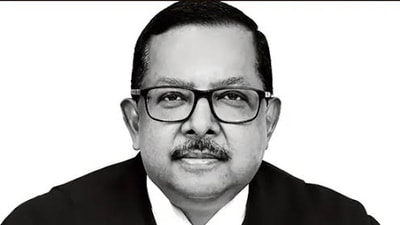
In his keynote address on ‘Arbitration in India: Reform, Relevance and Way Forward’, organized by the Legal Forum, Justice Bhuyan said that a series of recent developments, including the 2024 Supreme Court judgment in the Delhi Metro arbitration dispute and subsequent policy changes by the Ministry of Finance, have significantly weakened investor confidence in India’s arbitration regime.
The event was attended by Delhi High Court judge Justice C Hari Shankar and former Himachal Pradesh High Court Chief Justice Rajeev Chakder, which was officiated by senior advocate Amit Gupta.
Read also | Om Birla gives his nod to merger of Uddhav rebels with Shinde Sena and TMC rebels with NCPI
Justice Bhuiyan described the Supreme Court’s April 2024 remedial award in the Delhi Metro Rail Corporation (DMRC) vs. Delhi Airport Metro Express Limited (DAMEPL) dispute as having caused “the greatest disservice to arbitration in India”.
The judge said that by invoking its extraordinary remedial power to set aside a high-value arbitration award after it had survived challenges to the tribunal, the High Court, the Supreme Court under Article 136 and even review proceedings, the court had effectively reopened the dispute for a fifth round of scrutiny.
Read also | SC to consider access to affordable life-saving cancer drugs
“In remedial jurisdiction, the Supreme Court conducted a detailed review of the merits…effectively the fifth round of challenge to the arbitration award,” Justice Bhuiyan said, adding that while the ruling cautioned against creating additional stages of judicial interference in arbitration awards, “the bench did exactly the opposite.”
According to him, the ruling raised “serious questions” regarding the extent of judicial intervention in arbitration and the suitability of India as a preferred destination for resolving commercial disputes.
The April 2024 ruling had overturned an earlier Supreme Court ruling upholding an arbitration award directing the DMRC to pay approx. $8,000 crore, including interest, to DAMEPL through the Airport Metro Express line concession agreement. The remedial court held that the arbitral tribunal had ignored vital evidence and that allowing the arbitral award would result in a serious miscarriage of justice.
But Justice Bhuyan said the consequences of this ruling extend beyond the dispute itself. He referred to an office memorandum dated June 3, 2024, issued by the Federal Ministry of Finance, which noted the government’s “unsatisfactory experience” in arbitration and advised government departments and public sector organizations not to incorporate arbitration clauses into contracts involving disputes exceeding their value. $10 crore, with mediation encouraged instead.
Justice Bhuiyan described the memorandum as representing a “sharp, sudden and controversial shift in policy against arbitration” and said the change was inconsistent with the government’s stated policy. The judge recalled Prime Minister Narendra Modi’s speech at the National Initiative Towards Strengthening Arbitration and Enforcement in India conference in 2016, where the Prime Minister described creating a “vibrant institutional arbitration ecosystem” as one of the government’s top priorities and stressed that India should emerge as a global hub for arbitration.
“In complete contradiction to the vision of the Prime Minister and despite the announcement of the External Affairs Minister, the Ministry of Finance has issued the above guidelines,” Justice Bhuiyan noted.
Justice Bhuyan concluded his speech with a broader warning that recent developments threaten to undo years of legislative reform aimed at making India an arbitration-friendly jurisdiction.
“Irregular judicial rulings and reactionary policies such as the above pose impediments to India’s efforts to position itself as a global arbitration centre,” the judge said.