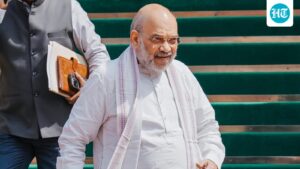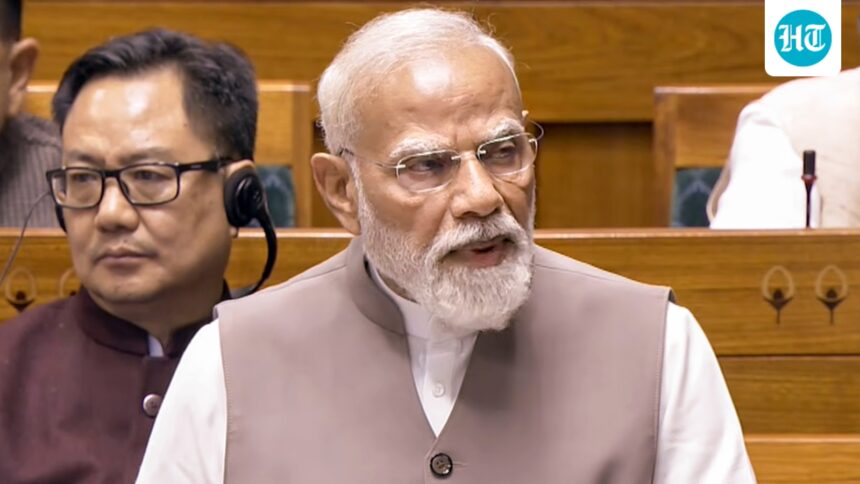
Prime Minister Narendra Modi on Monday assured the country that the government was relentlessly trying to downplay the impact of the war in West Asia even as he warned that difficult global conditions could persist for a long time and called on people to prepare and unite, just as they did during Covid-19.

In a statement in the Lok Sabha – his first since the outbreak of war – Modi described the attacks on commercial ships and the obstruction of the Strait of Hormuz as “unacceptable”, addressed concerns about their impact on fuel, fertilizers and national security, and said that a unanimous voice must come out to the world from the Indian Parliament on this crisis.
Emphasizing India’s steadfast commitment to humanity and peace, the Prime Minister said that “all our efforts are aimed at reducing tension and ending this war” and that farmers will not be allowed to bear “the burden of the global crisis.”
Read also | Prioritizing Domestic LPG and Safety of Indians in Iran and Gulf: Key Takeaways from PM Modi’s Lok Sabha Address
He said: “This war has created difficult global conditions that may last for a long time. Hence, we must remain prepared and united. We faced similar challenges during the Covid crisis with unity. Now again, we must prepare in the same way. With patience, restraint and calm, we must face all challenges – this is our identity, and this is our strength.” “At the same time, we must remain vigilant and cautious. Those who try to exploit the situation will try to spread lies, but we must not allow them to succeed.”
The Prime Minister informed the House that “India has more than 53,000 metric tons of oil in its strategic reserve” and is working on “65,000 metric tons.”
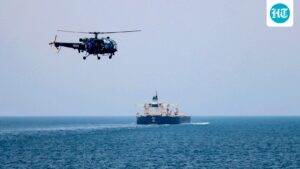
“In terms of diplomacy, India’s position has been very clear. From the beginning, we have expressed our deep concern about this conflict. I have spoken to all West Asian leaders and urged everyone to reduce tension and end this conflict. We have opposed attacks on people, transport and energy. Attacks on commercial ships and erecting obstructions in the Strait of Hormuz are unacceptable,” he said.
“In the midst of this war, India is trying to secure the movement of its ships through diplomacy. We have always raised our voice for humanity and peace. I repeat that talks and diplomacy are the only way to end the problem. All our efforts are aimed at easing the tension and ending this war. In this war, threat to any life is not in the interest of humanity. India wants a peaceful solution as soon as possible.”
Read also | ‘100% under Trump’: Rahul Gandhi targets PM Modi over silence on US in Lok Sabha speech
Modi said the war had led to “unexpected challenges for India in terms of economic situation, national security and humanity.” “India has a significant trade relationship with the countries involved in the war and with those affected by the war. A major part of our demand for oil and gas comes from this region. Nearly 1 crore Indians live and work in the Gulf region. A number of Indian seafarers are also present in merchant ships sailing in that region. The situation is alarming. It has been more than 3 weeks now. It is having an adverse impact on the global economy and people’s lives.”
“India has more than 53,000 metric tons of oil in its strategic reserve. We have increased our refining capabilities. We are in touch with other countries to ensure supplies from wherever possible. We are monitoring shipping routes near the Gulf region. Our goal is to ensure that ships carrying oil, gas, fertilizers and other important commodities reach India safely,” he said.
The Prime Minister said that after the war began, the movement of crude oil, gas and fertilizers through the Strait of Hormuz became very difficult. “We have made efforts to ensure that petrol and cooking gas supplies are not affected significantly. We all know that we import 60% of the required LPG. Given the uncertainty in supply, the government has prioritized domestic supplies of LPG. We are also working to increase LPG production in the country. We have worked to ensure smooth supply of petrol and diesel,” he said.
The Prime Minister announced that the government was relentlessly trying to minimize the impact of the war on India. He added: “We know that energy is the backbone of the economy. One of the largest sources of global energy comes from West Asia. Naturally, global economies have been affected by the current situation. We are relentlessly trying to minimize the impact on India. The government is working on short, medium and long-term strategies. Today the fundamentals of the Indian economy are strong.”
“The big question is how this will affect agriculture. Our farmers have kept our food stocks full. We are working to ensure proper harvest in the kharif season. We have enough fertilizer to handle any emergency.”
Modi expected energy demand to grow in the summer months but said all power plants had sufficient coal stocks. He also informed that he had spoken to all the leaders of West Asia and obtained assurances for the welfare of the Indians. “So far, 3.75 lakh Indians have returned. From Iran alone, more than 1,000 people, including 700 medical students, have returned safely.”
“The Prime Minister’s uncharacteristically short speech in Lok Sabha today was, as usual, a masterclass in self-aggrandizement, cowardice and partisan dialogue. Not a single word was uttered in condemnation of the ongoing US-Israeli air strikes on Iran,” Congressman Jairam Ramesh said in a post on X.