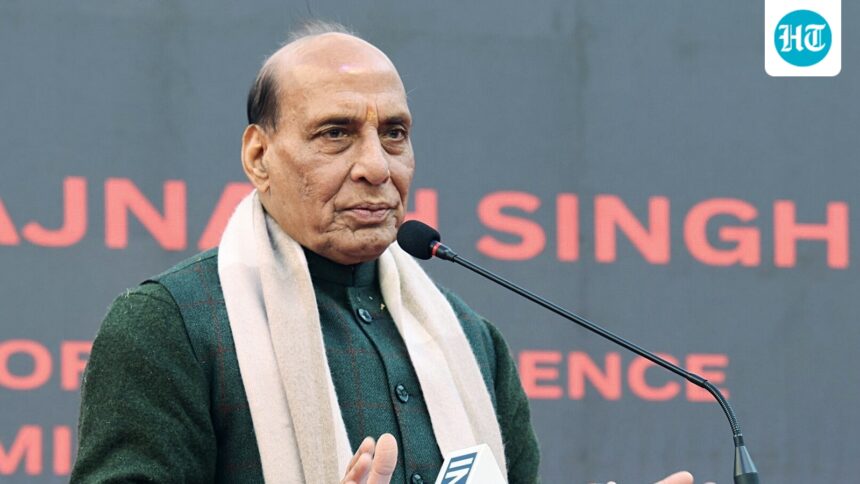
New Delhi: Defense Minister Rajnath Singh on Tuesday asked military commanders to draw “operational and technological” lessons from the ongoing US-Israel war with Iran to enhance India’s defense preparedness. This directive came during a wide-ranging review of the West Asia crisis, which disrupted global supply chains, sparked a rise in oil and gas prices, and shook the global economy.

“We need to formalize an integrated and comprehensive roadmap for the next decade keeping in mind the lessons learned, challenges and opportunities to move forward while ensuring self-reliance and operational readiness on all fronts,” Singh said at a meeting attended by the Chief of Defense Staff, the three Chiefs of Staff, the Defense Minister and other senior officials.
He was briefed on the latest global and regional security developments, the impact of the potential escalation of the ongoing conflict on India, and the challenges and opportunities posed by the current geopolitical uncertainty.
“The impact of the (West Asia) situation on supply chain management in the procurement and production of defense equipment, including maintenance and serviceability of existing equipment was also examined,” the Defense Ministry said.
The review came two days after the government decided to take a raft of measures to ensure food, fuel and fertilizer security amid turmoil caused by conflict in West Asia. On Sunday, it revealed immediate and long-term steps to ensure the availability of fuel and diversify imports of fertilizers and other basic needs.
Prime Minister Narendra Modi on Tuesday said the West Asia crisis has sparked a serious global energy crisis and disrupted major trade routes, with direct implications for the Indian economy and supply chains. Speaking in Rajya Sabha, he said the crisis has affected the movement of goods and led to uncertainty in supplies of essential commodities like petrol, diesel, gas and fertilisers.
Days after the outbreak of war on Iran, Navy Chief Admiral Dinesh K Tripathi said that recent global conflicts have raised questions about the current concept of “short and decisive wars”, adding that countries need to remain prepared to meet challenges by building their defense industrial complexes.
“One must not only produce (military equipment) on a large scale but also be prepared to modernize during production, because technology changes at the speed of thought. We have seen the need for this and we must be prepared in this regard,” he said in response to a question about lessons learned from recent military confrontations and industrial capacity requirements for modern warfare.