The United States considers India “indispensable” to keeping the Indo-Pacific region free and open and an essential partner for achieving a positive balance of power in Asia, a senior Trump administration official said on Tuesday, while outlining a vision for the two sides to work together on converging interests despite differences or even disputes on certain issues.

Elbridge Colby, US Undersecretary of Defense for Policy, who is in the capital to co-chair the Defense Policy Group meeting, noted the alignment between New Delhi’s “Bharat First” approach and the Trump administration’s “America First” policy and flexible realism, and highlighted a four-point agenda based on cooperation across differences, centralization of military power, defense industrial cooperation, and “strategic candor.”
Colby is the second senior Trump administration official to visit India this month, after US Deputy Secretary of State Christopher Landau, as the two sides work to rebuild relations damaged by severe tensions last year over the US imposition of 50% tariffs on Indian exports, including a 25% penalty on Russian oil purchases. The two sides agreed on a framework for a bilateral trade agreement, and Washington reduced customs duties.
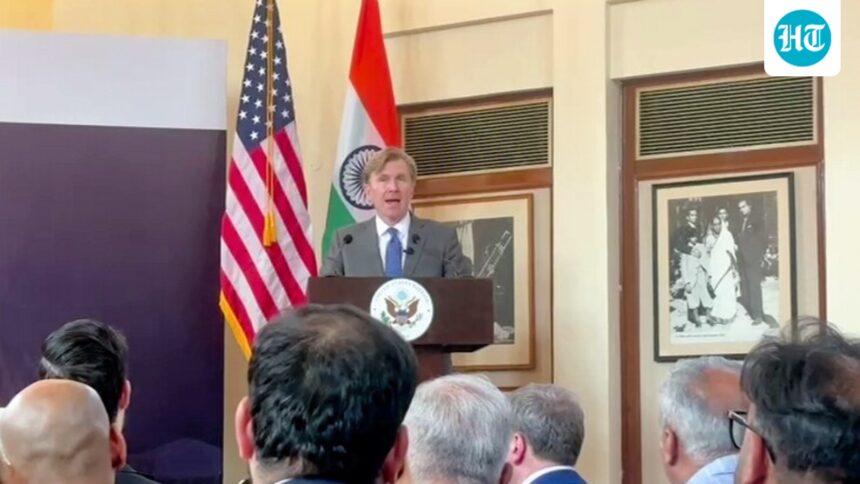
While recognizing that the world is going through one of the most significant shifts in global power in generations and that no country alone can maintain a stable balance of power in Asia, Colby while addressing the Ananta Center said that India’s role in keeping the Indo-Pacific region free and open is “indispensable”.
India’s importance stems from its size, economic potential, and strategic location. “Your country is located on the banks of the Indian Ocean, the connective tissue of the Indo-Pacific region. India has a long tradition of strategic independence and a growing ability to shape events beyond its borders,” he said, referring to India’s “formidable, self-reliant and capable military forces” capable of assuming significant security responsibilities.
“For all these reasons, the United States views India not just as a key partner, but as an essential partner in ensuring the appropriate long-term balance of power in Asia. At the same time, we approach our partnership with realism, clarity, and a fair dose of humility,” Colby said.
He noted that Washington’s approach to the Indo-US partnership is “interest-based, realistic, and shaped by geopolitics and incentives.”
In this context, Colby acknowledged that India “is not shy about promoting” its own interests and priorities, and said that such differences will not hinder the two sides working together because the US National Security Strategy envisions partnerships with “self-confident countries, not with dependencies.”
Referring to the description of the Minister of Foreign Affairs, S. Jaishankar described India’s approach as ‘Bharat First’ and ‘The India Way’, Colby added: “Like America First and flexible realism, Bharat First and the India Way emphasize the centrality of a realist approach to foreign policy, an explicit willingness to put national priorities first, and a results-oriented mindset in international policy.”
Colby listed four basic axes that could advance cooperation between the United States and India, the first of which is that the two sides “do not need to agree on everything to cooperate effectively.” He added: “What is most important is that our interests and goals are increasingly converging on the most fundamental issues. Disagreements and even conflicts are fully compatible with deepening consensus and cooperation on strategic issues.”
Colby, who played a key role in shifting the Pentagon’s focus on China during Trump’s first term, said the United States and India “benefit from an Indo-Pacific region where no power can dominate the region,” as well as open trade and national independence. He added: “These are the tangible common interests that form the basis of our permanent strategic partnership.”
The second factor mentioned by Colby is “the strategic centralization of military power in order to achieve a stable and favorable balance” in Asia. He noted the steady expansion of defense cooperation between India and the United States, including increased coordination between the two militaries, conducting more complex exercises and deepening information exchange. He said: “Regional and global cooperation has become routine, and defense industrial and technological cooperation is gaining new momentum.”
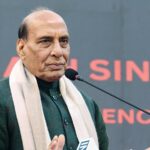
He said the US-India Major Defense Partnership, signed by US Defense Secretary Pete Hegseth and Defense Minister Rajnath Singh last October, provides a strong foundation for progress, and this momentum is expected to accelerate with the Defense Policy Group meeting on Wednesday that will be co-chaired by Defense Minister Rajesh Kumar Singh.
“Our focus now must be on moving forward with these important agreements to serve a larger strategic goal and enhance the ability of both countries to contribute to a stable balance of power in this vital region,” Colby said. “Our goal must be practical, to ensure that our forces are able to operate effectively together when our interests align and, in any event, to see that India possesses the capabilities necessary to defend its sovereignty and contribute to an appropriate regional balance of power.”
In this context, Colby said that the United States is committed to working with India to accelerate cooperation in areas such as long-range precision weapons systems, flexible logistics, maritime domain awareness, anti-submarine warfare, and advanced technologies.
The third pillar is defense industrial cooperation, and India’s entry into the highest ranks among global economies provides a strong basis for mutually beneficial cooperation in this field. He added that the two sides should benefit from cooperation in the fields of defense industry, science and technology to enhance the readiness of their armed forces and jointly develop defense capabilities. Even as the United States seeks to expand its defense sales to India, it recognizes that New Delhi’s ambition to expand its domestic defense industry is “entirely reasonable.”
While such cooperation could build a more resilient network for defense production, Colby noted that “regulatory barriers, bureaucratic inertia and differences in procurement systems” pose real challenges that must be overcome.
The fourth point Colby made was “strategic candor,” and he said that strong partnerships can benefit from “honesty, respect, and strategic clarity,” especially since the United States and India “have not always been partners or even friends.” The interests of the two sides “will diverge at times” but “disagreement in the agreement should not constitute any obstacle to our cooperation.”
Colby noted that the United States and India face the task of navigating “a period of tectonic shifts in a way that preserves our interests and our peace.” He emphasized that the United States is prepared for such an era, while the same cannot be said for some of the United States’ traditional partners. “India is very different. It is a growing power. As a result, the United States believes that India will play a central role in ensuring the appropriate balance of power in the Indo-Pacific region,” he said.
Colby said the US goal is to build a partnership with India to ensure peace and stability that is not based on “naivete or transparent abstraction like the rules-based international order, but on strength, reason, and tough cooperation.”