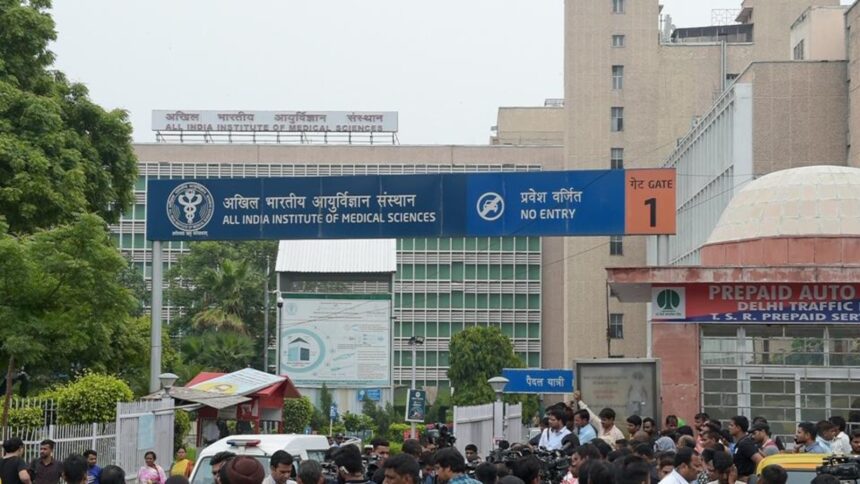
Harish Rana, the first person in India to be allowed passive euthanasia, died on Tuesday at AIIMS-Delhi after more than 13 years in a coma after completing medical procedures.

Rana was shifted from his home in Ghaziabad to the palliative care unit of Dr BR Ambedkar Rotary Cancer Hospital at AIIMS on March 14, officials said. He died at 4:10 pm on Tuesday in a Delhi hospital.
The process of passive euthanasia for 32-year-old Harish Rana, whose ‘right to die’ was upheld by the Supreme Court earlier this month, began last week and was expected to take several days given the multiple stages involved, including withholding or gradually withdrawing food support.
Rana, a resident of Ghaziabad in Uttar Pradesh state, has been in a coma since suffering a catastrophic head injury after falling from the fourth floor of his paid accommodation in 2013, when he was an engineering student in Chandigarh.
In its first ever order allowing passive euthanasia, the Supreme Court on March 11 allowed the withdrawal of Rana’s artificial life support.
Passive euthanasia process
Dr Sushma Bhatnagar, former president of AIIMS and professor of anesthesia-oncology and palliative medicine, said this case exemplifies palliative care that focuses on reducing prolonged suffering when recovery is not possible.
An earlier HT report quoted Dr Bhatnagar as saying: “As a principle of palliative care, external support that prolongs suffering in irreversible medical conditions may be withheld or withdrawn after all medical approvals, allowing nature to take its course.”
The process generally involves gradually withholding or withdrawing nutritional support while ensuring adequate pain relief.
The patient is given a soothing sedative so that he does not feel uncomfortable. Dr Bhatnagar said life support measures like artificial nutrition, oxygen and medicines are slowly being withdrawn.
In Harish’s case, sources said the entire process may take two to three weeks to complete, according to a PTI report.
The stages also included obtaining approval from two medical boards, a process initiated at AIIMS in accordance with Indian law governing living wills and passive euthanasia. These boards were supposed to certify that the patient met the necessary criteria before withdrawing life support, according to a previous HT report.
The hospital said that all medical evaluations will be conducted by the hospital’s medical committee formed for this case.